Interest in U.S. Constitution Spikes After Trump’s Election

Since Donald Trump’s election as president-elect of the United States, there has been a spike in interest in the United States Constitution. Below are just a few examples.

As someone who has devoted her career to promoting constitutional literacy, I hope the discussions on and commitment to studying and preserving the U.S. Constitution continue on not only this week or even throughout Trump’s administration, but in perpetuity. Because, as Thomas Jefferson famously said: “I know no safe depository of the ultimate powers of the society but the people themselves: and if we think them not enlightened enough to exercise their control with a wholesome discretion, the remedy is not to take it from them, but to inform their discretion by education. This is the true corrective of abuses of constitutional power.”

(1) Last night on her television show, Samantha Bee called for instruction on the U.S. Constitution in schoolscalled for instruction on the U.S. Constitution in schools.

(2) Retiring Senator Barbara Milkuski said “We need to start with civility, start with the Constitution, and I think we’ll be ok.”

(3) Rolling Stone published an article by Bridgette Dunlap titled, Let’s Talk About the Constitution – After Trump’s Win, We’re Going to Need It.

(4) Noah Feldman of Harvard Law School published an column in Bloomberg titled The Constitution is Built to Protect the Losers.

(5) Garrett Epps at the Atlantic discusses why he thinks “Donald Trump Has Broken the Constitution.”

(6) FiveThirtyEight Blog has a post on why people hate the Constitution’s electoral college and why it’s almost impossible to abolish (spoiler: it’s hard to amend the Constitution).

And the list goes on…

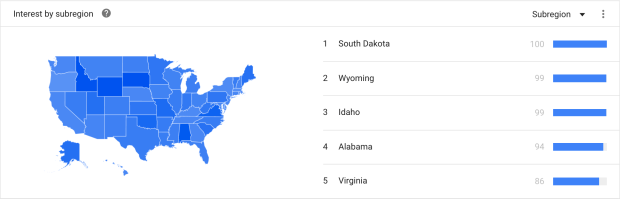
Google Trends shows an increase in searches on the United States Constitution in the last week, especially over the last few days.

screen-shot-2016-11-10-at-1-55-15-pm

Here’s a map showing interest by state. The states with the greatest interest in the Constitution over the last week are: South Dakota, Wyoming, Idaho, Alabama, and my home state of Virginia.

screen-shot-2016-11-10-at-1-58-02-pm

In the last 24 hours, Amazon.com saw a 48% increase in Pocket Constitution sales.

I’ve also received a large number of requests for pocket Constitutions and saw an uptick in web traffic to my non-profit’s website at http://www.ConSource.org.

Additionally, a number of individuals have approached me about how they can become involved in the movement to promote constitutional literacy nationwide. Email me at Julie.Silverbrook@consource.org if you’re interested in getting involved in some of ConSource’s existing programs or have a program idea of your own. Please also consider donating today! Your contribution can help us educate citizens of all ages about the U.S. Constitution and its history. 

America is Bigger Than A Single Election: Let’s Commit Ourselves to our Constitution and Civics Education

Last night’s election has sent shockwaves not only through our nation, but also throughout the world. I have received messages and read social media posts from people ready to declare the end of the American Republic. I implore you to refrain from writing America’s eulogy. I will admit here that I did not vote for Donald Trump and have deep and genuine concerns regarding his respect for the rule of law and our nation’s constitutional form of government. But I am an optimist. I believe that America is bigger than a single election. I genuinely believe that our Constitution and our principles will endure if We The People devote ourselves to preserving them.

George Washington said during his first inaugural address “[T]he preservation of the sacred fire of liberty, and the destiny of the republican model of government, are justly considered as deeply, perhaps as finally staked, on the experiment entrusted to the hands of the American people.”

How do we preserve the sacred fire of liberty and our republican model of government? We have to make sure our nation’s citizens – of all ages – understand and value our nation’s Constitution.

I’ve said it before, but I will repeat this in brief here – I do not think it is coincidental that Donald Trump’s election to the White House coincides with a correspondent and troubling decline in civics education and knowledge.

Countless reports and studies confirm that American citizens of all ages lack a basic understanding of our nation’s history and form of government. A survey released last year by the Annenberg Public Policy Center at the University of Pennsylvania found that –

  • Only one in three Americans could name all three branches of the U.S. government, while just as many could not identify even one; and,
  • And, I kid you not, about one in 10 Americans say the Bill of Rights includes the right to own a pet.

Additionally, across the nation, school boards and colleges and universities are cutting civics and history programs and young citizens are, as a result, losing the opportunity to study our nation’s Constitution and history.  It should, therefore, be no surprise that, for example, only 23% of middle school students performed at or above proficient on the civics portion of the National Assessment of Educational Progress. We are not only failing to teach our citizens about U.S. history and the Constitution in primary and secondary school, but also in college.

And the organizations, like mine (www.ConSource.org), that are devoted to educating our nation’s citizens about civics and the Constitution face budget shortfalls as the government, private foundations and philanthropists have turned away from funding civics education.

And while the situation is dire, I want to emphasize that there is hope! And you can be a part of the solution. I hope I can count on many of you to help me and other civic education leaders as we seek to stem the tide and reverse the decline in civic knowledge and constitutional literacy. We know that citizens who receive effective civics education are better informed and participate in government and civil society at higher rates than their peers. We also know that these citizens also tend to be more optimistic about the future.

If you believe in America, and I think you do, now is the time to invest in educating our citizens about our Constitution and system of government.

John Jay wrote “I consider knowledge to be the soul of a republic, and as the weak and the wicked are generally in alliance, as much care should be taken to diminish the number of the former as of the latter. Education is the way to do this, and nothing should be left undone to afford all ranks of people the means of obtaining a proper degree of it at a cheap and easy rate.”

At the end of the Constitutional Convention, Benjamin Franklin was approached by a woman who asked him what sort of government the delegates had created. Franklin famously replied, “A republic, if you can keep it.”

Now’s the time to fight to keep it, folks. Let’s get to work. Being a citizen is a full-time job. It doesn’t begin and end on Election Day.

I’ve devoted my career to the promotion of civic knowledge and constitutional literacy and am part of an incredible community of others who have done the same. Will you join us? Our work has never been more important than it is now.


100 Years Ago Today, Jeannette Rankin Was Elected as First U.S. Congresswoman

On November 7, 1916, Jeannette Rankin, a suffragist from Montana, was elected to the U.S. House of Representatives, becoming the first woman in the history of this nation to win a seat in the United States Congress. When she was elected, she said:“I may be the first woman member of Congress . . . But I won’t be the last.” Today, 104 women hold seats in the United States Congress. 20 women serve in the U.S. Senate and 84 serve in the U.S. House of Representatives.


Who Was Jeannette Rankin?

Jeannette Rankin, the eldest daughter of a rancher and a schoolteacher, was born near Missoula, Montana, on June 11, 1880. She graduated from Montana State University (now the University of Montana) in 1902 and attended the New York School of Philanthropy (later the Columbia University School of Social Work). After a brief period as a social worker in Spokane, Washington, Rankin entered the University of Washington in Seattle. It was there that she joined the woman suffrage movement, a campaign that achieved its goal in Washington State in 1910. Rankin became a professional lobbyist for the National American Woman Suffrage Association (NAWSA). Her speaking and organizing efforts helped Montana women gain the vote in 1914.

When Rankin decided in 1916 to run for a House seat from Montana, she had two key advantages: her reputation as a suffragist and her politically well-connected brother, Wellington, who financed her campaign. Some national woman suffrage leaders feared she would lose and hurt the cause. The novelty of a woman running for Congress, however, helped Rankin secure a GOP nomination for one of Montana’s two At-Large House seats on August 29, 1916. Rankin ran as a progressive, pledging to work for a constitutional woman suffrage amendment and emphasizing social welfare issues. Long a committed pacifist, she did not shy away from letting voters know how she felt about possible U.S. participation in the European war that had been raging for two years: “If they are going to have war, they ought to take the old men and leave the young to propagate the race.” Rankin came in second, winning one of Montana’s seats. She trailed the frontrunner, Democratic Representative John M. Evans, by 7,600 votes, but she topped the next candidate— another Democrat–by 6,000 votes. Rankin ran a nonpartisan campaign in a Democratic state during a period of national hostility toward parties in general. And this was the first opportunity for Montana women to vote in a federal election. “I am deeply conscious of the responsibility resting upon me,” read her public victory statement.

Rankin and the Fight for Women’s Suffrage

As the first woman Member, Rankin was on the front lines of the national suffrage fight. During the fall of 1917 she advocated the creation of a Committee on Woman Suffrage and, when it was created, she was appointed to it. When the special committee reported out a constitutional amendment on woman suffrage in January 1918, Rankin opened the very first House Floor debate on this subject. “How shall we answer their challenge, gentlemen,” she asked. “How shall we explain to them the meaning of democracy if the same Congress that voted for war to make the world safe for democracy refuses to give this small measure of democracy to the women of our country?” The resolution narrowly passed the House amid the cheers of women in the galleries, but it died in the Senate.

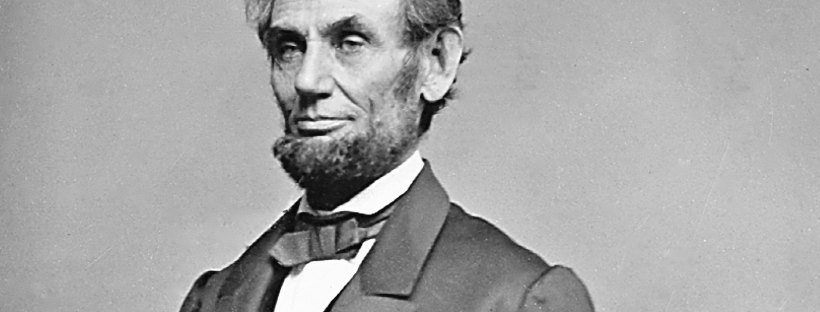
Abraham Lincoln was Elected as First Republican President On This Day in 1860

On November 6, 1860, Abraham Lincoln became the 16th president of the United States. He was the first Republican to win the presidency. He received only 40% of the popular vote, but still handily defeated the three other candidates: John C. Breckenridge (Southern Democrat), Stephen Douglas (Northern Democrat), and John Bell (Constitutional Union).

Lincoln’s victory signaled the secession of Southern states, which had publicly threatened secession if Republicans gained the White House. By the time of Lincoln’s inauguration on March 4, 1861, 7 states had seceded, and the Confederate States of America had been formally established. A month later, the Civil War began when Confederate forces opened fire on Fort Sumter in South Carolina.

This was the Republican Party Platform in 1860

Resolved, That we, the delegated representatives of the Republican electors of the United States in Convention assembled, in discharge of the duty we owe to our constituents and our country, unite in the following declarations:

1. That the history of the nation during the last four years, has fully established the propriety and necessity of the organization and perpetuation of the Republican party, and that the causes which called it into existence are permanent in their nature, and now, more than ever before, demand its peaceful and constitutional triumph.

2. That the maintenance of the principles promulgated in the Declaration of Independence and embodied in the Federal Constitution, “That all men are created equal; that they are endowed by their Creator with certain inalienable rights; that among these are life, liberty and the pursuit of happiness; that to secure these rights, governments are instituted among men, deriving their just powers from the consent of the governed,” is essential to the preservation of our Republican institutions; and that the Federal Constitution, the Rights of the States, and the Union of the States must and shall be preserved.

3. That to the Union of the States this nation owes its unprecedented increase in population, its surprising development of material resources, its rapid augmentation of wealth, its happiness at home and its honor abroad; and we hold in abhorrence all schemes for disunion, come from whatever source they may. And we congratulate the country that no Republican member of Congress has uttered or countenanced the threats of disunion so often made by Democratic members, without rebuke and with applause from their political associates; and we denounce those threats of disunion, in case of a popular overthrow of their ascendency as denying the vital principles of a free government, and as an avowal of contemplated treason, which it is the imperative duty of an indignant people sternly to rebuke and forever silence.

4. That the maintenance inviolate of the rights of the states, and especially the right of each state to order and control its own domestic institutions according to its own judgment exclusively, is essential to that balance of powers on which the perfection and endurance of our political fabric depends; and we denounce the lawless invasion by armed force of the soil of any state or territory, no matter under what pretext, as among the gravest of crimes.

5. That the present Democratic Administration has far exceeded our worst apprehensions, in its measureless subserviency to the exactions of a sectional interest, as especially evinced in its desperate exertions to force the infamous Lecompton Constitution upon the protesting people of Kansas; in construing the personal relations between master and servant to involve an unqualified property in persons; in its attempted enforcement everywhere, on land and sea, through the intervention of Congress and of the Federal Courts of the extreme pretensions of a purely local interest; and in its general and unvarying abuse of the power intrusted to it by a confiding people.

6. That the people justly view with alarm the reckless extravagance which pervades every department of the Federal Government; that a return to rigid economy and accountability is indispensable to arrest the systematic plunder of the public treasury by favored partisans; while the recent startling developments of frauds and corruptions at the Federal metropolis, show that an entire change of administration is imperatively demanded.

7. That the new dogma that the Constitution, of its own force, carries slavery into any or all of the territories of the United States, is a dangerous political heresy, at variance with the explicit provisions of that instrument itself, with contemporaneous exposition, and with legislative and judicial precedent; is revolutionary in its tendency, and subversive of the peace and harmony of the country.

8. That the normal condition of all the territory of the United States is that of freedom: That, as our Republican fathers, when they had abolished slavery in all our national territory, ordained that “no persons should be deprived of life, liberty or property without due process of law,” it becomes our duty, by legislation, whenever such legislation is necessary, to maintain this provision of the Constitution against all attempts to violate it; and we deny the authority of Congress, of a territorial legislature, or of any individuals, to give legal existence to slavery in any territory of the United States.

9. That we brand the recent reopening of the African slave trade, under the cover of our national flag, aided by perversions of judicial power, as a crime against humanity and a burning shame to our country and age; and we call upon Congress to take prompt and efficient measures for the total and final suppression of that execrable traffic

10. That in the recent vetoes, by their Federal Governors, of the acts of the legislatures of Kansas and Nebraska, prohibiting slavery in those territories, we find a practical illustration of the boasted Democratic principle of Non-Intervention and Popular Sovereignty, embodied in the Kansas-Nebraska Bill, and a demonstration of the deception and fraud involved therein.

11. That Kansas should, of right, be immediately admitted as a state under the Constitution recently formed and adopted by her people, and accepted by the House of Representatives.

12. That, while providing revenue for the support of the general government by duties upon imports, sound policy requires such an adjustment of these imports as to encourage the development of the industrial interests of the whole country; and we commend that policy of national exchanges, which secures to the workingmen liberal wages, to agriculture remunerative prices, to mechanics and manufacturers an adequate reward for their skill, labor, and enterprise, and to the nation commercial prosperity and independence.

13. That we protest against any sale or alienation to others of the public lands held by actual settlers, and against any view of the free-homestead policy which regards the settlers as paupers or suppliants for public bounty; and we demand the passage by Congress of the complete and satisfactory homestead measure which has already passed the House.

14. That the Republican party is opposed to any change in our naturalization laws or any state legislation by which the rights of citizens hitherto accorded to immigrants from foreign lands shall be abridged or impaired; and in favor of giving a full and efficient protection to the rights of all classes of citizens, whether native or naturalized, both at home and abroad.

15. That appropriations by Congress for river and harbor improvements of a national character, required for the accommodation and security of an existing commerce, are authorized by the Constitution, and justified by the obligation of Government to protect the lives and property of its citizens.

16. That a railroad to the Pacific Ocean is imperatively demanded by the interests of the whole country; that the federal government ought to render immediate and efficient aid in its construction; and that, as preliminary thereto, a daily overland mail should be promptly established.

17. Finally, having thus set forth our distinctive principles and views, we invite the co-operation of all citizens, however differing on other questions, who substantially agree with us in their affirmance and support.


On the eve of an election that has bitterly divided this country, I am reminded of this passage from Lincoln’s first inaugural address –

We are not enemies, but friends. We must not be enemies. Though passion may have strained, it must not break our bonds of affection. The mystic chords of memory, stretching from every battle-field, and patriot grave, to every living heart and hearth-stone, all over this broad land, will yet swell the chorus of the Union, when again touched, as surely they will be, by the better angels of our nature.


The Weekend Before Election Day: A Good Time to Make Sure You’re Fully Informed Before You Vote

The 2016 election is on Tuesday, November 8, 2016. More than 30 million citizens have already voted, taking advantage of early voting opportunities in many states. If, like me, you have not yet voted, I hope you’ll spend some time this weekend making sure you are fully informed before you head to the polls on Tuesday.

Ballotpedia, a non-partisan encyclopedia of American politics at all levels of government, has some very useful Election 2016 resources. This is a terrific one-stop-shop for folks who want a last minute primer on the 2016 election at the federal, state, and local level.

(1) To learn more about the candidates for President and Vice President and their positions on domestic, economic and foreign policy, check out this page.

(2) 34 of 100 seats in the United States Senate are up for reelection. Learn more about the Senate candidates running in your state here.

(3) Learn more about candidates for the House of Representatives here.

(4) A total of 93 state executive seats are scheduled for election in 23 states. All 13 types of executive offices will have an election in at least one state. Twelve states will elect governors, including a special election in Oregon, and ten states will elect attorneys general. Learn more here.

(5) 86 of 99 total state legislative chambers will hold elections on Tuesday. Learn more about these state legislative elections here.

(6) 162 statewide ballot measures have been certified for the ballot in 35 states. Learn more about ballot measures in your state here.

(7) There are many local ballot measures, as well. Check out this page to see what’s been proposed in your locality. 

(8) 63 state supreme courts and intermediate appellate courts across 34 states are holding elections in 2016. Learn more about your state judicial elections here.

(9) 39 of 50 states will hold elections for judges in general and limited jurisdiction trial courts. Learn more about these local judicial elections here.

(10) 46 of the country’s 100 largest cities are holding municipal elections this year. Learn more about your city’s municipal elections here.

(11) 644 of America’s largest school districts by enrollment are holding elections this year for 2,043 seats. These elections will take place in 38 states. These districts collectively educated a total of 17,177,187 students during the 2013-2014 school year—34% of all K-12 students in the United States. Learn more about school board elections where you live here.

(12) There are a number of political recall efforts in several states. Find out if elected officials in your state are being recalled here.

Reflecting on our Nation’s History on the 8th Anniversary of Barack Obama’s Election as America’s First Black President

On November 4, 2008, then-Senator Barack Obama of Illinois defeated Senator John McCain of Arizona to become the 44th president of the United States, and the first African American to serve as president.

Whatever your views of his policies or 8-year presidency, it is worth taking note of this historic moment in our nation’s history.

At the time of our nation’s founding, there were about a half million African slaves in the United States, primarily in the south. Many of our nation’s founders – including Thomas Jefferson, George Washington, and James Madison – owned slaves. Though it’s also worth noting that many others – including John Jay, Benjamin Rush, Alexander Hamilton, and John Adams—did not.

The 1787 federal Constitution, while never mentioning the words slavery or slave, contains three key compromises on enumeration (three-fifths clause), slave trade, and fugitive slaves. Those clauses are as follows –

Three Fifths Clause 

“Representatives and direct Taxes shall be apportioned among the several States which may be included within this Union, according to their respective Numbers, which shall be determined by adding to the whole Number of free Persons, including those bound to Service for a Term of Years, and excluding Indians not taxed, three fifths of all other Persons.”

Slave Trade Clause 

“The Migration or Importation of such Persons as any of the States now existing shall think proper to admit, shall not be prohibited by the Congress prior to the Year one thousand eight hundred and eight, but a Tax or duty may be imposed on such Importation, not exceeding ten dollars for each Person.”

Fugitive Slave Clause

“No Person held to Service or Labour in one State, under the Laws thereof, escaping into another, shall, in Consequence of any Law or Regulation therein, be discharged from such Service or Labour, but shall be delivered up on Claim of the Party to whom such Service or Labour may be due.”

Over 600,000 Americans died during our nation’s bloody civil war, fought, in part, over the issue of slavery.

The 13th Amendment formally abolished slavery when it was ratified in 1865. The Amendment reads –

SECTION 1

Neither slavery nor involuntary servitude, except as a punishment for crime whereof the party shall have been duly convicted, shall exist within the United States, or any place subject to their jurisdiction.

SECTION 2

Congress shall have power to enforce this article by appropriate legislation.

The 14th Amendment, ratified in 1868, granted citizenship rights to former slaves and promised “equal protections of the laws.” The Amendment reads in relevant part –

SECTION 1

All persons born or naturalized in the United States, and subject to the jurisdiction thereof, are citizens of the United States and of the State wherein they reside. No State shall make or enforce any law which shall abridge the privileges or immunities of citizens of the United States; nor shall any State deprive any person of life, liberty, or property, without due process of law; nor deny to any person within its jurisdiction the equal protection of the laws.

The Fifteenth Amendment, ratified in 1870, extended the franchise to black men. The amendment reads –

SECTION 1

The right of citizens of the United States to vote shall not be denied or abridged by the United States or by any State on account of race, color, or previous condition of servitude.

SECTION 2

The Congress shall have the power to enforce this article by appropriate legislation.

After Reconstruction ended, the era of Jim Crow began. It would take until the Civil Rights Movement of the 1960s and 70s for African Americans to receive more robust protection for their civil rights. The struggle for racial equality and civil rights continues to this day.

I was on the National Mall (with a group of mainly Republicans, it should be noted) the day President Obama was inaugurated in 2009. At that moment, at least amongst the group of thoughtful patriotic Americans I was with, politics didn’t matter. We were witnessing history and a moment that made all of us reflect on the words in our Constitution’s preamble – “We the People of the United States, in Order to form a more perfect Union…”

DC Residents Cast First Presidential Votes On This Day in 1964

On November 3, 1964, residents of the District of Columbia cast their ballots in a presidential election for the first time.

The 23rd Amendment, ratified in March 1961, gave citizens of the nation’s capital the right to vote for president and vice president. The amendment reads –

SECTION 1

The District constituting the seat of Government of the United States shall appoint in such manner as Congress may direct:

A number of electors of President and Vice President equal to the whole number of Senators and Representatives in Congress to which the District would be entitled if it were a State, but in no event more than the least populous State; they shall be in addition to those appointed by the States, but they shall be considered, for the purposes of the election of President and Vice President, to be electors appointed by a State; and they shall meet in the District and perform such duties as provided by the twelfth article of amendment.

SECTION 2

The Congress shall have power to enforce this article by appropriate legislation.

Washington, DC has three electoral votes, but only one non-voting delegates in the House of Representatives. The Washington D.C., Statehood Referendum is on the ballot this year.

State Ballot Measures in 2016

According to Ballotpedia, an online encyclopedia of information about politics at all levels of government, in November, there are 154 statewide ballot measures in 35 state. (If you include measures voted on before the November 8 election, that number goes up to 162). 71 of these ballot measures were put on the ballot via citizen initiative rather than by vote of the state legislature.

Measures on the 2016 statewide ballots include the following issues area (many of which are controversial) –

(1) Marijuana 

(2) Gun Control

(3) Minimum Wage

(4) California will vote on a statewide plastic bag ban

(5) Maine will vote on an initiative for a new system of voting

So what are ballot initiatives and referenda and whose uses them?

According to the National Council of State Legislatures, an initiative is

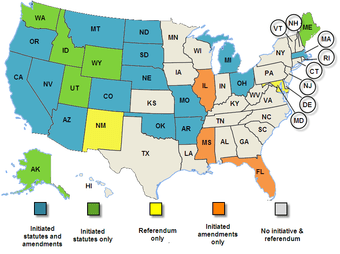
a process that enables citizens to bypass their state legislature by placing proposed statutes and, in some states, constitutional amendments on the ballot. The first state to adopt the initiative was South Dakota in 1898. Since then, 23 other states have included the initiative process in their constitutions, the most recent being Mississippi in 1992. That makes a total of 24 states with an initiative process.

There are both direct and indirect initiative processes. In a direct initiative process, qualifying proposals go directly on the ballot. In an indirect system, the initiative is first submitted to the state legislatures who may act on the proposal. Depending on the state, the initiative question will go on the ballot if the state legislature rejects the proposal, submits a different one, or takes no action. In some states, the legislature may also submit a competing measure that will appear on the ballot alongside the original ballot proposal. States with an indirect process include: Maine, Massachusetts, Michigan, Mississippi, Nevada and Ohio. In Utah and Washington, there are processes in place for either a direct or indirect ballot initiative process.

A referendum, on the other hand,

is a general term which refers to a measure that appears on the ballot. There are two primary types of referenda: the legislative referendum, whereby the Legislature refers a measure to the voters for their approval, and the popular referendum, a measure that appears on the ballot as a result of a voter petition drive.

What are the differences between legislative and popular referenda?

Legislatures are often required to refer certain measures to the ballot for voter approval. For instance, changes to the state constitution must be approved by voters before they can take effect. Many state legislatures are also required by their state constitutions to refer bond measures and tax changes to the voters. Although this is not always the case, legislative referenda tend to be less controversial than citizen initiatives, are more often approved by voters than citizen initiatives, and often receive higher vote thresholds. Legislative referenda may appear on the ballot in all 50 states.

The popular referendum is a device which allows voters to approve or repeal an act of the Legislature. If the Legislature passes a law that voters do not approve of, they may gather signatures to demand a popular vote on the law. Generally, there is a 90-day period after the law is passed during which the petitioning must take place. Once enough signatures are gathered and verified, the new law appears on the ballot for a popular vote. During the time between passage and the popular vote, the law may not take effect. If voters approve of the law, it takes effect as scheduled. If voters reject the law, it is voided and does not take effect. 24 states have the popular referendum. Most of them are also initiative states.

The map below, provided by Ballotpedia, shows which states use ballot initiatives and referenda.

340px-us_map_ir

You can learn more about the history of initiatives and referenda in the United States here.

America’s Mock Election Results for the 2016 Presidential Election

Students around the country took part in a nationwide mock election hosted by the University of Virginia Center for Politics’ Youth Leadership Initiative and America’s Mock Election.

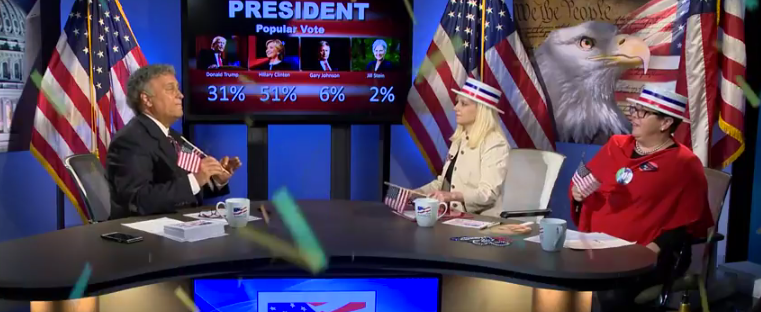
I co-hosted the results show about how the students voted.

Video of the results show is available here. In addition to discussing how the students voted in each state, we also discussed strategies for teaching about the election, the history of voting rights in the United States, and the importance of civics education.

The students who voted in the YLI/America’s Mock Election student mock election overwhelmingly favored Hillary Clinton. Clinton won 51% of the popular vote, while Donald Trump won 31% of the vote.

Scholastic also held a nationwide student mock election, where Clinton also prevailed – winning 52% of the student vote, while her Republican opponent, Donald Trump, received 35%.

It will be interesting to compare the results of these student mock elections with the final election results on November 8.