The Founders on the Presidency

As someone who runs a non-profit (www.ConSource.org) focused on making U.S. constitutional history more accessible to and understandable by the American public , I often spend my time steeped in the writing of the Founding Fathers. We are now exactly one month from election day and so I thought I’d share some of their thoughts on the presidency in today’s blog post.

(1) “This process of election affords a moral certainty, that the office of president, will never fall to the lot of any man, who is not in an eminent degree endowed with the requisite qualifications. Talents for low intrigue and the little arts of popularity may alone suffice to elevate a man to the first honors in a single state; but it will require other talents and a different kind of merit to establish him in the esteem and confidence of the whole union, or of so considerable a portion of it as would be necessary to make him a successful candidate for the distinguished office of president of the United States. It will not be too strong to say, that there will be a constant probability of seeing the station filled by characters pre-eminent for ability and virtue.” – Alexander Hamilton, The Federalist No. 68 

(2) “The powers of the Executive of the U. States are more definite, & better understood perhaps than those of almost any other Country; and my aim has been, & will continue to be, neither to stretch, nor relax from them in any instance what ever, unless imperious circumstances shd. render the measure indispensible [sic].” – George Washington to Alexander Hamilton (July 2, 1794)

(3) “The next good quality that I remark is, that the executive authority is one. By this means we obtain very important advantages. We may discover from history, from reason, and from experience, the security which this furnishes. The executive power is better to be trusted when it has no screen. Sir, we have a responsibility in the person of our President; he cannot act improperly, and hide either his negligence or inattention; he cannot roll upon any other person the weight of his criminality; no appointment can take place without his nomination; and he is responsible for every nomination he makes. We securevigor. We well know what numerous executives are. We know there is neither vigor, decision, nor responsibility, in them. Add to all this, that officer is placed high, and is possessed of power far from being contemptible; yet not a single privilege is annexed to his character; far from being above the laws, he is amenable to them in his private character as a citizen, and in his public character by impeachment.” – James Wilson, Pennsylvania Ratifying Convention (December 4, 1787)

(4) “There is an idea, which is not without its advocates, that a vigorous executive is inconsistent with the genius of republican government. The enlightened well wishers to this species of government must at least hope that the supposition is destitute of foundation; since they can never admit its truth, without at the same time admitting the condemnation of their own principles. Energy in the executive is a leading character in the definition of good government. It is essential to the protection of the community against foreign attacks: It is not less essential to the steady administration of the laws, to the protection of property against those irregular and high handed combinations, which sometimes interrupt the ordinary course of justice, to the security of liberty against the enterprises and assaults of ambition, of faction and of anarchy. Every man the least conversant in Roman story knows how often that republic was obliged to take refuge in the absolute power of a single man, under the formidable title of dictator, as well against the intrigues of ambitious individuals, who aspired to the tyranny, and the seditions of whole classes of the community, whose conduct threatened the existence of all government, as against the invasions of external enemies, who menaced the conquest and destruction of Rome. . . . Taking it for granted, therefore that all men of sense will agree in the necessity of an energetic executive; it will only remain to inquire, what are the ingredients which constitute this energy–how far can they be combined with those other ingredients which constitute safety in the republican sense? And how far does this combination characterise the plan, which has been reported by the convention? The ingredients, which constitute energy in the executive, are first unity, secondly duration, thirdly an adequate provision for its support, fourthly competent powers.” – Alexander Hamilton, The Federalist No. 70

(5) “If your American chief be a man of ambition and abilities, how easy is it for him to render himself absolute! The army is in his hands, and if he be a man of address, it will be attached to him, and it will be the subject of long meditation with him to seize the first auspicious moment to accomplish his design; and, sir, will the American spirit solely relieve you when this happens? I would rather infinitely–and I am sure most of this Convention are of the same opinion–have a king, lords, and commons, than a government so replete with such insupportable evils. If we make a king, we may prescribe the rules by which he shall rule his people, and interpose such checks as shall prevent him from infringing them; but the President, in the field, at the head of his army, can prescribe the terms on which he shall reign master, so far that it will puzzle any American ever to get his neck from under the galling yoke. I cannot with patience think of this idea. If ever he violates the laws, one of two things will happen: he will come at the head of his army, to carry every thing before him; or he will give bail, or do what Mr. Chief Justice will order him. If he be guilty, will not the recollection of his crimes teach him to make one bold push for the American throne? Will not the immense difference between being master of every thing, and being ignominiously tried and punished, powerfully excite him to make this bold push? But, sir, where is the existing force to punish him? Can he not, at the head of his army, beat down every opposition? Away with your President! we shall have a king: the army will salute him monarch: your militia will leave you, and assist in making him king, and fight against you: and what have you to oppose this force? What will then become of you and your rights? Will not absolute despotism ensue?” – Patrick Henry, Virginia Ratifying Convention (June 5, 1788)

This seems like a good time to encourage folks to read Article II of the Constitution, as well. You can read it here.

Facts are Stubborn Things: Take Time This Election Season to Educate Yourself About the Facts

In 1770, John Adams famously said: “Facts are stubborn things; and whatever may be our wishes, our inclinations, or the dictates of our passion, they cannot alter the state of facts and evidence.”

In 1779, Thomas Jefferson wrote “Illuminate, as far as practicable, the minds of the people at large, and more especially to give them knowledge of those facts, which history exhibiteth, that, possessed thereby of the experience of other ages and countries, they may be enabled to know ambition under all its shapes, and prompt to exert their natural powers to defeats its purposes.”

John Jay also famously said “I consider knowledge to be the soul of a republic, and as the weak and wicked are generally in alliance, as much care should be taken to diminish the number of the former as of the latter. Education is the way to do this, and nothing should be left undone to afford all ranks of people the means of obtaining a proper degree of it at a cheap and easy rate.”

In a 1786 essay, Dr. Benjamin Rush wrote “Freedom can exist only in the society of knowledge.”

James Madison in his 1810 address to Congress said “It is universally admitted that a well-instructed people alone can be permanently a free people.”

The Founding generation understood that facts matter.  And it is our responsibility as citizens to educate ourselves about the facts and to not allow the passions of the moment to overrule reason. Take time this election season to thoughtfully consider the veracity of claims made by candidates. Don’t give in to the allure of a post-factual society. Facts are stubborn, and foundational. You need facts to fully understand the world, and the free world requires a well-instructed people. In the words of James Monroe, “[it] is only when the People become ignorant and corrupt . . . that they are incapable of exercising their sovereignty.”

Announcing the Fifth Annual Harlan Institute -ConSource Virtual Supreme Court Competition for High School Students

The Harlan Institute and The Constitutional Sources Project (ConSource) announce their Fifth Annual Virtual Supreme Court competition. This competition offers teams of two high school students the opportunity to research cutting-edge constitutional law, write persuasive appellate briefs, argue against other students through video chats, and try to persuade a panel of esteemed attorneys during oral argument that their side is correct. This year the competition focuses on Trinity Lutheran Church v. Sarah Parker Pauley, exploring whether funding a playground associated with a Church violates the Establishment Clause of the First Amendment.

ConSource Executive Director Julie Silverbrook believes “the Virtual Supreme CourtCompetition is an excellent opportunity for high school students to develop core civic and constitutional literacy skills. Students are required to read the text of the Constitution, explore the history behind a contemporary constitutional dispute, and construct persuasive arguments. We know that experiences like theVirtual Supreme Court Competition leave a lifelong impression on participating students and encourages them to stay informed and engaged throughout their lives.”

Tanya Reyna, a winner of the 2016 Virtual Supreme Court Competition, noted that while her local community in Texas suffers from “an influx of drugs and criminals” and has dampened her views about the future of her community and the nation, her experience with the Virtual Supreme Court Competition “eased [her] apprehension [about the future].” She said that meeting “students, lawyers, professors, and judges” willing to take time out of their busy schedules “to inform younger generations of citizens about our legal system,” demonstrated to her that “as long as there are citizens like them, America will continue to hold a bright future.”

The members of the grand-prize winning team, the Solicitors General of FantasySCOTUS, will receive a free trip, including airfare and one night of hotel accommodations, to Washington, D.C. or New York City to attend the ConSource Constitution Day celebration in September 2017. Members of the runner-up team will each receive an iPad Mini. Members of the third and fourth place teams will each receive a $100 Amazon.com Gift card.

Screen shot 2016-10-02 at 10.51.13 PM.png


Josh Blackman, President of the Harlan Institute, champions theVirtual Supreme Court Competition, which provides an “unprecedented opportunity for high school students to engage in the highest level of appellate advocacy. They research the issues, write briefs, and make oral arguments before our judges. The strong caliber of the winning teams last year really impressed us. We can’t wait to see how the teams perform this year!”

Teachers interested in participating should sign up at HarlanInstitute.org, add an account, read the problem, and get started!

Please send any questions to info@harlaninstitute.orgor info@consource.org.

If you’re interested in supporting the Virtual Supreme Court Competition and the extraordinary students who participate across the country, please consider making a donation today!

A Brief History of the Office of the Vice President of the United States

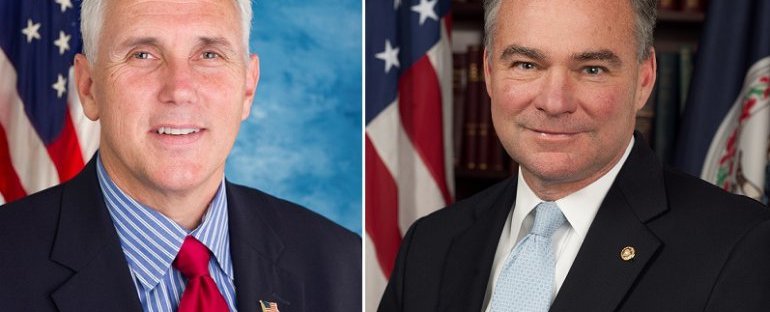
Tonight, Senator Tim Kaine and Governor Mike Pence, the vice presidential candidates for Hillary Clinton and Donald Trump respectively, will debate at Longwood University. This seems like a good opportunity to discuss the office of the Vice President of the United States. It is an office that is little understood and often ridiculed.

Of the office, John Adams said “But my country has in its wisdom contrived for me the most insignificant office that ever the invention of man contrived or his imagination conceived. And as I can do neither good nor evil, I must be borne away by others, and meet the common fate.”

Thomas Jefferson, who served as vice president under John Adams, wrote “The second office of the land is honorable and easy, the first is but a splendid misery.”

Adams and Jefferson are among the remarkable individuals who have served in the office of the vice president. The Senate Historical Office succinctly summarizes the individuals who have served in the office

Fourteen of the former vice presidents became president of the United States—more than half of them after a president had died. One defeated the sitting president with whom he served. One murdered a man and became a fugitive. One joined the Confederate army and led an invasion of Washington, D.C. One was the wealthiest banker of his era. Three received the Nobel Peace Prize and one composed a popular melody. One served as a corporal in the Coast Guard while vice president. One had cities in Oregon and Texas named after him. Two resigned from the office. Two were never elected by the people. One was the target of a failed assassination plot. Another was mobbed in his car while on a goodwill mission. Seven died in office—one in his room in the U.S. Capitol and two fatally stricken while on their way to preside over the Senate. And one piano-playing vice president suffered political repercussions from a photograph showing him playing that instrument while a famous movie actress posed seductively on top of it.

The Constitution and the Vice Presidency

Selecting the Vice President

Article II, Section 1 of the Constitution provides –

The Electors shall meet in their respective States, and vote by Ballot for two Persons, of whom one at least shall not be an Inhabitant of the same State with themselves. And they shall make a List of all the Persons voted for, and of the Number of Votes for each; which List they shall sign and certify, and transmit sealed to the Seat of the Government of the United States, directed to the President of the Senate. The President of the Senate shall, in the Presence of the Senate and House of Representatives, open all the Certificates, and the Votes shall then be counted. The Person having the greatest Number of Votes shall be the President, if such Number be a Majority of the whole Number of Electors appointed; and if there be more than one who have such Majority, and have an equal Number of Votes, then the House of Representatives shall immediately chuse by Ballot one of them for President; and if no Person have a Majority, then from the five highest on the List the said House shall in like Manner chuse the President. But in chusing the President, the Votes shall be taken by States, the Representation from each State having one Vote; A quorum for this Purpose shall consist of a Member or Members from two thirds of the States, and a Majority of all the States shall be necessary to a Choice. In every Case, after the Choice of the President, the Person having the greatest Number of Votes of the Electors shall be the Vice President. But if there should remain two or more who have equal Votes, the Senate shall chuse from them by Ballot the Vice President. (Emphasis Added)

The Election of 1800 and the 12th Amendment

In the contentious election of 1800 between John Adams and Thomas Jefferson, Jefferson and his running mate Aaron Burr ended up receiving the same number of electoral votes. Per the language in Article II, Section 1 (see above), the decision of who would serve as president fell to the House of Representatives. After 35 separate ballots where neither candidate was able to secure a majority, Jefferson was finally able to prevail over Burr. Jefferson became president and Burr served as vice president.

How could this happen? How could candidates running together end up running against each other in the event of a tie? Prior to the passage of the 12th Amendment, the Constitution did not differentiate between presidential and vice presidential candidates. Each elector cast two votes without regard for political affiliation. Whomever received the most votes became president and the runner-up became vice president. Either candidate could win either office, regardless of whether they initially set out to run in one position or the other. The election of 1800 put pressure on Congress to fix this system, and so by 1804 the 12th Amendment was passed by Congress and ratified by the requisite number of states. The Amendment reads –

The electors shall meet in their respective states and vote by ballot for President and Vice-President, one of whom, at least, shall not be an inhabitant of the same state with themselves; they shall name in their ballots the person voted for as President, and in distinct ballots the person voted for as Vice-President, and they shall make distinct lists of all persons voted for as President, and of all persons voted for as Vice-President, and of the number of votes for each, which lists they shall sign and certify, and transmit sealed to the seat of the government of the United States, directed to the President of the Senate;–The President of the Senate shall, in the presence of the Senate and House of Representatives, open all the certificates and the votes shall then be counted;–the person having the greatest number of votes for President, shall be the President, if such number be a majority of the whole number of electors appointed; and if no person have such majority, then from the persons having the highest numbers not exceeding three on the list of those voted for as President, the House of Representatives shall choose immediately, by ballot, the President. But in choosing the President, the votes shall be taken by states, the representation from each state having one vote; a quorum for this purpose shall consist of a member or members from two-thirds of the states, and a majority of all the states shall be necessary to a choice. And if the House of Representatives shall not choose a President whenever the right of choice shall devolve upon them, before the fourth day of March next following, then the Vice-President shall act as President, as in the case of the death or other constitutional disability of the President. The person having the greatest number of votes as Vice-President, shall be the Vice-President, if such number be a majority of the whole number of electors appointed, and if no person have a majority, then from the two highest numbers on the list, the Senate shall choose the Vice-President; a quorum for the purpose shall consist of two-thirds of the whole number of Senators, and a majority of the whole number shall be necessary to a choice. But no person constitutionally ineligible to the office of President shall be eligible to that of Vice-President of the United States. (Emphasis added)

Duties of the Vice President Under the Constitution

Under Article II, Section I, of the Constitution, the Vice President will act as president when the sitting president is removed from office, or if (s)he dies, resigns or is unable to discharge the powers and duties of the office.

In case of the removal of the President from office, or of his death, resignation, or inability to discharge the powers and duties of the said office, the same shall devolve on the Vice President, and the Congress may by law provide for the case of removal, death, resignation or inability, both of the President and Vice President, declaring what officer shall then act as President, and such officer shall act accordingly, until the disability be removed, or a President shall be elected.

Under Article I, Section III,

The Vice President of the United States shall be President of the Senate, but shall have no vote, unless they be equally divided.

Furthermore, Article II, Section 1 provides that the President of the Senate (the Vice President) shall receive from the states the tally of electoral ballots cast for president and vice president and open the certificates “in the Presence of the Senate and House of Representatives,” so that the total votes could be counted. In 2000, this led to a famously awkward moment when then-Vice President Al Gore had to formally certify his opponent in the 2000 presidential race, George W. Bush, as president of the United States.

The decision of the Framers to have the Vice President preside over the Senate was not an uncontroversial one. Joseph Story on his Commentaries on the Constitution explained

§ 733. Some objections have been taken to the appointment of the vice president to preside in the senate. It was suggested in the state conventions, that the officer was not only unnecessary, but dangerous; that it is contrary to the usual course of parliamentary proceedings to have a presiding officer, who is not a member; and that the state, from which he comes, may thus have two votes, instead of one. It has also been coldly remarked by a learned commentator, that “the necessity of providing for the case of a vacancy in the office of president doubtless gave rise to the creation of that officer; and for want of something else for him to do, whilst there is a president in office, he seems to have been placed, with no very great propriety, in the chair of the senate.”

There were additional separation of powers concerns raised during the Constitutional Convention. George Mason of Virginia

thought the office of vice-President an encroachment on the rights of the Senate; and that it mixed too much the Legislative & Executive, which as well as the Judiciary departments, ought to be kept as separate as possible. 

So what of the vice presidency today? Nearly 1/3 of Americans can’t name our current Vice President. All the more reason to study up on the history of the office!


A Civic Holiday for SCOTUS Enthusiasts: The First Monday in October

28 U.S.C § 2 states that “The Supreme Court shall hold at the seat of government a term of court commencing on the first Monday in October of each year and may hold such adjourned or special terms as may be necessary.”

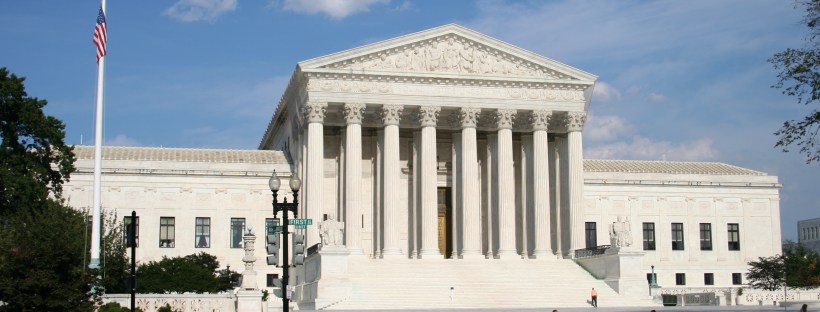
And so the first Monday in October has become an unofficial civic holiday of sorts for followers of the United States Supreme Court. And so it seems only appropriate to spend some time discussing the history of the United States Supreme Court.

Article III, §1 of the United States Constitution states that “[t]he judicial Power of the United States, shall be vested in one supreme Court, and in such inferior Courts as the Congress may from time to time ordain and establish.” The Supreme Court of the United States was created in accordance with this provision and by authority of the Judiciary Act of September 24, 1789. It was organized on February 2, 1790.

Article III, §2 of the Constitution sets out the jurisdiction of the Supreme Court and provides that

“The judicial Power shall extend to all Cases, in Law and Equity, arising under this Constitution, the Laws of the United States, and Treaties made, or which shall be made, under their Authority;-to all Cases affecting Ambassadors, other public Ministers and Consuls;-to all Cases of admiralty and maritime Jurisdiction;-to Controversies to which the United States shall be a Party;-to Controversies between two or more States;—between a State and Citizens of another State;-between Citizens of different States;—between Citizens of the same State claiming Lands under Grants of different States, and between a State, or the Citizens thereof, and foreign States, Citizens or Subjects.

“In all Cases affecting Ambassadors, other public ministers and Consuls, and those in which a State shall be Party, the supreme Court shall have original Jurisdiction. In all the other Cases before mentioned, the supreme Court shall have appellate jurisdiction, both as to Law and Fact, with such Exceptions, and under such Regulations as the Congress shall make.”

Under authority given to Congress by the Constitution, various statutes have been passed conferring appellate jurisdiction upon the U.S. Supreme Court.

The U.S. Supreme Court consists of the Chief Justice of the United States and 8 associate justices (the number currently fixed by statute in 28 U.S.C. §1).

Article III, §1 provides that “[t]he Judges, both of the supreme and inferior Courts, shall hold their Offices during good Behaviour, and shall, at stated Times, receive for their Services, a Compensation, which shall not be diminished during their Continuance in Office.”

The current justices of the United States Supreme Court include:

(1) Chief Justice John G. Roberts

(2) Associate Justice Anthony M. Kennedy

(3) Associate Justice Clarence Thomas

(4) Associate Justice Ruth Bader Ginsburg

(5) Associate Justice Stephen G. Breyer

(6) Associate Justice Samuel A. Alito, Jr.

(7) Associate Justice Sonio Sotomayor

(8) Associate Justice Elena Kagan

There is currently one vacancy on the Court. Chief Judge Merrick Garland of the United States Court of Appeals for the District of Columbia Circuit has been nominated by President Obama to fill that vacancy. The Senate has not yet voted to confirm Garland’s nomination. Article II, §2 of the Constitution states that the President “shall nominate, and by and with the advice and consent of the Senate, shall appoint . . . judges of the Supreme Court.”


Thurgood Marshall was Sworn in as the First Black U.S. Supreme Court Justice 49 Years Ago Today

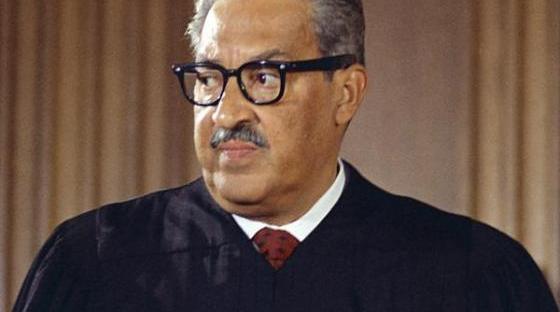
On October 2, 1967, Thurgood Marshall was sworn in by Chief Justice Earl Warren as the first black United States Supreme Court Justice. On August 30 of that year, after heated debate, the Senate voted 69 to 11 to confirm his nomination to the Supreme Court by President Lyndon Baines Johnson.

Marshall was the great-grandson of a slave, who spent most of his career fighting for civil rights. He served as chief counsel for the National Association for the Advancement of Colored People (NAACP) in the 1940s and 1950s, where he was the architect of the legal strategy that ended the era of state-sanctioned segregation. The most notable case he argued and won was Brown v. Board of Education of Topeka. In Brown, the Supreme Court held that separate but equal educational facilities for racial minorities is inherently unequal violating the Equal Protection Clause of the Fourteenth Amendment.

In 1961, Marshall was appointed by John F. Kennedy to the United States Court of Appeals for the Second Circuit. He wrote over 150 decisions on a number of important constitutional matters while on the Second Circuit. In 1965, President Lyndon Johnson appointed Marshall to the office of U.S. Solicitor General, where he again successfully argued cases before the United States Supreme Court.

On June 13, 1967, Johnson nominated Marshall to fill the seat of retiring Supreme Court Justice Tom Clark. Of his decision to appoint Marshall as the first black Supreme Court Justice, Johnson said it was “the right thing to do, the right time to do it, the right man, and the right place.”

Marshall served on the Supreme Court for 23 years, and retired in October 1991.

When Marshall died two years later in 1993, then-Chief Justice William Rehnquist said at his funeral service “As a lawyer and judge, Thurgood Marshall left an indelible mark, not just on the law, but on his country.”


Event Announcement: I’m Speaking on a Panel About George Mason at the National Constitution Center on October 5

Event Information (including how to register) available here and below

THE RELUCTANT STATESMAN: GEORGE MASON AND THE AMERICAN TRADITION OF DISSENT

Wednesday, October 5, 2016 at 12 – 2:30 p.m.

National Constitution Center

525 Arch Street | Philadelphia, PA

Admission: Free


In a special afternoon symposium, acclaimed historians and scholars Fergus Bordewich, Linda Monk, Julie SilverbrookStephen Solomon, David O. Stewart, and Ralph Young discuss George Mason — one of the three dissenters of the Constitution — and the role dissent has played in shaping America. This program is presented in partnership with George Mason’s Gunston Hall.

12:00 – 12:05 p.m.: Welcome Remarks
Scott Stroh, Executive Director, Gunston Hall

12:05 – 12:20 p.m.: Keynote Address
Tom Donnelly, Senior Fellow for Constitutional Studies, National Constitution Center

12:20 – 1:20 p.m.: George Mason and America’s Founding: Mason’s Constitutional Legacy
Historians David O. Stewart and Fergus Bordewich, and Julie Silverbrook, executive director of The Constitutional Sources Project, discuss Mason’s constitutional legacy, including his influence on the Declaration of Independence, the U.S. Constitution, and the Bill of Rights, and his relationship with key Founding Fathers. Scott Stroh, executive director at Gunston Hall, moderates.

1:30 – 2:30 p.m.: George Mason, the First Amendment, and the American Tradition of Dissent
Constitutional scholar Linda Monk, Stephen Solomon, author of Revolutionary Dissent: How the Founding Generation Created the Freedom of Speech, and Ralph Young, author of Dissent: The History of an American Idea, discuss Mason’s role as a key dissenter, the birth of the First Amendment, and the importance of the tradition of dissent in American history. Michael Gerhardt, scholar-in-residence at the National Constitution Center, moderates.

Watch live on October 5 at noon: http://constitutioncenter.org/calendar/the-reluctant-statesman-george-mason-and-the-american-tradition-of-dissent

In Honor of the 11th Anniversary of John Roberts Being Sworn in as the 17th Chief Justice of the United States Supreme Court, A Brief History of Our Nation’s Chief Justices

On September 29, 2005, John G. Roberts, Jr., was sworn in as the 17th Chief Justice of the United States Supreme Court. You can watch his swearing in ceremony here.

This seems like a nice opportunity to spotlight all of our nation’s chief justices (note: all images and biographical information are provided below from the Supreme Court Historical Society):

(1) Chief Justice John Jay, 1789-1795

001_jay

JOHN JAY was born on December 12, 1745, in New York, New York, and grew up in Rye, New York. He was graduated from King’s College (Now Columbia University) in 1764. He read law in a New York law firm and was admitted to the bar in 1768. Jay served as a delegate to both the First and Second Continental Congresses, and was elected President of the Continental Congress in 1778. He also served in the New York State militia. In 1779, Jay was sent on a diplomatic mission to Spain in an effort to gain recognition and economic assistance for the United States. In 1783, he helped to negotiate the Treaty of Paris, which marked the end of the Revolutionary War. Jay favored a stronger union and contributed five essays to The Federalist Papers in support of the new Constitution. President George Washington nominated Jay the first Chief Justice of the United States on September 24, 1789. The Senate confirmed the appointment on September 26, 1789. In April 1794, Jay negotiated a treaty with Great Britain, which became known as the Jay Treaty. After serving as Chief Justice for five years, Jay resigned from the Supreme Court on June 29, 1795, and became Governor of New York. He declined a second appointment as Chief Justice in 1800, and President John Adams then nominated John Marshall for the position.

(2) Chief Justice John Rutledge, 1795

002_rutledge

JOHN RUTLEDGE was born in Charleston, South Carolina, in September 1739. He studied law at the Inns of Court in England, and was admitted to the English bar in 1760. In 1761, Rutledge was elected to the South Carolina Commons House of Assembly. In 1764, he was appointed Attorney General of South Carolina by the King’s Governor and served for ten months. Rutledge served as the youngest delegate to the Stamp Act Congress of 1765, which petitioned King George III for repeal of the Act. Rutledge headed the South Carolina delegation to the Constitutional Convention in 1787 and served as a member of the South Carolina Ratification Convention the following year. On September 24, 1789, President George Washington nominated Rutledge one of the original Associate Justices of the Supreme Court of the United States. The Senate confirmed the appointment two days later. After one year on the Supreme Court, Rutledge resigned in 1791 to become Chief Justice of South Carolina’s highest court. On August 12, 1795, President George Washington nominated Rutledge Chief Justice of the United States. He served in that position as a recess appointee for four months, but the Senate refused to confirm him.

(3) Chief Justice Oliver Ellsworth, 1796-1800

003_ellsworth

OLIVER ELLSWORTH was born on April 29, 1745, in Windsor, Connecticut. Ellsworth attended Yale College until the end of his sophomore year, and then transferred to the College of New Jersey (now Princeton University), where he was graduated in 1766. He read law in a law office for four years and was admitted to the bar in 1779. Ellsworth was a member of the Connecticut General Assembly from 1773 to 1776. From 1777 to 1784, he served as a delegate to the Continental Congress and worked on many of its committees. After service on the Connecticut Council of Safety and the Governor’s Council, he became a Judge of the Superior Court of Connecticut in 1785. As a delegate to the Federal Constitutional Convention in Philadelphia in 1787, Ellsworth helped formulate the “Connecticut Compromise,” which resolved a critical debate between the large and small states over representation in Congress. Ellsworth was elected to the First Federal Congress as a Senator. There he chaired the committee that drafted the Judiciary Act of 1789, which established the federal court system. On March 3, 1796, President George Washington nominated Ellsworth Chief Justice of the United States and the Senate confirmed the appointment the following day. He resigned from the Supreme Court on September 30, 1800.

(4) Chief Justice John Marshall, 1801-1835

004_marshall

JOHN MARSHALL was born on September 24, 1755, in Germantown, Virginia. Following service in the Revolutionary War, he attended a course of law lectures conducted by George Wythe at the College of William and Mary and continued the private study of law until his admission to practice in 1780. Marshall was elected to the Virginia House of Delegates in 1782, 1787, and 1795. In 1797, he accepted appointment as one of three envoys sent on a diplomatic mission to France. Although offered appointment to the United States Supreme Court in 1798, Marshall preferred to remain in private practice. Marshall was elected to the United States House of Representatives in 1799, and in 1800 was appointed Secretary of State by President John Adams. The following year, President Adams nominated Marshall Chief Justice of the United States, and the Senate confirmed the appointment on January 27, 1801. Notwithstanding his appointment as Chief Justice, Marshall continued to serve as Secretary of State throughout President Adams’ term and, at President Thomas Jefferson’s request, he remained in that office briefly following Jefferson’s inauguration. Marshall served as Chief Justice for 34 years, the longest tenure of any Chief Justice. During his tenure, he helped establish the Supreme Court as the final authority on the meaning of the Constitution.

(5) Chief Justice Roger Brooke Taney, 1836-1864
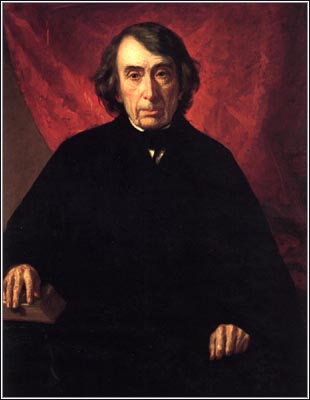
005_taney

ROGER BROOKE TANEY was born in Calvert County, Maryland, on March 17, 1777. He was graduated from Dickinson College in 1795. After reading law in a law office in Annapolis, Maryland, he was admitted to the bar in 1799. In the same year, he was elected to the Maryland House of Delegates. Defeated for re-election, he was elected to the State Senate in 1816 and served until 1821. In 1823, Taney moved to Baltimore, where he continued the practice of law. From 1827 to 1831, Taney served as Attorney General for the State of Maryland. In 1831, Taney was appointed Attorney General of the United States by President Andrew Jackson. On September 23, 1833, Taney received a recess appointment as Secretary of the Treasury. When the recess appointment terminated, Taney was formally nominated to serve in that position, but the Senate declined to confirm the appointment in 1834. In 1835, Taney was nominated as Associate Justice by President Jackson to succeed Justice Duvall, but the Senate failed to confirm him. On December 28, 1835, President Jackson nominated Taney Chief Justice of the United States. The Senate confirmed the appointment on March 15, 1836. Taney served as Chief Justice for twenty-eight years.

(6) Chief Justice Salmon Portland Chase, 1864-1873

006_chase.jpg

SALMON PORTLAND CHASE was born in Cornish, New Hampshire, on January 13, 1808, and was raised in Ohio. He returned to New Hampshire to attend Dartmouth College and was graduated in 1826 at the age of eighteen. He then moved to Washington, D.C., where he read law under Attorney General William Wirth. Chase was admitted to the bar in 1829 and moved to Cincinnati, Ohio, where he worked as a lecturer, writer, and editor while he established a legal practice. Chase became involved in the anti-slavery movement, and in 1848 he helped to write the platform of the Free Soilers Party. In 1848, the Ohio legislature elected Chase to the United States Senate, where he served one six-year term. In 1855, he was elected to a four-year term as Governor of Ohio, and in 1860 he was re-elected to the United States Senate. Chase resigned his Senate seat after only two days to accept a wartime appointment by President Abraham Lincoln as Secretary of the Treasury. He resigned from that post in June 1864. Six months later, on December 6, 1864, President Lincoln nominated Chase Chief Justice of the United States. The Senate confirmed the appointment on December 15, 1864. Chase served as Chief Justice for eight years

(7) Chief Justice Morrison R. Waite, 1874-1888

007_waite

MORRISON R. WAITE was born in Lyme, Connecticut on November 29, 1816. He was graduated from Yale College in 1837 and moved to Ohio to read law with an attorney in Maumee City. Waite was admitted to the bar in 1839 and practiced in Maumee City until 1850. He then moved to Toledo, where he practiced until 1874. Waite was elected to the Ohio General Assembly in 1850 and served one term. He ran unsuccessfully for the United States House of Representatives in 1846 and 1862. Waite declined an appointment to the Ohio Supreme Court in 1863. In 1871, President Ulysses S. Grant appointed Waite to a Commission established to settle United States claims against Great Britain, arising out of the latter’s assistance to the Confederacy during the Civil War. The proceedings resulted in an award of $15.5 million in compensation to the United States. Upon his return from Europe, Waite was elected to the Ohio Constitutional Convention of 1873 and was unanimously selected to serve as its president. During the Convention, on January 19, 1874, President Grant nominated Waite Chief Justice of the United States. The Senate confirmed the appointment two days later. Waite served as Chief Justice for fourteen years.

(8) Chief Justice Melville Weston Fuller, 1888-1910

008_fuller

MELVILLE WESTON FULLER was born in Augusta, Maine, on February 11, 1833, and was graduated from Bowdoin College in 1853. Fuller read law in Bangor, Maine, and was admitted to the bar after six months of study at Harvard Law School. In 1855, Fuller began to practice law in Augusta, Maine, and was elected President of the Augusta Common Council and appointed city solicitor. In 1856, Fuller moved west to Chicago, where he established a law practice and became active in politics. He was elected to the Illinois House of Representatives in 1863 and served one term. In succeeding years he was offered the positions of Chairman of the Civil Service Commission and Solicitor General of the United States but declined both. President Grover Cleveland nominated Fuller Chief Justice of the United States on April 30, 1888. The Senate confirmed the appointment on July 20, 1888. While on the Court, Fuller served on the Venezuela-British Guiana Border Commission and the Court of Permanent Arbitration at the Hague. Fuller served twenty-one years as Chief Justice.

(9) Chief Justice Edward Douglas White, 1910-1921

009_white-1

EDWARD DOUGLAS WHITE was born in the Parish of Lafourche, Louisiana, on November 3, 1845. While White was studying at Georgetown College (now Georgetown University) the Civil War began and he returned home to join the Confederate Army. He was captured in 1863 by Union troops and remained in captivity until the end of the War. Upon his release in 1865, White read law and attended the University of Louisiana. He was admitted to the bar in 1866 and established a law practice in New Orleans. White was elected to the Louisiana State Senate in 1874, and from 1878 to 1880 he served on the Louisiana Supreme Court. In 1891, the State Legislature elected him to the United States Senate. President Grover Cleveland nominated White to the Supreme Court of the United States on February 19, 1894. The Senate confirmed the appointment the same day. White had served for sixteen years on the Court when, on December 12, 1910, President William H. Taft nominated him Chief Justice of the United States. The Senate confirmed the appointment the same day. White was the first Associate Justice to be appointed Chief Justice. White served on the Court for a total of twenty-six years, ten of them as Chief Justice.

(10) Chief Justice William Howard Taft, 1921-1930

010_taft (1).jpg

WILLIAM HOWARD TAFT was born in Cincinnati, Ohio, on September 15, 1857. He was graduated from Yale University in 1878 and from Cincinnati Law School in 1880. Taft began his career in private practice in Cincinnati. After serving as an assistant prosecutor and a Judge of the Ohio Superior Court, he was appointed Solicitor General of the United States in 1890. From 1892 to 1900, Taft served as a Judge on the United States Court of Appeals for the Sixth Circuit. In 1901, he was named Civilian Governor of the Philippines. In 1904, President Theodore Roosevelt appointed Taft Secretary of War. Taft was elected President of the United States in 1908 and served one term. After leaving the White House, Taft taught constitutional law at Yale University and appeared frequently on the lecture circuit. From 1918 to 1919, he served as Joint Chairman of the War Labor Board. President Warren G. Harding nominated Taft Chief Justice of the United States on June 30, 1921. The senate confirmed the appointment the same day, making Taft the only person in history to have been both President and Chief Justice. As Chief Justice he focused on the administration of justice and at his request Congress created the Conference of Senior Circuit (Chief) Judges to oversee court administration. This body became the Judicial Conference of the United States. Taft retired from the Court on February 3, 1930, after serving eight years as Chief Justice.

(11) Chief Justice Charles Evans Hughes, 1930 – 1941

011_hughes-1

CHARLES EVANS HUGHES was born in Glens Falls, New York, on April 11, 1862. He was graduated in 1881 from Brown University and received a law degree from Columbia University in 1884. For the next twenty years, he practiced law in New York, New York, with only a three-year break to teach law at Cornell University. Hughes was elected Governor of New York in 1905 and re-elected two years later. On April 25, 1910, President William H. Taft nominated Hughes to the Supreme Court of the United States, and the Senate confirmed the appointment on May 2, 1910. Hughes resigned from the Court in 1916 upon being nominated by the Republican Party to run for president. After losing the election to Woodrow Wilson, he returned to his law practice in New York. Hughes served as Secretary of State from 1921 to 1925. He subsequently resumed his law practice while serving in the Hague as a United States delegate to the Permanent Court of Arbitration from 1926 to 1930. On February 3, 1930, President Herbert Hoover nominated Hughes Chief Justice of the United States, and the Senate confirmed the appointment on February 13, 1930. He served as Chairman of the Judicial Conference of the United States from 1930 to 1941. Hughes retired on July 1, 1941, after serving eleven years as Chief Justice.

(12) Chief Justice Harlan Fiske Stone, 1941-1946
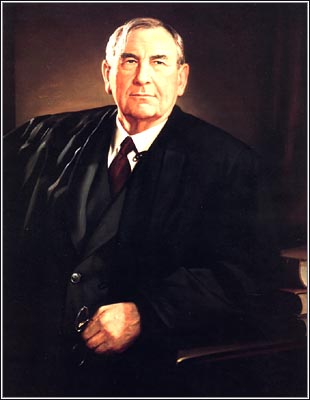
012_stone.jpg

HARLAN FISKE STONE was born on October 11, 1872, in Chesterfield, New Hampshire. He was graduated from Amherst College in 1894. After teaching high school chemistry for one year, he studied law at Columbia University, where he received his degree in 1898. In 1899, Stone was admitted to the bar and joined a New York law firm. For the next twenty-five years he divided his time between his practice and a career as a professor of law at Columbia University. He became Dean of the Law School in 1910 and remained in that position for thirteen years. In 1924, President Calvin Coolidge appointed Stone Attorney General of the United States. The following year, on January 5, 1925, President Coolidge nominated him to the Supreme Court of the United States. The Senate confirmed the appointment February 5, 1925. After sixteen years of service as an Associate Justice, Stone was nominated Chief Justice of the United States by President Franklin D. Roosevelt on June 12, 1941. He served as Chairman of the Judicial Conference of the United States from 1941 to 1946. Stone served a total of twenty years on the Court.

(13)  Chief Justice Fred M. Vinson, 1946-1953

013_vinson.jpg

FRED M. VINSON was born in Louisa, Kentucky, on January 22, 1890. He was graduated from Centre College in 1909 and from its Law School two years later. In 1911, Vinson was admitted to the bar and began to practice law in Ashland, Kentucky. Vinson became City Attorney of Ashland and, in 1921, Commonwealth’s Attorney for the County. He was elected to the United States House of Representatives in 1924 and was re-elected in 1926. He resumed his Ashland practice for two years and then won re-election to the House for four consecutive terms. In 1938, President Franklin D. Roosevelt appointed him to the United States Court of Appeals for the District of Columbia Circuit. Vinson served the Roosevelt Administration during World War II in a succession of positions starting in 1943: Director of the Office of Economic Stabilization, Administrator of the Federal Loan Agency, and Director of the Office of War Mobilization and Reconversion. In 1945, shortly after the end of the War, President Harry Truman appointed Vinson Secretary of the Treasury. On June 6, 1946, President Truman nominated Vinson Chief Justice of the United States. The Senate confirmed the appointment on June 20, 1946. He served as Chairman of the Judicial Conference of the United States from 1946 to 1953. Vinson served for seven years as Chief Justice.

(14) Chief Justice Earl Warren, 1953-1969

014_warren.jpg

EARL WARREN was born in Los Angeles, California, on March 19, 1891. He was graduated from the University of California in 1912 and went on to receive a law degree there in 1914. He practiced for a time in law offices in San Francisco and Oakland. In 1919, Warren became Deputy City Attorney of Oakland, beginning a life in public service. In 1920, he became Deputy Assistant District Attorney of Alameda County. In 1925, he was appointed District Attorney of Alameda County, to fill an unexpired term, and was elected and re-elected to the office in his own right in 1926, 1930, and 1934. In 1938, he was elected Attorney General of California. In 1942, Warren was elected Governor of California, and he was twice re-elected. In 1948, he was the Republican nominee for Vice President of the United States, and in 1952, he sought the Republican party’s nomination for President. On September 30, 1953, President Dwight D. Eisenhower nominated Warren Chief Justice of the United States under a recess appointment. The Senate confirmed the appointment on March 1, 1954. Warren served as Chairman of the Judicial Conference of the United States from 1953 to 1969 and as Chairman of the Federal Judicial Center from 1968 to 1969. He also chaired the commission of inquiry into the assassination of President John F. Kennedy in 1963. He retired on June 23, 1969, after fifteen years of service.

(15) Chief Justice Warren E. Burger, 1969-1986

015_burger.jpg

WARREN E. BURGER was born in St. Paul, Minnesota, on September 17, 1907. After pre-legal studies at the University of Minnesota in high classes, he earned a law degree in 1931 from the St. Paul College of Law (now William Mitchell College of Law) by attending four years of night classes while working in the accounting department of a life insurance company. He was appointed to the faculty of his law school upon graduation and remained on the adjunct faculty until 1946. Burger practiced with a St. Paul law firm from 1931 to 1953. In 1953, President Dwight D. Eisenhower appointed Burger Assistant Attorney General of the United States, Chief of the Civil Division of the Department of Justice. In 1955, President Eisenhower appointed him to the United States Court of Appeals for the District of Columbia Circuit, where he served until 1969. President Richard M. Nixon nominated Burger Chief Justice of the United States on May 22, 1969. The Senate confirmed the appointment on June 9, 1969, and he took office on June 23, 1969. In July 1985, President Ronald Reagan appointed Burger Chairman of the Commission on the Bicentennial of the United States Constitution. As Chief Justice he served as Chairman of the Judicial Conference of the United States and as Chairman of the Federal Judicial Center from 1969 to 1986. Burger retired from the Court on September 26, 1986, after seventeen years of service, and continued to direct the Commission on the Bicentennial of the United States Constitution from 1986 to 1992.

(16) Chief Justice William Hubbs Rehnquist, 1986-2005

016_rehnquist

WILLIAM HUBBS REHNQUIST was born in Milwaukee, Wisconsin, October 1, 1924. He served in the Army Air Corps during World War II as a weather observer in North Africa. Following the war, he attended college on the GI Bill, earning both a B.A. (Phi Beta Kappa) and M.A. in political science at Stanford University in 1948. Rehnquist received a second M.A., in government, from Harvard two years later. He then entered Stanford Law School, where he graduated first in his class in 1952. (The student who ranked third was Sandra Day, who later joined him on the Supreme Court.) In 1952, Rehnquist clerked for Justice Robert Jackson. Rehnquist served as assistant attorney general for the Justice Department’s Office of Legal Counsel under the Nixon Administration. Rehnquist served on the Supreme Court for 33 years, first as an Associate Justice from 1972 to 1986, and then as the 16th Chief Justice of the United States from 1986 until his death in 2005.

(17) Chief Justice John G. Roberts, Jr., 2005 – Present

John G. Roberts portrait

JOHN G. ROBERTS, Jr. was born in Buffalo, New York, January 27, 1955. He married Jane Marie Sullivan in 1996 and they have two children – Josephine and Jack. He received an A.B. from Harvard College in 1976 and a J.D. from Harvard Law School in 1979. He served as a law clerk for Judge Henry J. Friendly of the United States Court of Appeals for the Second Circuit from 1979–1980 and as a law clerk for then-Associate Justice William H. Rehnquist of the Supreme Court of the United States during the 1980 Term. He was Special Assistant to the Attorney General, U.S. Department of Justice from 1981–1982, Associate Counsel to President Ronald Reagan, White House Counsel’s Office from 1982–1986, and Principal Deputy Solicitor General, U.S. Department of Justice from 1989–1993. From 1986–1989 and 1993–2003, he practiced law in Washington, D.C. He was appointed to the United States Court of Appeals for the District of Columbia Circuit in 2003. President George W. Bush nominated him as Chief Justice of the United States, and he took his seat September 29, 2005.

“While Reason Retains Her Rule”: John Jay’s Words of Wisdom Strike A Chord in 2016

In 1788, John Jay published his “Address to the People of the State of New York on the Subject of the Constitution.”

I’m including below passages from his remarks that I believe should be read and reflected on this election cycle. I submit them to you without comment below.

While reason retains her rule, while men are as ready to receive as to give advice, and as willing to be convinced themselves as to convince others, there are few political evils from which a free and enlightened people cannot deliver themselves. It is unquestionably true that the great body of the people love their country, and with it prosperity; and this observation is particularly applicable to the people of a free country, for they have more and stronger reasons for loving it than others. It is not, therefore, to vicious motives that the unhappy divisions which sometime prevail among them are to be imputed; the people at large always mean well, and although they may on certain occasions be misled by the counsels or injured by the efforts of the few who expect more advantage from the wreck than from the preservation of national prosperity, yet the motives of these few are by no means to be confounded with those of the community in general.

That such seeds of discord and danger have been disseminated and begin to take root in America as, unless eradicated, will soon poison our gardens and our fields, is a truth much to be lamented; and the more so as their growth rapidly increases while we are wasting the season in honestly but imprudently disputing, not whether they shall be pulled up, but by whom, in what manner, and with what instruments the work shall be done.

. . .

Let us all be mindful that the cause of freedom depends on the use we make of the singular opportunities we enjoy of governing ourselves wisely; for, if the event should prove that the people of this country either cannot or will not govern themselves, who will hereafter be advocates for systems which, however charming in theory and prospect, are not reducible to practice? If the people of our nation, instead of consenting to be governed by laws of their own making and rulers of their own choosing, should let licentiousness, disorder, and confusion reign over them, the minds of men everywhere will insensibly become alienated from republican forms, and prepared to prefer and acquiesce in governments which, though less friendly to liberty, afford more peace and security.

Receive this address with the same candour with which it is written; and may the spirit of wisdom and patriotism direct and distinguish your councils and your conduct.

In Honor of National Voter Registration Day: A Brief History of Voting Rights in America

In honor of National Voter Registration Day, and in an effort to encourage citizens to not only register to vote ahead of state deadlines but also to vote in this year’s election on Tuesday, November 8, I thought I’d provide some general information here about the history of voting rights in this country.

Let’s begin at the beginning. . .

Voting in Colonial America

The 13 colonies imposed land/property or tax-paying requirements on voters. In their view, only these people were sufficiently committed to their communities to vote.

Many colonies also imposed religious tests on voting, barring Catholics and Jews, for example, from participating in elections. These religious tests would later be repealed.

The American Revolution

The American Revolution was fought, in part, over the issues of voting and representation in Parliament. American colonists rejected the notion of “virtual representation” – the idea that English members of Parliament could represent the interests of the colonists in North America, even though the colonists had no say in electing those representatives. Hence the language in the Declaration of Independence: “Governments are instituted among Men, deriving their just powers from the consent of the governed[.]” (emphasis added).

The Abolition of Property Requirements in the 19th Century

The 19th century saw the abolition of property requirements for voting and thus began a new era of universal white manhood suffrage.

Note that during this time, only a few states (like Maine, Massachusetts, Vermont, and others) allowed African Americans to vote without significant restrictions. In most other places, African Americans – whether slave or free –  could not vote.

Also during this period, women property holders in New Jersey, who had once had the right to vote, now lost it.

The Fifteenth Amendment

The Fifteenth Amendment to the Constitution granted African American men the right to vote. It declared the “right of citizens of the United States to vote shall not be denied or abridged by the United States or by any state on account of race, color, or previous condition of servitude.”

Although ratified on February 3, 1870, the promise of the 15th Amendment would not be fully realized for almost a century. Through the use of poll taxes, literacy tests, intimidation, violence, and other Jim Crow-era means, Southern states effectively disenfranchised African Americans during this period. It was not until the passage of the Voting Rights Act of 1965 that a majority of African Americans in the South would be registered to vote.


The Nineteenth Amendment

In 1776, Abigail Adams wrote to her husband John Adams: “I long to hear that you have declared an independency. And, by the way, in the new code of laws which I suppose it will be necessary for you to make, I desire you would remember the ladies and be more generous and favorable to them than your ancestors. Do not put such unlimited power into the hands of the husbands. Remember, all men would be tyrants if they could. If particular care and attention is not paid to the ladies, we are determined to foment a rebellion, and will not hold ourselves bound by any laws in which we have no voice or representation.”

John Adams responded to his wife’s letter (in a similarly teasing tone) and declared that men were not really the “masters” of women but were “subject to the despotism of the petticoat.” Adams and his contemporaries, like those who preceded them, failed to make codifying women’s rights a priority.

Although the Seneca Falls women’s rights convention of 1848 adopted a specific call for women’s suffrage, it would take an additional 72 years of lobbying and protesting for most women to gain the right to vote.  The amendment was first introduced in Congress in 1878, but was not ratified until August 18, 1920.

The Nineteenth Amendment reads:

“The right of citizens of the United States to vote shall not be denied or abridged by the United States or by any State on account of sex. Congress shall have power to enforce this article by appropriate legislation.”

The Voting Rights Act of 1965

The Voting Rights Act of 1965 was an act to enforce the 15th amendment to the United States Constitution, and was signed into law 95 years after that amendment was ratified. In that 95 year period, African Americans in the South faced near insurmountable obstacles to voting, including, literacy tests, poll taxes, a variety of bureaucratic restrictions, intimidation, physical violence and economic reprisal. As a result, there were few registered black voters in the South.

Political protests and reactionary violence in 1964 brought renewed attention to the issue of voting rights for African Americans. In particular, the murder of voting-rights activists in Mississippi and attacks on peaceful marchers in Selma, Alabama, allowed President Lyndon Baines Johnson and Congress to pass the voting rights bill on August 5, 1965.

The legislation outlawed literacy tests and provided for the appointment of federal examiners to help register qualified citizens to vote. By the end of 1965, 250,000 new black voters had been registered, one-third by Federal examiners. By the end of 1966, only 4 out of the 13 southern states had fewer than 50 percent of African Americans registered to vote.

The 24th Amendment and the Abolition of the Poll Tax

At the time of the passage of the 24th Amendment by Congress in 1962, five states (Virginia, Alabama, Mississippi, Arkansas and Texas) maintained poll taxes. which disproportionately impacted poor African American voters. The Amendment was ratified in 1964 and reads:

“The right of citizens of the United States to vote in any primary or other election for President or Vice President, for electors for President or Vice President, or for Senator or Representative in Congress, shall not be denied or abridged by the United States or any state by reason of failure to pay any poll tax or other tax. The Congress shall have power to enforce this article by appropriate legislation.”

The 26th Amendment: Old Enough to Fight, Old Enough to Vote

The debate over lowering the voting age from 21 to 18 began during World War II and intensified during the Vietnam War, when young men who could not vote and therefore influence war policy were being conscripted to fight in the Vietnam War.

In 1970, Congress passed the Voting Rights Acts Amendments, which sought to lower the minimum age of voters in both state and federal elections from 21 to 18. In response, the Supreme Court ruled in the case of Oregon v. Mitchell (1970) that Congress had the right to regulate the minimum voting age in federal, but not state and local, elections.

In response to this case and mounting political pressure, Congress passed the 26th Amendment in March 1971. The states quickly ratified the Amendment, which went into effect in July of that year. The 26th Amendment reads:

“The right of citizens of the United States, who are 18 years of age or older, to vote, shall not be denied or abridged by the United States or any state on account of age. The Congress shall have the power to enforce this article by appropriate legislation.”

The fight over voting rights continues

The Voting Rights Act of 1965 was amended and reauthorized in 1970, 1975, 1982, 1992 and 2006. In 2013, the United States Supreme Court in Shelby County v. Holder

ruled 5-4 that Section 4 of the Voting Rights Act of 1965 was unconstitutional. Section 4 lays out the formulas for how the Justice Department enforces Section 5 of the Voting Rights Act. Section 5 requires that the states identified with a history of discrimination  obtain approval from the federal government before they can make changes to their election law. Section 4 formulas as of 2013 mandated that “Alabama, Alaska, Arizona, Georgia, Louisiana, Mississippi, South Carolina, Texas, and Virginia in their entirety; and parts of California, Florida, Michigan, New York, North Carolina, and South Dakota” ask for preclearance for electoral law changes. After Shelby County v. Holder, these states are free to make changes to election law or district maps without approval from the Justice Department.

Without Section 4, the Justice Department has fewer legal resources for challenging election law it finds discriminatory.

The Supreme Court found Section 4 unconstitutional because of the age of the coverage formulas. The Supreme Court’s opinion notes: “voting discrimination still exists; no one doubts that. The question is whether the Act’s extraordinary measures, including its disparate treatment of the States, continue to satisfy constitutional requirements. As we put it a short time ago, ‘the Act imposes current burdens and must be justified by current needs.’”

In other words, the Supreme Court is telling Congress, “if you want to keep Section 5, you better make new rules.”

Since the Supreme Court’s decision, Congress has yet to amend the Voting Rights Act in light of the Court’s concerns. Furthermore, many states have enacted laws that shift early voting and voter registration times or impose new voter-ID requirements. Conservatives argue that these laws are designed to counter voter fraud or help shrink stage budgets. Liberals argue that the laws are designed to disenfranchise college students and African Americans, who typically vote in favor of Democratic candidates. There is active litigation over these statutes across the country.

Similarly, there is an ongoing debate over whether convicted felons who have served their time in prison should be allowed to vote. A handful of states bar felons from voting unless they successfully petition to have their voting rights restored.