Voting is Important, But Serving on a Jury is Really Important, Too!

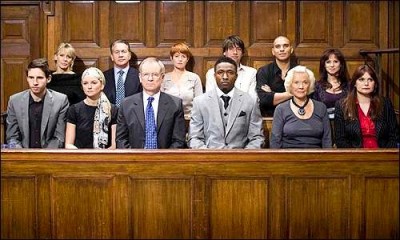
Many people dread receiving their jury duty summons. So much so that where I work in Washington, DC (yes, the nation’s capital), some 70,000 Washingtonians failed to respond to their jury summons in 2014.

Why Jury Duty Matters?

My friend and colleague Andrew Ferguson published a fabulous book that fully explores why jury duty is so important. Here is a summary of his argument

Turning the dread of jury duty into a form of enjoyment begins with understanding why jury duty matters. Simply put, it may well be the closest you ever come to the Constitution – not just exercising a right it gives you, but participating in the process through which constitutional rights and values come alive in practice. In a country formed from a single founding document, it is amazing how disconnected most of us are from its meaning and purpose. Jury duty changes that reality – it is a day of constitutional connection.

. . .

A jury summons is an invitation to participation. Jurors are asked to involve themselves in some of the most personal, sensational, and terrifying events in a community. It is real life, usually real tragedy, played out in court. Jurors confront disturbing facts, bloody images, or heart-wrenching testimony. A jury may have to decide whether a man lives or dies, or whether a multimillion-dollar company goes bankrupt. A jury will have to pass judgment in a way that will have real-world effects on both parties before the court. This active role was not accidental. Participation in jury service teaches the skills required for democratic self-government. Being a juror lets you develop the habits and skills of citizenship.

Juries and The American Revolution

Juries were viewed as an essential safeguard of liberty well before the American Revolution, but I will start our story here nonetheless.

Early American jurors frequently protected the rights of individuals by refusing to enforce acts of Parliament. In 1735, for example, a New York jury famously acquitted John Peter Zenger of seditious libel for publishing a critique of the colonial governor. They ruled that Zenger had the right to publish the truth, despite being instructed by the trial judge that truth was no defense to a seditious libel charge.

In the Declaration of Independence, the list of “repeated injuries and usurpations” committed by the King of Great Britain included this language justifying Independence: “For depriving us in many cases, of the benefits of Trial by Jury”.

Thomas Jefferson, the principal architect of the Declaration of Independence, would later say “I consider [trial by jury] as the only anchor ever yet imagined by man, by which a government can be held to the principles of its constitution.”

Juries and the Constitution

Article III, Section 2, Clause 3 reads

The Trial of all Crimes, except in Cases of Impeachment, shall be by Jury; and such Trial shall be held in the State where the said Crimes shall have been committed; but when not committed within any State, the Trial shall be at such Place or Places as the Congress may by Law have directed.

Joseph Story described the importance of this guarantee of jury trials in all criminal cases in his Commentaries on the Constitution –

§ 1773. It seems hardly necessary in this place to expatiate upon the antiquity, or importance of the trial by jury in criminal cases. It was from very early times insisted on by our ancestors in the parent country, as the great bulwark of their civil and political liberties, and watched with an unceasing jealousy and solicitude. The right constitutes the fundamental articles of Magna Charta, in which it is declared, “nullus homo capiatur, nec imprisonetur, aut exulet, aut aliquo modo destruatur, &c.; nisi per legale judicium parium suorum, vel per legem terrae;” no man shall be arrested, nor imprisoned, nor banished, nor deprived of life, &c. but by the judgment of his peers, or by the law of the land. The judgment of his peers here alluded to, and commonly called in the quaint language of former times a trialper pais, or trial by the country, is the trial by a jury, who are called the peers of the party accused, being of the like condition and equality in the state. When our more immediate ancestors removed to America, they brought this great privilege with them, as their birth-right and inheritance, as a part of that admirable common law, which had fenced round, and interposed barriers on every side against the approaches of arbitrary power. It is now incorporated into all our state constitutions, as a fundamental right; and the constitution of the United States would have been justly obnoxious to the most conclusive objection, if it had not recognised, and confirmed it in the most solemn terms.

§ 1774. The great object of a trial by jury in criminal cases is, to guard against a spirit of oppression and tyranny on the part of rulers, and against a spirit of violence and vindictiveness on the part of the people. Indeed, it is often more important to guard against the latter, than the former. The sympathies of all mankind are enlisted against the revenge and fury of a single despot; and every attempt will be made to screen his victims. But how difficult is it to escape from the vengeance of an indignant people, roused into hatred by unfounded calumnies, or stimulated to cruelty by bitter political enmities, or unmeasured jealousies? The appeal for safety can, under such circumstances, scarcely be made by innocence in any other manner, than by the severe control of courts of justice, and by the firm and impartial verdict of a jury sworn to do right, and guided solely by legal evidence and a sense of duty. In such a course there is a double security against the prejudices of judges, who may partake of the wishes and opinions of the government, and against the passions of the multitude, who may demand their victim with a clamorous precipitancy. So long, indeed, as this palladium remains sacred and inviolable, the liberties of a free government cannot wholly fall. But to give it real efficiency, it must be preserved in its purity and dignity; and not, with a view of slight inconveniences, or imaginary burthens, be put into the hands of those, who are incapable of estimating its worth, or are too inert, or too ignorant, or too imbecile, to wield its potent armour. Mr. Justice Blackstone, with the warmth and pride becoming an Englishman living under its blessed protection, has said: “A celebrated French writer, who concludes, that because Rome, Sparta, and Carthage have lost their liberties, therefore those of England in time must perish, should have recollected, that Rome, Sparta, and Carthage, at the time, when their liberties were lost, were strangers to the trial by jury.”

During the state debates over ratification of the Constitution, many objected to the Constitution’s lack of a guarantee for jury trials in civil cases. This was addressed by the addition of the Seventh Amendment in the Bill of Rights.

In Suits at common law, where the value in controversy shall exceed twenty dollars, the right of trial by jury shall be preserved, and no fact tried by a jury, shall be otherwise re-examined in any Court of the United States, than according to the rules of the common law.

The Sixth Amendment also discusses jury trial –

In all criminal prosecutions, the accused shall enjoy the right to a speedy and public trial, by an impartial jury of the State and district wherein the crime shall have been committed, which district shall have been previously ascertained by law, and to be informed of the nature and cause of the accusation; to be confronted with the witnesses against him; to have compulsory process for obtaining witnesses in his favor, and to have the Assistance of Counsel for his defence.

Thomas Jefferson in 1789 wrote –

We think in America that it is necessary to introduce the people into every department of government as far as they are capable of exercising it; and that this is the only way to ensure a long-continued and honest administration of it’s powers. 1. They are not qualified to exercise themselves the EXECUTIVEdepartment: but they are qualified to name the person who shall exercise it. With us therefore they chuse this officer every 4. years. 2. They are not qualified to LEGISLATE. With us therefore they only chuse the legislators. 3. They are not qualified to JUDGE questions of law; but they are very capable of judging questions of fact. In the form of JURIES therefore they determine all matters of fact, leaving to the permanent judges to decide the law resulting from those facts. But we all know that permanent judges acquire an Esprit de corps, that being known they are liable to be tempted by bribery, that they are misled by favor, by relationship, by a spirit of party, by a devotion to the Executive or Legislative; that it is better to leave a cause to the decision of cross and pile, than to that of a judge biassed to one side; and that the opinion of 12 honest jurymen gives still a better hope of right, than cross and pile does. It is left therefore to the juries, if they think the permanent judges are under any biass [sic] whatever in any cause, to take upon themselves to judge the law as well as the fact. They never exercise this power but when they suspect partiality in the judges, and by the exercise of this power they have been the firmest bulwarks of English liberty. Were I called upon to decide whether the people had best be omitted in the Legislative or Judiciary department, I would say it is better to leave them out of the Legislative. The execution of the laws is more important than the making them. However it is best to have the people in all the three departments where that is possible.

Given this history, you should be much more enthusiastic when you receive your jury summons. I look forward to receiving mine!
What is the Electoral College?

The Constitution and the Electoral College

Article II, Section 1 of the Constitution provides

The executive Power shall be vested in a President of the United States of America. He shall hold his Office during the Term of four Years, and, together with the Vice President, chosen for the same Term, be elected, as follows:

Each State shall appoint, in such Manner as the Legislature thereof may direct, a Number of Electors, equal to the whole Number of Senators and Representatives to which the State may be entitled in the Congress: but no Senator or Representative, or Person holding an Office of Trust or Profit under the United States, shall be appointed an Elector.

The Electors shall meet in their respective States, and vote by Ballot for two Persons, of whom one at least shall not be an Inhabitant of the same State with themselves. And they shall make a List of all the Persons voted for, and of the Number of Votes for each; which List they shall sign and certify, and transmit sealed to the Seat of the Government of the United States, directed to the President of the Senate. The President of the Senate shall, in the Presence of the Senate and House of Representatives, open all the Certificates, and the Votes shall then be counted. The Person having the greatest Number of Votes shall be the President, if such Number be a Majority of the whole Number of Electors appointed; and if there be more than one who have such Majority, and have an equal Number of Votes, then the House of Representatives shall immediately chuse by Ballot one of them for President; and if no Person have a Majority, then from the five highest on the List the said House shall in like Manner chuse the President. But in chusing the President, the Votes shall be taken by States, the Representation from each State having one Vote; A quorum for this purpose shall consist of a Member or Members from two thirds of the States, and a Majority of all the States shall be necessary to a Choice. In every Case, after the Choice of the President, the Person having the greatest Number of Votes of the Electors shall be the Vice President. But if there should remain two or more who have equal Votes, the Senate shall chuse from them by Ballot the Vice President.

In Federalist No. 68, Alexander Hamilton said of the electoral college

I venture somewhat further; and hesitate not to affirm, that if the manner of it be not perfect, it is at least excellent. It unites in an eminent degree all the advantages; the union of which was to be desired.

. . .

All these advantages will be happily combined in the plan devised by the convention; which is, that the people of each state shall choose a number of persons as electors, equal to the number of senators and representatives of such state in the national government, who shall assemble within the state and vote for some fit person as president. Their votes, thus given, are to be transmitted to the seat of the national government, and the person who may happen to have a majority of the whole number of votes will be the president. But as a majority of the votes might not always happen to centre on one man and as it might be unsafe to permit less than a majority to be conclusive, it is provided, that in such a contingency, the house of representatives shall select out of the candidates, who shall have the five highest numbers of votes, the man who in their opinion may be best qualified for the office.

This process of election affords a moral certainty, that the office of president, will seldom fall to the lot of any man, who is not in an eminent degree endowed with the requisite qualifications. Talents for low intrigue and the little arts of popularity may alone suffice to elevate a man to the first honors in a single state; but it will require other talents and a different kind of merit to establish him in the esteem and confidence of the whole union, or of so considerable a portion of it as would be necessary to make him a successful candidate for the distinguished office of president of the United States. It will not be too strong to say, that there will be a constant probability of seeing the station filled by characters pre-eminent for ability and virtue. And this will be thought no inconsiderable recommendation of the constitution, by those, who are able to estimate the share, which the executive in every government must necessarily have in its good or ill administration.

The electoral college was the result of a compromise at the Constitutional Convention in 1787. There were four possible options proposed for selecting a national executive: election by Congress, election by state governors, election by state legislatures and direct election. The idea of the electoral college was ultimately proposed by the Committee of Eleven on Postponed Matters. The proposal was met by approval by most of the delegates and was added to the Constitution with only minor changes.

The Twelfth Amendment, which was passed by Congress and ratified by the states, after the electoral college tie between Thomas Jefferson and Aaron Burr in 1800, modified Article II, Section 1 as follows –

The Electors shall meet in their respective states and vote by ballot for President and Vice-President, one of whom, at least, shall not be an inhabitant of the same state with themselves; they shall name in their ballots the person voted for as President, and in distinct ballots the person voted for as Vice-President, and they shall make distinct lists of all persons voted for as President, and of all persons voted for as Vice-President, and of the number of votes for each, which lists they shall sign and certify, and transmit sealed to the seat of the government of the United States, directed to the President of the Senate; — The President of the Senate shall, in the presence of the Senate and House of Representatives, open all the certificates and the votes shall then be counted; — The person having the greatest number of votes for President, shall be the President, if such number be a majority of the whole number of Electors appointed; and if no person have such majority, then from the persons having the highest numbers not exceeding three on the list of those voted for as President, the House of Representatives shall choose immediately, by ballot, the President. But in choosing the President, the votes shall be taken by states, the representation from each state having one vote; a quorum for this purpose shall consist of a member or members from two-thirds of the states, and a majority of all the states shall be necessary to a choice. And if the House of Representatives shall not choose a President whenever the right of choice shall devolve upon them, before the fourth day of March next following, then the Vice-President shall act as President, as in case of the death or other constitutional disability of the President. — The person having the greatest number of votes as Vice-President, shall be the Vice-President, if such number be a majority of the whole number of Electors appointed, and if no person have a majority, then from the two highest numbers on the list, the Senate shall choose the Vice-President; a quorum for the purpose shall consist of two-thirds of the whole number of Senators, and a majority of the whole number shall be necessary to a choice. But no person constitutionally ineligible to the office of President shall be eligible to that of Vice-President of the United States.


How it Works

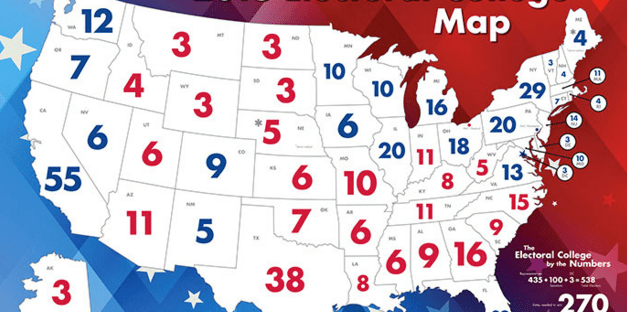
When Americans cast their votes for a president and vice president, they are, in reality, voting for the slate of electors in their states pledged to those particular candidates. This group across the states is known collectively as the electoral college. The Constitution (as described above) assigns each state a number of electors. The number is based on the combined total of the state’s Senate and House of Representatives delegations. There are currently 538 electors.

According to the Congressional Research Service,

In 48 states and the District of Columbia, the entire slate of electors winning the most popular votes in the state is elected, a practice known as “winner-take-all” or “the general ticket” system. Maine and Nebraska use an alternative method, the “district system,” which awards two electors to the popular vote winners statewide, and one to the popular vote winners in each congressional district. Electors assemble in their respective states on the Monday after the second Wednesday in December (December 19 in 2016). They are expected, but not constitutionally bound, to vote for the candidates they represent. The electors cast separate ballots for President and Vice President, after which the electoral college ceases to exist until the next presidential election. State electoral vote results are reported to Congress and other designated authorities; they are then counted and declared at a joint session of Congress held on January 6 of the year after the election; Congress may, however, change this date by joint resolution. A majority of electoral votes (currently 270 of 538) is required to win, but the results submitted by any state are open to challenge at the joint session, as provided by law.

The final electoral college vote has reflected the national popular vote in 53 of 57 presidential elections. Andrew Jackson, Samuel Tilden, Grover Cleveland, and Al Gore all won the national popular vote, but lost in the electoral college.


Carpool2Vote: A New App Connecting Volunteer Drivers with Voters in Need of a Ride to the Polls

Women Votes 2016 – a millennial led group – has launched a cool new app called Carpool2Vote that connects volunteer drivers with voters in need of a ride to the polls. Women Votes describes the purpose of this initiative as an effort “to ensure every woman, mom, grandmother (everyone) gets their chance to vote in #Election2016. Who better to help make this happen than ‘women’ who coined the phrase ‘carpool’?”

How to use the Carpool2Vote App:
The Carpool2Vote App is available for free download in the App Store as a public benefit to support voter turnout and help riders with a lift to the polls to cast their ballot in the general election on Tuesday, November 8, 2016 (and beyond).
Step 1: For DRIVERS who are heading to the polls — Simply utilize the apps capability to create a “Trip Profile” and “List” your trip with polling location, vehicle type, seats available, and time.
Step 2: For RIDERS — It’s easy and simple to navigate! Simply “Request a Carpool” by clicking on a vehicle within the map.  You will select the number of seats you will need, and any special accommodations such as wheel chair access, etc.

Step 3: For DRIVERS and RIDERS — Our Carpool2Vote App also ensures the rider is getting in the correct vehicle driven by the correct driver through a very simple authentication solution that’s similar to the way warehouses work. Each driver will be issued a unique barcode based on their license plate and driver’s license.

When the driver’s car arrives, that barcode will be displayed on the driver’s phone, and the rider can quickly take a picture of the driver’s barcode to ensure they are getting into the right vehicle. If the driver is who they should be, the passenger will receive a confirmation sound (beep) and vibration after they “scan.” If the driver is not correct, there will be an alert on the passenger’s phone. 
Step 4: Your vote is your voice! Please show you care by volunteering as a driver, spreading the word, and reaching out to your neighbors and friends to help inspire social and civic engagement.
I just downloaded the app and am looking forward to volunteering to drive voters in Arlington, Va, to the polls on Election Day! Learn more about this great initiative here! And download the app in your App Store today!

The Founders on Character

There’s a lot of talk right now about character and virtue, and so I thought I’d share some thoughts from the Founders on the topic.

(1) “Nothing is more essential to the establishment of manners in a State than that all persons employed in places of power and trust must be men of unexceptionable characters.” – Samuel Adams

(2) “The public cannot be too curious concerning the characters of public men.” – Samuel Adams

(3) “Good moral character is the first essential in a man.” – George Washington

(4) “[The people] have a right, an indisputable, unalienable, indefeasible, divine right to that most dreaded and envied kind of knowledge– I mean of the character and conduct of their rulers.” – John Adams

(5) “The uniform tenor of a man’s life furnishes better evidence of what he has said or done on any particular occasion than the word of any enemy.” – Thomas Jefferson

(6) “Nothing is more certain than that a general profligacy and corruption of manners make a people ripe for destruction. A good form of government may hold the rotten materials together for some time, but beyond a certain pitch, even the best constitution will be ineffectual, and slavery must ensue.” – John Witherspoon.

(7) “The same fidelity to the public interest which obliges those who are its appointed guardians to pursue with every vigor a perfidious or dishonest servant of the public requires them to confront the imputations of malice against the good and faithful one.” – James Madison

(8) “The moral sense, or conscience, is as much a part of man as his leg or arm. It is given to all human beings in a stronger or weaker degree, as force of members is given them in a greater or less degree. It may be strengthened by exercise, as may any particular limb of the body. This sense is submitted indeed in some degree to the guidance of reason; but it is a small stock which is required for this: even a less one than what we call common sense. State a moral case to a ploughman & a professor. The former will decide it as well, & often better than the latter, because he has not been led astray by artificial rules.” – Thomas Jefferson

(9) “Oh! that I could wear out of my mind every mean and base affectation, conquer my natural Pride and Self Conceit, expect no more defference from my fellows than I deserve, acquire that meekness, and humility, which are the sure marks and Characters of a great and generous Soul, and subdue every unworthy Passion and treat all men as I wish to be treated by all. How happy should I then be, in the favour and good will of all honest men, and the sure prospect of a happy immortality!” – John Adams

(10) “But I go on this great republican principle, that the people will have virtue and intelligence to select men of virtue and wisdom. Is there no virtue among us? If there be not, we are in a wretched situation. No theoretical checks–no form of government can render us secure. To suppose that any form of government will secure liberty or happiness without any virtue in the people, is a chimerical idea. If there be sufficient virtue and intelligence in the community, it will be exercised in the selection of these men. So that we do not depend on their virtue, or put confidence in our rulers, but in the people who are to choose them.” – James Madison

(11) “As there is a degree of depravity in mankind which requires a certain degree of circumspection and distrust, so there are other qualities in human nature which justify a certain portion of esteem and confidence. Republican government presupposes the existence of these qualities in a higher degree than any other form. Were the pictures which have been drawn by the political jealousy of some among us faithful likenesses of the human character, the inference would be, that there is not sufficient virtue among men for self-government; and that nothing less than the chains of despotism can restrain them from destroying and devouring one another.” – James Madison, The Federalist No. 55

(12) “When public Virtue is gone, when the national Spirit is fled, when a Party is Substituted for the Nation, and Faction for a Party, when Venality lurks and Skulks in Secret, and much more when it impudently braves the public Censure, whether it be Sent in the form of Emissaries from foreign Powers, or is employed by ambitious and Intriguing domestic Citizens, the Republic is lost in Essence, though it may still exist in form.” – John Adams


The Founders on the Presidency

As someone who runs a non-profit (www.ConSource.org) focused on making U.S. constitutional history more accessible to and understandable by the American public , I often spend my time steeped in the writing of the Founding Fathers. We are now exactly one month from election day and so I thought I’d share some of their thoughts on the presidency in today’s blog post.

(1) “This process of election affords a moral certainty, that the office of president, will never fall to the lot of any man, who is not in an eminent degree endowed with the requisite qualifications. Talents for low intrigue and the little arts of popularity may alone suffice to elevate a man to the first honors in a single state; but it will require other talents and a different kind of merit to establish him in the esteem and confidence of the whole union, or of so considerable a portion of it as would be necessary to make him a successful candidate for the distinguished office of president of the United States. It will not be too strong to say, that there will be a constant probability of seeing the station filled by characters pre-eminent for ability and virtue.” – Alexander Hamilton, The Federalist No. 68 

(2) “The powers of the Executive of the U. States are more definite, & better understood perhaps than those of almost any other Country; and my aim has been, & will continue to be, neither to stretch, nor relax from them in any instance what ever, unless imperious circumstances shd. render the measure indispensible [sic].” – George Washington to Alexander Hamilton (July 2, 1794)

(3) “The next good quality that I remark is, that the executive authority is one. By this means we obtain very important advantages. We may discover from history, from reason, and from experience, the security which this furnishes. The executive power is better to be trusted when it has no screen. Sir, we have a responsibility in the person of our President; he cannot act improperly, and hide either his negligence or inattention; he cannot roll upon any other person the weight of his criminality; no appointment can take place without his nomination; and he is responsible for every nomination he makes. We securevigor. We well know what numerous executives are. We know there is neither vigor, decision, nor responsibility, in them. Add to all this, that officer is placed high, and is possessed of power far from being contemptible; yet not a single privilege is annexed to his character; far from being above the laws, he is amenable to them in his private character as a citizen, and in his public character by impeachment.” – James Wilson, Pennsylvania Ratifying Convention (December 4, 1787)

(4) “There is an idea, which is not without its advocates, that a vigorous executive is inconsistent with the genius of republican government. The enlightened well wishers to this species of government must at least hope that the supposition is destitute of foundation; since they can never admit its truth, without at the same time admitting the condemnation of their own principles. Energy in the executive is a leading character in the definition of good government. It is essential to the protection of the community against foreign attacks: It is not less essential to the steady administration of the laws, to the protection of property against those irregular and high handed combinations, which sometimes interrupt the ordinary course of justice, to the security of liberty against the enterprises and assaults of ambition, of faction and of anarchy. Every man the least conversant in Roman story knows how often that republic was obliged to take refuge in the absolute power of a single man, under the formidable title of dictator, as well against the intrigues of ambitious individuals, who aspired to the tyranny, and the seditions of whole classes of the community, whose conduct threatened the existence of all government, as against the invasions of external enemies, who menaced the conquest and destruction of Rome. . . . Taking it for granted, therefore that all men of sense will agree in the necessity of an energetic executive; it will only remain to inquire, what are the ingredients which constitute this energy–how far can they be combined with those other ingredients which constitute safety in the republican sense? And how far does this combination characterise the plan, which has been reported by the convention? The ingredients, which constitute energy in the executive, are first unity, secondly duration, thirdly an adequate provision for its support, fourthly competent powers.” – Alexander Hamilton, The Federalist No. 70

(5) “If your American chief be a man of ambition and abilities, how easy is it for him to render himself absolute! The army is in his hands, and if he be a man of address, it will be attached to him, and it will be the subject of long meditation with him to seize the first auspicious moment to accomplish his design; and, sir, will the American spirit solely relieve you when this happens? I would rather infinitely–and I am sure most of this Convention are of the same opinion–have a king, lords, and commons, than a government so replete with such insupportable evils. If we make a king, we may prescribe the rules by which he shall rule his people, and interpose such checks as shall prevent him from infringing them; but the President, in the field, at the head of his army, can prescribe the terms on which he shall reign master, so far that it will puzzle any American ever to get his neck from under the galling yoke. I cannot with patience think of this idea. If ever he violates the laws, one of two things will happen: he will come at the head of his army, to carry every thing before him; or he will give bail, or do what Mr. Chief Justice will order him. If he be guilty, will not the recollection of his crimes teach him to make one bold push for the American throne? Will not the immense difference between being master of every thing, and being ignominiously tried and punished, powerfully excite him to make this bold push? But, sir, where is the existing force to punish him? Can he not, at the head of his army, beat down every opposition? Away with your President! we shall have a king: the army will salute him monarch: your militia will leave you, and assist in making him king, and fight against you: and what have you to oppose this force? What will then become of you and your rights? Will not absolute despotism ensue?” – Patrick Henry, Virginia Ratifying Convention (June 5, 1788)

This seems like a good time to encourage folks to read Article II of the Constitution, as well. You can read it here.

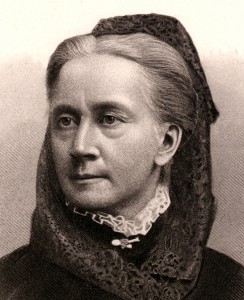
Belva Ann Lockwood: A Supreme Court Trailblazer

This week the Supreme Court opened its October Term 2016. As I reflect on this Court, with three sitting woman justices, I was reminded of the extraordinary efforts of Belva Ann Lockwood to open the Court to women. It is those efforts I’d like to spotlight here. Lockwood, a true Supreme Court trailblazer, who successfully lobbied Congress to pass legislation opening the U.S. Supreme Court bar to qualified women lawyers. She became the first woman to argue before the U.S. Supreme Court, and would go on to twice run for president as a candidate for the Equal Rights Party.

Lockwood’s Difficult Pathway to the Bar

Lockwood applied to the Columbian Law School in Washington, DC, in 1870. The school’s trustees denied her admission, citing their belief that she would prove a distraction to the male students. She was later accepted to the new National University Law School (now part of the George Washington University). While she completed her legal studies in 1873, the school was unwilling to grant her a diploma on the basis of her gender. Without a diploma, Lockwood was unable to gain admittance to the bar.

In September 1873, Lockwood wrote a letter to President Ulysses S. Grant, who also served as president of National University, appealing to him to intervene on her behalf. She explained that she had passed all her courses and deserved to be awarded a diploma. A week after sending the letter, Lockwood received her diploma. She was 43.

Legal Career

After her admission to the District of Columbia bar, Lockwood became one of the first female lawyers in the United States. She started with a modest legal practice, but then began to build a reputation as a competent lawyer – one who even gained respect from her male colleagues.

In 1876, she sought to gain admission to the U.S. Supreme Court Bar. The justices refused to admit her saying “none but men are permitted to practice before [us] as attorneys and counselors.” Lockwood, never one to accept the status quo, drafted a bill that would require women to have the same access as male lawyers to the Supreme Court Bar. She vigorously lobbied Congress from 1874 to 1879. In 1879, Congress passed the legislation and President Rutherford B. Hayes signed it into law. The law required that all qualified women lawyers be admitted to practice before the U.S. Supreme Court.

Belva-Lockwood.jpg

Lockwood would go on to become the first woman member of the U.S. Supreme Court Bar, and would become the first woman to argue before the Court in the case of Kaiser v. Stickney.

Interestingly, women were able to practice before the U.S. Supreme Court 41 years before they were allowed to vote after the ratification of the 19th Amendment.


Facts are Stubborn Things: Take Time This Election Season to Educate Yourself About the Facts

In 1770, John Adams famously said: “Facts are stubborn things; and whatever may be our wishes, our inclinations, or the dictates of our passion, they cannot alter the state of facts and evidence.”

In 1779, Thomas Jefferson wrote “Illuminate, as far as practicable, the minds of the people at large, and more especially to give them knowledge of those facts, which history exhibiteth, that, possessed thereby of the experience of other ages and countries, they may be enabled to know ambition under all its shapes, and prompt to exert their natural powers to defeats its purposes.”

John Jay also famously said “I consider knowledge to be the soul of a republic, and as the weak and wicked are generally in alliance, as much care should be taken to diminish the number of the former as of the latter. Education is the way to do this, and nothing should be left undone to afford all ranks of people the means of obtaining a proper degree of it at a cheap and easy rate.”

In a 1786 essay, Dr. Benjamin Rush wrote “Freedom can exist only in the society of knowledge.”

James Madison in his 1810 address to Congress said “It is universally admitted that a well-instructed people alone can be permanently a free people.”

The Founding generation understood that facts matter.  And it is our responsibility as citizens to educate ourselves about the facts and to not allow the passions of the moment to overrule reason. Take time this election season to thoughtfully consider the veracity of claims made by candidates. Don’t give in to the allure of a post-factual society. Facts are stubborn, and foundational. You need facts to fully understand the world, and the free world requires a well-instructed people. In the words of James Monroe, “[it] is only when the People become ignorant and corrupt . . . that they are incapable of exercising their sovereignty.”

Video: National Constitution Center Event on George Mason and Constitution

This afternoon, I had the privilege of participating in a special symposium co-hosted by The National Constitution Center and Gunston Hall on “The Reluctant Statesman: George Mason and the American Tradition of Dissent.” Other participants included historians and scholars Fergus Bordewich, Linda Monk, Stephen Solomon, David O. Stewart, and Ralph Young.

Video of my panel on Mason and the Constitution, and the entire symposium is available here: 

Announcing the Fifth Annual Harlan Institute -ConSource Virtual Supreme Court Competition for High School Students

The Harlan Institute and The Constitutional Sources Project (ConSource) announce their Fifth Annual Virtual Supreme Court competition. This competition offers teams of two high school students the opportunity to research cutting-edge constitutional law, write persuasive appellate briefs, argue against other students through video chats, and try to persuade a panel of esteemed attorneys during oral argument that their side is correct. This year the competition focuses on Trinity Lutheran Church v. Sarah Parker Pauley, exploring whether funding a playground associated with a Church violates the Establishment Clause of the First Amendment.

ConSource Executive Director Julie Silverbrook believes “the Virtual Supreme CourtCompetition is an excellent opportunity for high school students to develop core civic and constitutional literacy skills. Students are required to read the text of the Constitution, explore the history behind a contemporary constitutional dispute, and construct persuasive arguments. We know that experiences like theVirtual Supreme Court Competition leave a lifelong impression on participating students and encourages them to stay informed and engaged throughout their lives.”

Tanya Reyna, a winner of the 2016 Virtual Supreme Court Competition, noted that while her local community in Texas suffers from “an influx of drugs and criminals” and has dampened her views about the future of her community and the nation, her experience with the Virtual Supreme Court Competition “eased [her] apprehension [about the future].” She said that meeting “students, lawyers, professors, and judges” willing to take time out of their busy schedules “to inform younger generations of citizens about our legal system,” demonstrated to her that “as long as there are citizens like them, America will continue to hold a bright future.”

The members of the grand-prize winning team, the Solicitors General of FantasySCOTUS, will receive a free trip, including airfare and one night of hotel accommodations, to Washington, D.C. or New York City to attend the ConSource Constitution Day celebration in September 2017. Members of the runner-up team will each receive an iPad Mini. Members of the third and fourth place teams will each receive a $100 Amazon.com Gift card.

Screen shot 2016-10-02 at 10.51.13 PM.png


Josh Blackman, President of the Harlan Institute, champions theVirtual Supreme Court Competition, which provides an “unprecedented opportunity for high school students to engage in the highest level of appellate advocacy. They research the issues, write briefs, and make oral arguments before our judges. The strong caliber of the winning teams last year really impressed us. We can’t wait to see how the teams perform this year!”

Teachers interested in participating should sign up at HarlanInstitute.org, add an account, read the problem, and get started!

Please send any questions to info@harlaninstitute.orgor info@consource.org.

If you’re interested in supporting the Virtual Supreme Court Competition and the extraordinary students who participate across the country, please consider making a donation today!

A Brief History of the Office of the Vice President of the United States

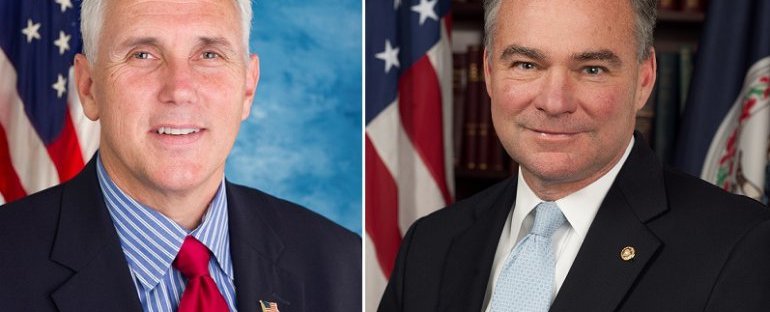
Tonight, Senator Tim Kaine and Governor Mike Pence, the vice presidential candidates for Hillary Clinton and Donald Trump respectively, will debate at Longwood University. This seems like a good opportunity to discuss the office of the Vice President of the United States. It is an office that is little understood and often ridiculed.

Of the office, John Adams said “But my country has in its wisdom contrived for me the most insignificant office that ever the invention of man contrived or his imagination conceived. And as I can do neither good nor evil, I must be borne away by others, and meet the common fate.”

Thomas Jefferson, who served as vice president under John Adams, wrote “The second office of the land is honorable and easy, the first is but a splendid misery.”

Adams and Jefferson are among the remarkable individuals who have served in the office of the vice president. The Senate Historical Office succinctly summarizes the individuals who have served in the office

Fourteen of the former vice presidents became president of the United States—more than half of them after a president had died. One defeated the sitting president with whom he served. One murdered a man and became a fugitive. One joined the Confederate army and led an invasion of Washington, D.C. One was the wealthiest banker of his era. Three received the Nobel Peace Prize and one composed a popular melody. One served as a corporal in the Coast Guard while vice president. One had cities in Oregon and Texas named after him. Two resigned from the office. Two were never elected by the people. One was the target of a failed assassination plot. Another was mobbed in his car while on a goodwill mission. Seven died in office—one in his room in the U.S. Capitol and two fatally stricken while on their way to preside over the Senate. And one piano-playing vice president suffered political repercussions from a photograph showing him playing that instrument while a famous movie actress posed seductively on top of it.

The Constitution and the Vice Presidency

Selecting the Vice President

Article II, Section 1 of the Constitution provides –

The Electors shall meet in their respective States, and vote by Ballot for two Persons, of whom one at least shall not be an Inhabitant of the same State with themselves. And they shall make a List of all the Persons voted for, and of the Number of Votes for each; which List they shall sign and certify, and transmit sealed to the Seat of the Government of the United States, directed to the President of the Senate. The President of the Senate shall, in the Presence of the Senate and House of Representatives, open all the Certificates, and the Votes shall then be counted. The Person having the greatest Number of Votes shall be the President, if such Number be a Majority of the whole Number of Electors appointed; and if there be more than one who have such Majority, and have an equal Number of Votes, then the House of Representatives shall immediately chuse by Ballot one of them for President; and if no Person have a Majority, then from the five highest on the List the said House shall in like Manner chuse the President. But in chusing the President, the Votes shall be taken by States, the Representation from each State having one Vote; A quorum for this Purpose shall consist of a Member or Members from two thirds of the States, and a Majority of all the States shall be necessary to a Choice. In every Case, after the Choice of the President, the Person having the greatest Number of Votes of the Electors shall be the Vice President. But if there should remain two or more who have equal Votes, the Senate shall chuse from them by Ballot the Vice President. (Emphasis Added)

The Election of 1800 and the 12th Amendment

In the contentious election of 1800 between John Adams and Thomas Jefferson, Jefferson and his running mate Aaron Burr ended up receiving the same number of electoral votes. Per the language in Article II, Section 1 (see above), the decision of who would serve as president fell to the House of Representatives. After 35 separate ballots where neither candidate was able to secure a majority, Jefferson was finally able to prevail over Burr. Jefferson became president and Burr served as vice president.

How could this happen? How could candidates running together end up running against each other in the event of a tie? Prior to the passage of the 12th Amendment, the Constitution did not differentiate between presidential and vice presidential candidates. Each elector cast two votes without regard for political affiliation. Whomever received the most votes became president and the runner-up became vice president. Either candidate could win either office, regardless of whether they initially set out to run in one position or the other. The election of 1800 put pressure on Congress to fix this system, and so by 1804 the 12th Amendment was passed by Congress and ratified by the requisite number of states. The Amendment reads –

The electors shall meet in their respective states and vote by ballot for President and Vice-President, one of whom, at least, shall not be an inhabitant of the same state with themselves; they shall name in their ballots the person voted for as President, and in distinct ballots the person voted for as Vice-President, and they shall make distinct lists of all persons voted for as President, and of all persons voted for as Vice-President, and of the number of votes for each, which lists they shall sign and certify, and transmit sealed to the seat of the government of the United States, directed to the President of the Senate;–The President of the Senate shall, in the presence of the Senate and House of Representatives, open all the certificates and the votes shall then be counted;–the person having the greatest number of votes for President, shall be the President, if such number be a majority of the whole number of electors appointed; and if no person have such majority, then from the persons having the highest numbers not exceeding three on the list of those voted for as President, the House of Representatives shall choose immediately, by ballot, the President. But in choosing the President, the votes shall be taken by states, the representation from each state having one vote; a quorum for this purpose shall consist of a member or members from two-thirds of the states, and a majority of all the states shall be necessary to a choice. And if the House of Representatives shall not choose a President whenever the right of choice shall devolve upon them, before the fourth day of March next following, then the Vice-President shall act as President, as in the case of the death or other constitutional disability of the President. The person having the greatest number of votes as Vice-President, shall be the Vice-President, if such number be a majority of the whole number of electors appointed, and if no person have a majority, then from the two highest numbers on the list, the Senate shall choose the Vice-President; a quorum for the purpose shall consist of two-thirds of the whole number of Senators, and a majority of the whole number shall be necessary to a choice. But no person constitutionally ineligible to the office of President shall be eligible to that of Vice-President of the United States. (Emphasis added)

Duties of the Vice President Under the Constitution

Under Article II, Section I, of the Constitution, the Vice President will act as president when the sitting president is removed from office, or if (s)he dies, resigns or is unable to discharge the powers and duties of the office.

In case of the removal of the President from office, or of his death, resignation, or inability to discharge the powers and duties of the said office, the same shall devolve on the Vice President, and the Congress may by law provide for the case of removal, death, resignation or inability, both of the President and Vice President, declaring what officer shall then act as President, and such officer shall act accordingly, until the disability be removed, or a President shall be elected.

Under Article I, Section III,

The Vice President of the United States shall be President of the Senate, but shall have no vote, unless they be equally divided.

Furthermore, Article II, Section 1 provides that the President of the Senate (the Vice President) shall receive from the states the tally of electoral ballots cast for president and vice president and open the certificates “in the Presence of the Senate and House of Representatives,” so that the total votes could be counted. In 2000, this led to a famously awkward moment when then-Vice President Al Gore had to formally certify his opponent in the 2000 presidential race, George W. Bush, as president of the United States.

The decision of the Framers to have the Vice President preside over the Senate was not an uncontroversial one. Joseph Story on his Commentaries on the Constitution explained

§ 733. Some objections have been taken to the appointment of the vice president to preside in the senate. It was suggested in the state conventions, that the officer was not only unnecessary, but dangerous; that it is contrary to the usual course of parliamentary proceedings to have a presiding officer, who is not a member; and that the state, from which he comes, may thus have two votes, instead of one. It has also been coldly remarked by a learned commentator, that “the necessity of providing for the case of a vacancy in the office of president doubtless gave rise to the creation of that officer; and for want of something else for him to do, whilst there is a president in office, he seems to have been placed, with no very great propriety, in the chair of the senate.”

There were additional separation of powers concerns raised during the Constitutional Convention. George Mason of Virginia

thought the office of vice-President an encroachment on the rights of the Senate; and that it mixed too much the Legislative & Executive, which as well as the Judiciary departments, ought to be kept as separate as possible. 

So what of the vice presidency today? Nearly 1/3 of Americans can’t name our current Vice President. All the more reason to study up on the history of the office!