227 years ago, the U.S. Senate Confirmed the First U.S. Supreme Court Justices

On September 26, 1789, the U.S. Senate voted to confirm  John Jay, John Rutledge, William Cushing, John Blair, Robert Harrison, and James Wilson as the first justices of the United States Supreme Court.

John Jay was confirmed as the nation’s first Chief Justice. Jay served as a delegated to both the First and Second Continental Congresses, and was elected president of the Continental Congress in 1778. He also contributed five essays to The Federalist (now known as The Federalist Papers), and was a stronger supporter of the federal Constitution of 1787. After serving as Chief Justice for five years, Jay resigned from the Supreme Court on June 29, 1795, and became Governor of New York. He declined a second appointment as Chief Justice in 1800, and President John Adams then nominated John Marshall for the position.

001_jay

John Rutledge  was elected to the South Carolina Commons House of Assembly. In 1764, he was appointed Attorney General of South Carolina by the King’s Governor and served for ten months. Rutledge served as the youngest delegate to the Stamp Act Congress of 1765.He was a member South Carolina delegation to the Constitutional Convention in 1787 and served as a member of the South Carolina Ratification Convention the following year. After one year on the Supreme Court, Rutledge resigned in 1791 to become Chief Justice of South Carolina’s highest court. On August 12, 1795, President George Washington nominated Rutledge Chief Justice of the United States. He served in that position as a recess appointee for four months, but the Senate refused to confirm him.

002_rutledge

William Cushing served as Chief Justice of the Massachusetts Supreme Judicial Court from 1780 to 1789. He strongly supported ratification of the U.S. Constitution and served as Vice Chairman of the Massachusetts Ratification Convention. Cushing served on the Court for 20 years.

002_cushing

John Blair began his public service in 1766 as a member of the Virginia House of Burgesses. In 1770, he resigned from the House to become Clerk of the Governor’s Council. Blair was a delegate to the Virginia Convention of 1776, which drafted the State Constitution. Blair became a Judge of the Virginia General Court in 1777 and was elevated to Chief Judge in 1779. From 1780 to 1789, he served as a Judge of the First Virginia Court of Appeals. Blair was a delegate to the Federal Constitutional Convention of 1787 and was one of three Virginia delegates to sign the Constitution. He was also a delegate to the Virginia Ratification Convention of 1788. He served on the Court for only 5 years, and resigned due to the rigors of circuit riding and ill health.
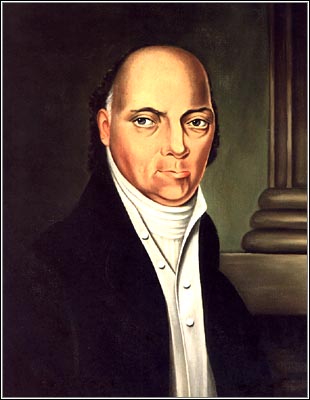
003_blair

Robert Harrison served as the Chief Justice of the General Court of Maryland from 1781 to 1789.Harrison, ultimately, declined to serve as an associate justice, citing health reasons. The seat eventually went to James Iredell.

robert_hanson_harrison

James Wilson was elected a delegate to the First Continental Congress in 1775 and was a signer of the Declaration of Independence. He also served as a delegate to the Second Continental Congress. As a delegate to the Constitutional Convention in Philadelphia in 1787, Wilson was a member of the committee that produced the first draft of the Constitution. He signed the finished document on September 17, 1787, and later served as a delegate to the Pennsylvania Ratification Convention. He served on the Court for eight years.
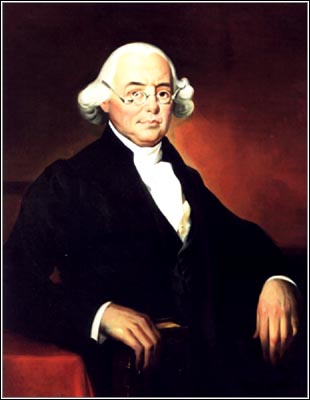
001_wilson

(Biographical information of the justices was provided by the Supreme Court Historical Society).

Presidential Debate Primer: Check out Washington Times Special Section on the President and the Constitution

In honor of Constitution Day this year, I took the lead on behalf of the National Constitutional Literacy Campaign on the publication of a Washington Times special section on the President and the Constitution. The special report includes articles from Senators Patrick Leahy and Mike Lee, among many others.

On the eve of tomorrow night’s presidential debate, I hope folks will consider reading, reflecting, and learning from the public officials, scholars and civic education advocates who submitted articles on this timely topic. It’s a great presidential debate primer.

The full special section is available in PDF form here.

Articles include:

Section 1: Citizens, Civic Knowledge, and Presidential Elections

(1) Julie Silverbrook, Why A Call for Civic Education and Constitutional Literacy?

(2) Julie Silverbrook, Student Competitions Spark Optimism, Civic Involvement

(3) Charles Quigley, Effective Civic Education Produces Informed Voters

(4) Dr. Michael Poliakoff, Civic Illiteracy and Civic Disempowerment

(5) Jeff Hymas, A Democratic or Republican Election? 

(6) Kyle Kondik, ‘Tyranny of the Swing States’?

(7) Meg Heubeck and Gerard Ferri, Get in the Game: Empowering America’s Next Generation to Vote

Section 2: Congress and the President

(1) Congressman George Nethercutt, Founders Intended ‘Tension’ In Co-Equal Branches

(2) Dr. Robert J. Spitzer, Political Gridlock, Past and Present

(3) Senator Patrick Leahy, Constitution Day: Protection Our Democracy

(4) Senator Mike Lee, The Battle to ‘Keep’ the American Republic

(5) Dr. Matthew Spalding, Congress and the New Imperial Presidency

Section 3: The Courts and the President

(1) Elizabeth Wydra, The President, the Constitution, and the Supreme Court

(2) Dr. Louis Fisher, How Courts Expand Presidential Power Beyond Constitutional Limits

(3) Ken Gormley, Presidents and the Supreme Court: Public Battles and Quiet Respect

Section 4: The Media and the President

(1) Julie Silverbrook, The Constitution on the Campaign Trail in 2016

(2) David Keene, the ‘Genius’ of the Constitution 

(3) Janine Turner and Andrew Langer, Is the Media Responsible for the Too-Power Presidency?

(4) Shoshana Weissman, How Social Media Gives Public Opinion Wings

Section 5: The Expansion of Presidential Authority

(1) Tim Donner, The Ever-Expanding Power of the Presidency

(2) Josh Blackman, Unteaching Professor Obama’s Constitutional Lessons

(3) Dr. Jason Stevens, Calvin Coolidge and the ‘two minds’ of the American Presidency

(4) Scott Michelman, Upholding the Right ‘To Be Let Alone’

100 years in the making, National Museum of African American History and Culture Opens on the National Mall

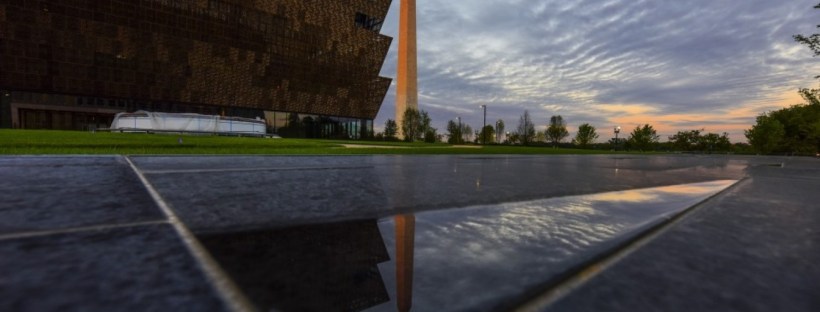
The National Museum of African American History and Culture opens today on the National Mall. It opens 100 years after the museum was first proposed and 13 years after it was authorized by Congress.

The museum’s website describes the NMAAHC as

[T]he only national museum devoted exclusively to the documentation of African American life, history, and culture. It was established by Act of Congress in 2003, following decades of efforts to promote and highlight the contributions of African Americans. To date, the museum has collected more than 36,000 artifacts. Nearly 100,000 individuals have become charter members of the museum.

The website goes on to spell out the four pillars on which the new museum is premised -It provides an opportunity for those who are interested in African American culture to explore and revel in this history through interactive exhibitions;

  1. It helps all Americans see how their stories, their histories, and their cultures are shaped and informed by global influences;

  2. It explores what it means to be an American and share how American values like resiliency, optimism, and spirituality are reflected in African American history and culture; and

  3. It serves as a place of collaboration that reaches beyond Washington to engage new audiences and to collaborate with the myriad of museums and educational institutions that have explored and preserved this important history well before this museum was created.

Congressman John Lewis, who was a driving force behind the museum, said “There were some who said it couldn’t happen, who said ‘you can’t do it’ but we did it. . . This place is more than a building. It is a dream come true.”

The museum opened with a series of celebrations and speeches (many still ongoing) from Chief Justice John Roberts (who serves as the chancellor of the Smithsonian Institution), President Barack Obama, former president George W. Bush (who signed the 2003 bill authorizing the museum), Oprah Winfrey, and many others.

Lonnie Bunch, the director of the NMAAHC, said of the museum that it will “not just tell of a people’s journey, but a nation’s story.” He went on to say, “There is nothing more powerful than a people, than a nation steeped in history. . . And nothing more noble than honoring all of our ancestors by remembering.”

President Obama, the nation’s first black president, said, “This national museum helps to tell a richer and fuller story of who we are. It helps us better understand the lives, yes, of the president but also the slave, the industrialist but also the porter, the keeper of the status quo but also the activist seeking to overthrow that status quo.” He went on to say, in imagining taking his grandchildren to the museum, that “[t]ogether we’ll learn about ourselves, as Americans.”

The museum now owns close to 37,000 artifacts. You can explore their collection online here.

Here are some interesting artifacts in the museum’s collection:

(1) Digital collection of manuscripts and images related to the Freedmen’s Bureau;

(2) Rosa Parks’ dress

(3) The pen used by Lyndon B. Johnson to sign the Voting Rights Act of 1965

(4) Program from the March on Washington (1963)

(5) Jim Crow-era Southern Railway car

(6) Nat Turner’s Bible

(7) Emmett Till’s casket