The 13th Amendment Was Ratified On This Day in 1865

doc_040_big-1

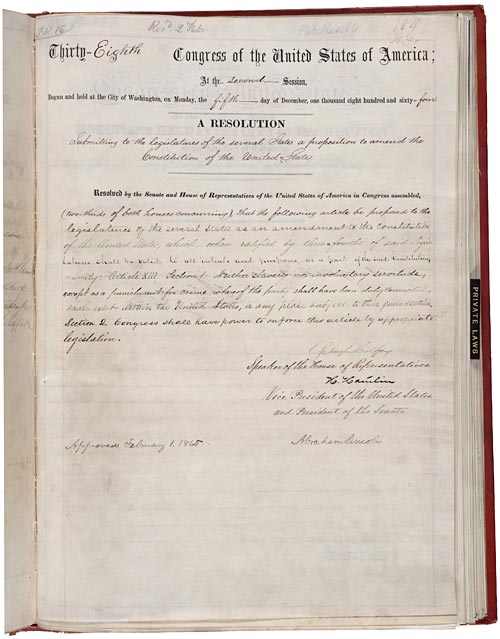
The 13th Amendment to the United States Constitution was ratified by the states on December 6, 1865. The amendment reads –

Section 1.
Neither slavery nor involuntary servitude, except as a punishment for crime whereof the party shall have been duly convicted, shall exist within the United States, or any place subject to their jurisdiction.

Section 2.
Congress shall have power to enforce this article by appropriate legislation

The 13th Amendment abolished both slavery and involuntary servitude throughout the nation and gave Congress the power to enforce the Amendment by “appropriate legislation.”

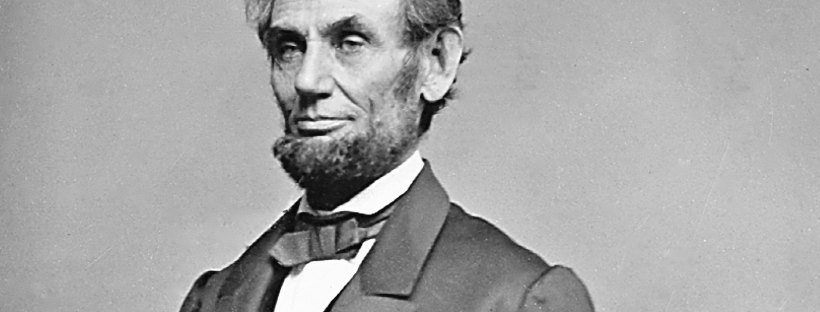
At the outset of the Civil War, few could imagine such a revolutionary amendment. In 1861, President Lincoln’s aim during the war was not to disrupt the South’s system of slavery, but instead to reunite the fractured nation.

According to Dr. Abigail Perkiss,

By the summer of 1862, though, with mounting deaths and desertions and declining enlistments of white soldiers, the President reconsidered his position.

By the end of the war, more than 186,000 black men had enlisted in Lincoln’s army, some 134,000 of whom came from slave-holding states.  Some were freed blacks who had made lives for themselves in the South, but many more were slaves who, when troops marched through the Confederacy, took it upon themselves to claim their freedom and sign up for the Union cause.

And as black soldiers entered the military, the relationship between the war and the institution of slavery became more intertwined.  As Lincoln saw it, with the inclusion of African-Americans in the conflict, the fight had become defined by the question of slavery.

On January 1, 1863, President Lincoln issued his Emancipation Proclamation, which read –

By the President of the United States of America:

A Proclamation.

Whereas, on the twentysecond day of September, in the year of our Lord one thousand eight hundred and sixty two, a proclamation was issued by the President of the United States, containing, among other things, the following, to wit:

“That on the first day of January, in the year of our Lord one thousand eight hundred and sixty-three, all persons held as slaves within any State or designated part of a State, the people whereof shall then be in rebellion against the United States, shall be then, thenceforward, and forever free; and the Executive Government of the United States, including the military and naval authority thereof, will recognize and maintain the freedom of such persons, and will do no act or acts to repress such persons, or any of them, in any efforts they may make for their actual freedom.

“That the Executive will, on the first day of January aforesaid, by proclamation, designate the States and parts of States, if any, in which the people thereof, respectively, shall then be in rebellion against the United States; and the fact that any State, or the people thereof, shall on that day be, in good faith, represented in the Congress of the United States by members chosen thereto at elections wherein a majority of the qualified voters of such State shall have participated, shall, in the absence of strong countervailing testimony, be deemed conclusive evidence that such State, and the people thereof, are not then in rebellion against the United States.”

Now, therefore I, Abraham Lincoln, President of the United States, by virtue of the power in me vested as Commander-in-Chief, of the Army and Navy of the United States in time of actual armed rebellion against the authority and government of the United States, and as a fit and necessary war measure for suppressing said rebellion, do, on this first day of January, in the year of our Lord one thousand eight hundred and sixty three, and in accordance with my purpose so to do publicly proclaimed for the full period of one hundred days, from the day first above mentioned, order and designate as the States and parts of States wherein the people thereof respectively, are this day in rebellion against the United States, the following, to wit:

Arkansas, Texas, Louisiana, (except the Parishes of St. Bernard, Plaquemines, Jefferson, St. Johns, St. Charles, St. James Ascension, Assumption, Terrebonne, Lafourche, St. Mary, St. Martin, and Orleans, including the City of New Orleans) Mississippi, Alabama, Florida, Georgia, South-Carolina, North-Carolina, and Virginia, (except the fortyeight counties designated as West Virginia, and also the counties of Berkley, Accomac, Northampton, Elizabeth-City, York, Princess Ann, and Norfolk, including the cities of Norfolk and Portsmouth[)], and which excepted parts, are for the present, left precisely as if this proclamation were not issued.

And by virtue of the power, and for the purpose aforesaid, I do order and declare that all persons held as slaves within said designated States, and parts of States, are, and henceforward shall be free; and that the Executive government of the United States, including the military and naval authorities thereof, will recognize and maintain the freedom of said persons.

And I hereby enjoin upon the people so declared to be free to abstain from all violence, unless in necessary self-defence; and I recommend to them that, in all cases when allowed, they labor faithfully for reasonable wages.

And I further declare and make known, that such persons of suitable condition, will be received into the armed service of the United States to garrison forts, positions, stations, and other places, and to man vessels of all sorts in said service.

And upon this act, sincerely believed to be an act of justice, warranted by the Constitution, upon military necessity, I invoke the considerate judgment of mankind, and the gracious favor of Almighty God.

In witness whereof, I have hereunto set my hand and caused the seal of the United States to be affixed.

Done at the City of Washington, this first day of January, in the year of our Lord one thousand eight hundred and sixty three, and of the Independence of the United States of America the eighty-seventh.

By the President: ABRAHAM LINCOLN

WILLIAM H. SEWARD, Secretary of State.

The proclamation was largely a military gesture, and it only freed slaves in the Confederacy, where Lincoln had no control. And yet, as historian Eric Foner describes, the symbolic proclamation had real effect –

“[N]ever before had so large a number of slaves been declared free. By making the army an agent of emancipation and wedding the goals of Union and abolition, it ensured that northern victory would produce a social transformation in the South and a redefinition of the place of blacks in American life.”

Nearly a year later, in mid-December 1863 Congressman James Ashley of Ohio introduced a bill supporting a federal prohibition on slavery. A month later, in January 1864, Missouri Senator John Henderson submitted a joint resolution for a constitutional amendment.

The Senate, dominated by Republicans, passed the amendment on April 3, 1864, but the amendment languished in the House of Representatives, where many Democrats rallied against the amendment for encroaching on the rights of the states. Because the amendment was not confined in its reach to the federal government, but instead extended to both the states and individual citizens, many Democrats feared it too greatly expanded the powers of the federal government.

The election of 1864 secured Republican majorities in both the House and Senate. And on January 31, 1865, the 13th amendment passed the House by a vote of 119 to 56, seven votes above the needed two-thirds majority vote for a constitutional amendment.

The amendment was then sent to the states for ratification and was ratified on December 6, 1865, when Georgia voted to ratify the Amendment.

And so today we mark the 151st anniversary of the formal abolition of slavery in the United States of America.


A Brief History of Thanksgiving

Thanksgiving is an American holiday steeped in tradition – from gathering families for a large feast to breaking the turkey wishbone to watching football or the annual Thanksgiving Day parade.

It is also a holiday with a rich and interesting history, stemming from the New England custom of celebrating a successful harvest, and the Puritan religious tradition of thanksgivings, which combined solemn prayer and feasting.

The Continental Congress declared the first national Thanksgiving in 1777.

FORASMUCH as it is the indispensable Duty of all Men to adore the superintending Providence of Almighty God; to acknowledge with Gratitude their Obligation to him for Benefits received, and to implore such farther Blessings as they stand in Need of: And it having pleased him in his abundant Mercy, not only to continue to us the innumerable Bounties of his common Providence; but also to smile upon us in the Prosecution of a just and necessary War, for the Defense and Establishment of our unalienable Rights and Liberties; particularly in that he hath been pleased, in so great a Measure, to prosper the Means used for the Support of our Troops, and to crown our Arms with most signal success: It is therefore recommended to the legislative or executive Powers of these UNITED STATES to set apart THURSDAY, the eighteenth Day of December next, for SOLEMN THANKSGIVING and PRAISE: That at one Time and with one Voice, the good People may express the grateful Feelings of their Hearts, and consecrate themselves to the Service of their Divine Benefactor; and that, together with their sincere Acknowledgments and Offerings, they may join the penitent Confession of their manifold Sins, whereby they had forfeited every Favor; and their humble and earnest Supplication that it may please GOD through the Merits of JESUS CHRIST, mercifully to forgive and blot them out of Remembrance; That it may please him graciously to afford his Blessing on the Governments of these States respectively, and prosper the public Council of the whole: To inspire our Commanders, both by Land and Sea, and all under them, with that Wisdom and Fortitude which may render them fit Instruments, under the Providence of Almighty GOD, to secure for these United States, the greatest of all human Blessings, INDEPENDENCE and PEACE: That it may please him, to prosper the Trade and Manufactures of the People, and the Labor of the Husbandman, that our Land may yield its Increase: To take Schools and Seminaries of Education, so necessary for cultivating the Principles of true Liberty, Virtue and Piety, under his nurturing Hand; and to prosper the Means of Religion, for the promotion and enlargement of that Kingdom, which consisteth “in Righteousness, Peace and Joy in the Holy Ghost.” And it is further recommended, That servile Labor, and such Recreation, as, though at other Times innocent, may be unbecoming the Purpose of this Appointment, be omitted on so solemn an Occasion.

Presidents Washington, Adams, and Monroe each proclaimed national Thanksgivings, but the custom fell out of use by 1815, leaving individual states to observe the holiday.

Washington’s 1789 Thanksgiving Proclamation stated –

BY THE PRESIDENT OF THE UNITED STATES OF AMERICA – A PROCLAMATION Whereas it is the duty of all Nations to acknowledge the providence of almighty God, to obey his will, to be grateful for his benefits, and humbly to implore his protection and favor – and Whereas both Houses of Congress have by their joint Committee requested me “to recommend to the People of the United States a day of public thanksgiving and prayer to be observed by acknowledging with grateful hearts the many signal favors of Almighty God, especially by affording them an opportunity peaceably to establish a form of government for their safety and happiness.” Now therefore I do recommend and assign Thursday the 26th day of November next to be devoted by the People of these States to the service of that great and glorious Being, who is the beneficent Author of all the good that was, that is, or that will be – That we may then all unite in rendering unto him our sincere and humble thanks – for his kind care and protection of the People of this country previous to their becoming a Nation – for the signal and manifold mercies, and the favorable interpositions of his providence, which we experienced in the course and conclusion of the late war –for the great degree of tranquillity, union, and plenty, which we have since enjoyed – for the peaceable and rational manner in which we have been enabled to establish constitutions of government for our safety and happiness, and particularly the national One now lately instituted, for the civil and religious liberty with which we are blessed, and the means we have of acquiring and diffusing useful knowledge; and in general for all the great and various favors which he hath been pleased to confer upon us. And also that we may then unite in most humbly offering our prayers and supplications to the great Lord and Ruler of Nations and beseech him to pardon our national and other transgressions – to enable us all, whether in public or private stations, to perform our several and relative duties properly and punctually – to render our national government a blessing to all the People, by constantly being a government of wise, just, and constitutional laws, discreetly and faithfully executed and obeyed – to protect and guide all Sovereigns and Nations (especially such as have shewn kindness unto us) and to bless them with good government, peace, and concord – To promote the knowledge and practice of true religion and virtue, and the increase of science among them and Us – and generally to grant unto all mankind such a degree of temporal prosperity as he alone knows to be best. Given under my hand at the City of New York the third day of October in the year of our Lord 1789. GO. WASHINGTON.

By the 1850s, almost every state celebrated Thanksgiving in some way. Through the efforts of Sarah Josepha Hale, and later Abraham Lincoln, Thanksgiving became a regularly recognized national holiday.

On October 3, 1863, in the midsts of the Civil War, President Abraham Lincoln issued a proclamation setting aside the last Thursday in November as a national day of thanks, thus setting the precedent for the modern Thanksgiving holiday.

BY THE PRESIDENT OF THE UNITED STATES OF AMERICA – A PROCLAMATION The year that is drawing toward its close has been filled with the blessings of fruitful fields and healthful skies. To these bounties, which are so constantly enjoyed that we are prone to forget the source from which they come, others have been added which are of so extraordinary a nature that they can not fail to penetrate and soften even the heart which is habitually insensible to the everwatchful providence of Almighty God. In the midst of a civil war of unequaled magnitude and severity, which has sometimes seemed to foreign states to invite and to provoke their aggression, peace has been preserved with all nations, order has been maintained, the laws have been respected and obeyed, and harmony has prevailed everywhere, except in the theater of military conflict, while that theater has been greatly contracted by the advancing armies and navies of the Union. Needful diversions of wealth and of strength from the fields of peaceful industry to the national defense have not arrested the plow, the shuttle, or the ship; the ax has enlarged the borders of our settlements, and the mines, as well of iron and coal as of the precious metals, have yielded even more abundantly than heretofore. Population has steadily increased notwithstanding the waste that has been made in the camp, the siege, and the battlefield, and the country, rejoicing in the consciousness of augmented strength and vigor, is permitted to expect continuance of years with large increase of freedom. No human counsel hath devised nor hath any mortal hand worked out these great things. They are the gracious gifts of the Most High God, who, while dealing with us in anger for our sins, hath nevertheless remembered mercy. It has seemed to me fit and proper that they should be solemnly, reverently, and gratefully acknowledged, as with one heart and one voice, by the whole American people. I do therefore invite my fellow-citizens in every part of the United States, and also those who are at sea and those who are sojourning in foreign lands, to set apart and observe the last Thursday of November next as a day of thanksgiving and praise to our beneficent Father who dwelleth in the heavens. And I recommend to them that while offering up the ascriptions justly due to Him for such singular deliverances and blessings they do also, with humble penitence for our national perverseness and disobedience, commend to His tender care all those who have become widows, orphans, mourners, or sufferers in the lamentable civil strife in which we are unavoidably engaged, and fervently implore the interposition of the Almighty hand to heal the wounds of the nation and to restore if, as soon as may be consistent with the divine purpose, to the full enjoyment of peace, harmony, tranquillity, and union. In testimony whereof I have hereunto set my hand and caused the seal of the United States to be affixed. Done at the city of Washington, this 3d day of October A.D. 1863, and of the Independence of the United States the eighty-eighth. ABRAHAM LINCOLN

Thanksgiving was celebrated on the last Thursday of November for every year from then until 1939, when President Franklin D. Roosevelt moved it up by a week in an attempt to increase holiday retail sales during the Great Depression. This move, known as Franksgiving, was met with much opposition, and, as a result, Congress passed a bill that Roosevelt reluctantly signed into law making Thanksgiving again the fourth Thursday in November.


Amending the Constitution: Understanding Article V of the U.S. Constitution

There’s a lot of talk these days about amending the Constitution – whether it’s on the right with calls for a Convention of the States, or from the left with a new effort to abolish the electoral college.

I thought it might be useful to discuss how to amend the Constitution via Article V of the United States Constitution, and to provide a brief history of Article V.

Article V of the U.S. Constitution

The Congress, whenever two thirds of both Houses shall deem it necessary, shall propose Amendments to this Constitution, or, on the Application of the Legislatures of two thirds of the several States, shall call a Convention for proposing Amendments, which, in either Case, shall be valid to all Intents and Purposes, as Part of this Constitution, when ratified by the Legislatures of three fourths of the several States, or by Conventions in three fourths thereof, as the one or the other Mode of Ratification may be proposed by the Congress; Provided that no Amendment which may be made prior to the Year One thousand eight hundred and eight shall in any Manner affect the first and fourth Clauses in the Ninth Section of the first Article; and that no State, without its Consent, shall be deprived of it’s equal Suffrage in the Senate.

Two Ways to Amend the Constitution

Article V provides that an amendment may be proposed either by the Congress with a two-thirds majority vote in both the House of Representatives and the Senate or by a constitutional convention called for by two-thirds of the State legislatures. Note: none of the 27 amendments to the Constitution have been proposed via the latter process.

A proposed amendment becomes part of the Constitution as soon as it is ratified by three-fourths of the States (38 of 50 States).

Note this language in Article V: “[N]o Amendment which may be made prior to the Year One thousand eight hundred and eight shall in any Manner affect the first and fourth Clauses in the Ninth Section of the first Article; and that no State, without its Consent, shall be deprived of it’s equal Suffrage in the Senate.” [Article I, Section 9, Clause 1 prohibits Congress from abolishing the slave trade prior to 1808; Article I, Section 9, Clause 4 reads “No capitation, or other direct, tax shall be laid, unless in proportion to the census or enumeration herein before directed to be taken.]

The Federalist: Explaining Article V

Federalist No. 43 (James Madison)

That useful alterations will be suggested by experience, could not but be foreseen. It was requisite therefore that a mode for introducing them should be provided. The mode preferred by the Convention seems to be stamped with every mark of propriety. It guards equally against that extreme facility which would render the Constitution too mutable; and that extreme difficulty which might perpetuate its discovered faults. It moreover equally enables the general and the state governments to originate the amendment of errors as they may be pointed out by the experience on one side or on the other. The exception in favour of the equality of suffrage in the Senate was probably meant as a palladium to the residuary sovereignty of the States, implied and secured by that principle of representation in one branch of the Legislature; and was probably insisted on by the States particularly attached to that equality. The other exception must have been admitted on the same considerations which produced the privilege defended by it.

Federalist No. 49 (James Madison)

The author of the “Notes on the state of Virginia,” quoted in the last paper, has subjoined to that valuable work, the draught of a constitution which had been prepared in order to be laid before a convention expected to be called in 1783 by the legislature, for the establishment of a constitution for that commonwealth. The plan, like every thing from the same pen, marks a turn of thinking original, comprehensive and accurate; and is the more worthy of attention, as it equally displays a fervent attachment to republican government, and an enlightened view of the dangerous propensities against which it ought to be guarded. One of the precautions which he proposes, and on which he appears ultimately to rely as a palladium to the weaker departments of power, against the invasions of the stronger, is perhaps altogether his own, and as it immediately relates to the subject of our present enquiry, ought not to be overlooked.

His proposition is, “that whenever any two of the three branches of government shall concur in opinion, each by the voices of two thirds of their whole number, that a convention is necessary for altering the constitution or correcting breaches of it, a convention shall be called for the purpose.”

As the people are the only legitimate fountain of power, and it is from them that the constitutional charter, under which the several branches of government hold their power, is derived; it seems strictly consonant to the republican theory, to recur to the same original authority, not only whenever it may be necessary to enlarge, diminish, or new-model the powers of government; but also whenever any one of the departments may commit encroachments on the chartered authorities of the others. The several departments being perfectly co-ordinate by the terms of their common commission, neither of them, it is evident, can pretend to an exclusive or superior right of settling the boundaries between their respective powers; and how are the encroachments of the stronger to be prevented, or the wrongs of the weaker to be redressed, without an appeal to the people themselves; who, as the grantors of the commission, can alone declare its true meaning and enforce its observance?

There is certainly great force in this reasoning, and it must be allowed to prove, that a constitutional road to the decision of the people, ought to be marked out, and kept open, for certain great and extraordinary occasions. But there appear to be insuperable objections against the proposed recurrence to the people, as a provision in all cases for keeping the several departments of power within their constitutional limits.

In the first place, the provision does not reach the case of a combination of two of the departments against a third. If the legislative authority, which possesses so many means of operating on the motives of the other departments, should be able to gain to its interest either of the others, or even one-third of its members, the remaining department could derive no advantage from this remedial provision. I do not dwell however on this objection, because it may be thought to lie rather against the modification of the principle, than against the principle itself.

In the next place, it may be considered as an objection inherent in the principle, that as every appeal to the people would carry an implication of some defect in the government, frequent appeals would in great measure deprive the government of that veneration, which time bestows on every thing, and without which perhaps the wisest and freest governments would not possess the requisite stability. If it be true that all governments rest on opinion, it is no less true that the strength of opinion in each individual, and its practical influence on his conduct, depend much on the number which he supposes to have entertained the same opinion. The reason of man, like man himself is timid and cautious, when left alone; and acquires firmness and confidence, in proportion to the number with which it is associated. When the examples, which fortify opinion, are antient as well as numerous, they are known to have a double effect. In a nation of philosophers, this consideration ought to be disregarded. A reverence for the laws, would be sufficiently inculcated by the voice of an enlightened reason. But a nation of philosophers is as little to be expected as the philosophical race of kings wished for by Plato. And in every other nation, the most rational government will not find it a superfluous advantage, to have the prejudices of the community on its side.

The danger of disturbing the public tranquility by interesting too strongly the public passions, is a still more serious objection against a frequent reference of constitutional questions, to the decision of the whole society. Notwithstanding the success which has attended the revisions of our established forms of government, and which does so much honour to the virtue and intelligence of the people of America, it must be confessed, that the experiments are of too ticklish a nature to be unnecessarily multiplied. We are to recollect that all the existing constitutions were formed in the midst of a danger which repressed the passions most unfriendly to order and concord; of an enthusiastic confidence of the people in their patriotic leaders, which stifled the ordinary diversity of opinions on great national questions; of a universal ardor for new and opposite forms, produced by a universal resentment and indignation against the antient government; and whilst no spirit of party, connected with the changes to be made, or the abuses to be reformed, could mingle its leven in the operation. The future situations in which we must expect to be usually placed, do not present any equivalent security against the danger which is apprehended.

But the greatest objection of all is, that the decisions which would probably result from such appeals, would not answer the purpose of maintaining the constitutional equilibrium of the government. We have seen that the tendency of republican governments is to an aggrandizement of the legislative, at the expence of the other departments. The appeals to the people therefore would usually be made by the executive and judiciary departments. But whether made by one side or the other, would each side enjoy equal advantages on the trial? Let us view their different situations. The members of the executive and judiciary departments, are few in number, and can be personally known to a small part only of the people. The latter by the mode of their appointment, as well as, by the nature and permanency of it, are too far removed from the people to share much in their prepossessions. The former are generally the objects of jealousy: And their administration is always liable to be discoloured and rendered unpopular. The members of the legislative department, on the other hand, are numerous. They are distributed and dwell among the people at large. Their connections of blood, of friendship and of acquaintance, embrace a great proportion of the most influencial part of the society. The nature of their public trust implies a personal influence among the people, and that they are more immediately the confidential guardians of the rights and liberties of the people. With these advantages, it can hardly be supposed that the adverse party would have an equal chance for a favorable issue.

But the legislative party would not only be able to plead their cause most successfully with the people. They would probably be constituted themselves the judges. The same influence which had gained them an election into the legislature, would gain them a seat in the convention. If this should not be the case with all, it would probably be the case with many, and pretty certainly with those leading characters, on whom every thing depends in such bodies. The convention in short would be composed chiefly of men, who had been, who actually were, or who expected to be, members of the department whose conduct was arraigned. They would consequently be parties to the very question to be decided by them.

It might however sometimes happen, that appeals would be made under circumstances less adverse to the executive and judiciary departments. The usurpations of the legislature might be so flagrant and so sudden, as to admit of no specious colouring. A strong party among themselves might take side with the other branches. The executive power might be in the hands of a peculiar favorite of the people. In such a posture of things, the public decision might be less swayed by prepossessions in favor of the legislative party. But still it could never be expected to turn on the true merits of the question. It would inevitably be connected with the spirit of pre-existing parties, or of parties springing out of the question itself. It would be connected with persons of distinguished character and extensive influence in the community. It would be pronounced by the very men who had been agents in, or opponents of the measure, to which the decision would relate. The passions therefore not the reason, of the public, would sit in judgment. But it is the reason of the public alone that ought to controul and regulate the government. The passions ought to be controuled and regulated by the government.

We found in the last paper that mere declarations in the written constitution, are not sufficient to restrain the several departments within their legal limits. It appears in this, that occasional appeals to the people would be neither a proper nor an effectual provision, for that purpose. How far the provisions of a different nature contained in the plan above quoted, might be adequate, I do not examine. Some of them are unquestionably founded on sound political principles, and all of them are framed with singular ingenuity and precision.

Commentaries on the Constitution

Joseph Story in his Commentaries on the Constitution writes –

§ 1821. Upon this subject, little need be said to persuade us, at once, of its utility and importance. It is obvious, that no human government can ever be perfect; and that it is impossible to foresee, or guard against all the exigencies, which may, in different ages, require different adaptations and modifications of powers to suit the various necessities of the people. A government, forever changing and changeable, is, indeed, in a state bordering upon anarchy and confusion. A government, which, in its own organization, provides no means of change, but assumes to be fixed and unalterable, must, after a while, become wholly unsuited to the circumstances of the nation; and it will either degenerate into a despotism, or by the pressure of its inequalities bring on a revolution. It is wise, therefore, in every government, and especially in a republic, to provide means for altering, and improving the fabric of government, as time and experience, or the new phases of human affairs, may render proper, to promote the happiness and safety of the people. The great principle to be sought is to make the changes practicable, but not too easy; to secure due deliberation, and caution; and to follow experience, rather than to open a way for experiments, suggested by mere speculation or theory.

§ 1822. In regard to the constitution of the United States, it is confessedly a new experiment in the history of nations. Its framers were not bold or rash enough to believe, or to pronounce it to be perfect. They made use of the best lights, which they possessed, to form and adjust its parts, and mould its materials. But they knew, that time might develope many defects in its arrangements, and many deficiencies in its powers. They desired, that it might be open to improvement; and under the guidance of the sober judgment and enlightened skill of the country, to be perpetually approaching nearer and nearer to perfection. It was obvious, too, that the means of amendment might avert, or at least have a tendency to avert, the most serious perils, to which confederated republics are liable, and by which all have hitherto been shipwrecked. They knew, that the besetting sin of republics is a restlessness of temperament, and a spirit of discontent at slight evils. They knew the pride and jealousy of state power in confederacies; and they wished to disarm them of their potency, by providing a safe means to break the force, if not wholly to ward off the blows, which would, from time to time, under the garb of patriotism, or a love of the people, be aimed at the constitution. They believed, that the power of amendment was, if one may so say, the safety valve to let off all temporary effervescences and excitements; and the real effective instrument to control and adjust the movements of the machinery, when out of order, or in danger of self-destruction.

§ 1823. Upon the propriety of the power, in some form, there will probably be little controversy. The only question is, whether it is so arranged, as to accomplish its objects in the safest mode; safest for the stability of the government; and safest for the rights and liberties of the people.

§ 1824. Two modes are pointed out, the one at the instance of the government itself, through the instrumentality of congress; the other, at the instance of the states, through the instrumentality of a convention. Congress, whenever two thirds of each house shall concur in the expediency of an amendment, may propose it for adoption. The legislatures of two thirds of the states may require a convention to be called, for the purpose of proposing amendments. In each case, three fourths of the states, either through their legislatures, or conventions, called for the purpose, must concur in every amendment, before it becomes a part of the constitution. That this mode of obtaining amendments is practicable, is abundantly demonstrated by our past experience in the only mode hitherto found necessary, that of amendments proposed by congress. In this mode twelve amendments have already been incorporated into the constitution. The guards, too, against the too hasty exercise of the power, under temporary discontents or excitements, are apparently sufficient. Two thirds of congress, or of the legislatures of the states, must concur in proposing, or requiring amendments to be proposed; and three fourths of the states must ratify them. Time is thus allowed, and ample time, for deliberation, both in proposing and ratifying amendments. They cannot be carried by surprise, or intrigue, or artifice. Indeed, years may elapse before a deliberate judgment may be passed upon them, unless some pressing emergency calls for instant action. An amendment, which has the deliberate judgment of two-thirds of congress, and of three fourths of the states, can scarcely be deemed unsuited to the prosperity, or security of the republic. It must combine as much wisdom and experience in its favour, as ordinarily can belong to the management of any human concerns. In England the supreme power of the nation resides in parliament; and, in a legal sense, it is so omnipotent, that it has authority to change the whole structure of the constitution, without resort to any confirmation of the people. There is, indeed, little danger, that it will so do, as long as the people are fairly represented in it. But still it does, theoretically speaking, possess the power; and it has actually exercised it so far, as to change the succession to the crown, and mould to its will some portions of the internal structure of the constitution.

On This Day in 1789, New Jersey Becomes the First State to Ratify the Bill of Rights

On November 20, 1789, New Jersey becomes the first state to ratify the Bill of Rights. The New Jersey legislators ratified 11 of the 12 amendments drafted by James Madison and approved by Congress. New Jersey rejected Article II, which would have regulated congressional pay raises (note: nearly 203 years later, this amendment was ratified and is now the 27th amendment to the Constitution).

The 12 Amendments proposed to the states in 1789 included:

Art. I. After the first enumeration required by the first article of the Constitution, there shall be one representative for every thirty thousand, until the number shall amount to one hundred, after which the proportion shall be so regulated by Congress, that there shall not be less than one hundred representatives, nor less than one representative for every forty thousand persons, until the number of representatives shall amount to two hundred, after which the proportion shall be so regulated by Congress, that there shall not be less than two hundred representatives, nor more than one representative for every fifty thousand.

Art. II. No law varying the compensation for services of the senators and representatives shall take effect, until an election of representatives shall have intervened.

Art. III. Congress shall make no law respecting an establishment of religion, or prohibiting the free exercise thereof, or abridging the freedom of speech, or of the press, or the right of the people peaceably to assemble, and to petition the government for a redress of grievances.

Art. IV. A well-regulated militia being necessary to the security of a free state, the right of the people to keep and bear arms shall not be infringed.

Art. V. No soldier shall, in time of peace, be quartered in any house without the consent of the owner, nor in time of war, but in a manner prescribed by law.

Art. VI. The right of the people to be secure in their persons, houses, papers, effects, against unreasonable searches and seizures, shall not be violated; and no warrants shall issue, but upon principal cause, supported by oath or affirmation, and particularly describing the place to be searched, and the persons or things to be seized.

Art. VII. No person shall be held to answer for a capital or otherwise infamous crime, unless on a presentment or indictment of a grand jury, except in cases arising in the land or naval forces, or in the militia when in actual service, in time of war or public danger; nor shall any person be subject, for the same offence, to be twice put in jeopardy of life or limb; nor shall be compelled, in any criminal case, to be a witness against himself; nor be deprived of life, liberty, or property, without due process of law; nor shall private property be taken for public use without just compensation.

Art. VIII. In all criminal prosecutions, the accused shall enjoy the right of a speedy and public trial, by an impartial jury of the state and district wherein the crime shall have been committed, which district shall have been previously ascertained by law; and to be informed of the nature and cause of the accusation; to be confronted with the witnesses against him; to have compulsory process for obtaining witnesses in his favor; and to have the assistance of counsel for his defence.

Art. IX. In suits at common law, where the value in controversy shall exceed twenty dollars, the right of trial by jury shall be preserved, and no fact tried by a jury shall be otherwise reëxamined, in any court of the United States, than according to the rules in common law.

Art. X. Excessive bail shall not be required, nor excessive fines imposed, nor cruel and unusual punishments inflicted.

Art. XI. The enumeration, in the Constitution, of certain rights, shall not be construed to deny or disparage others retained by the people.

Art. XII. The powers not delegated to the United States by the Constitution, nor prohibited by it to the states, are reserved to the states, respectively, or to the people.

Ratification of these 12 amendments required approval by three-fourths of the states. Only 10 amendments (now known as the Bill of Rights) were ratified, when Virginia voted in favor of ratification on December 15, 1791 (now known as Bill of Rights Day).

To learn more about the history of the Bill of Rights, explore the legislative history of the Bill of Rights in the ConSource digital library or check out this recorded conversation between me and historian Carol Berkin on the history of the Bill of Rights at the National Constitution Center.

“[G]overnment of the people, by the people, for the people shall not perish from the earth”: Lincoln Delivers His Gettysburg Address On This Day in 1863

On November 19, 1863, in the midst of the Civil War, President Abraham Lincoln delivers his Gettysburg Address. The Gettysburg Address is one of the most memorable speeches in American history. The short but powerful speech is reproduced in full below –


“Fourscore and seven years ago our fathers brought forth on this continent a new nation, conceived in liberty and dedicated to the proposition that all men are created equal. Now we are engaged in a great civil war, testing whether that nation or any nation so conceived and so dedicated can long endure. We are met on a great battlefield of that war. We have come to dedicate a portion of that field as a final resting-place for those who here gave their lives that that nation might live. It is altogether fitting and proper that we should do this. But in a larger sense, we cannot dedicate, we cannot consecrate, we cannot hallow this ground. The brave men, living and dead who struggled here have consecrated it far above our poor power to add or detract. The world will little note nor long remember what we say here, but it can never forget what they did here. It is for us the living rather to be dedicated here to the unfinished work which they who fought here have thus far so nobly advanced. It is rather for us to be here dedicated to the great task remaining before us–that from these honored dead we take increased devotion to that cause for which they gave the last full measure of devotion–that we here highly resolve that these dead shall not have died in vain, that this nation under God shall have a new birth of freedom, and that government of the people, by the people, for the people shall not perish from the earth.”

The Founders on Freedom of the Press

Below are a selection of quotes from the Founding generation on the importance of the freedom of the press.

(1) Benjamin Franklin, Apology for Printers (1731)

“Printers are educated in the Belief, that when Men differ in Opinion, both Sides ought equally to have the Advantage of being heard by the Publick; and that when Truth and Error have fair Play, the former is always an overmatch for the latter.”

(2) John Peter Zenger, The New-York Weekly Journal (1733)

The loss of liberty in general would soon follow the suppression of the liberty of the press; for it is an essential branch of liberty, so perhaps it is the best preservative of the whole.  Even a restraint of the press would have a fatal influence.  No nation ancient or modern has ever lost the liberty of freely speaking, writing or publishing their sentiments, but forthwith lost their liberty in general and became slaves.”

(3) Massachusetts Constitution (1780)

“The liberty of the press is essential to the security of freedom in a State; it ought not, therefore, to be restrained in this commonwealth.”

(4) Thomas Jefferson to Dr. J. Currie (1786)

“Our liberty depends on the freedom of the press, and that cannot be limited without being lost.”

(5) Thomas Jefferson to William Green Mumford (1799)

“[T]o preserve the freedom of the human mind then & freedom of the press, every spirit should be ready to devote itself to martyrdom; for as long as we may think as we will, & speak as we think, the condition of man will proceed in improvement.”

(6) James Madison, Report on the Virginia Resolutions (1800)

“[T]o the press alone, chequered as it is with abuses, the world is indebted for all the triumphs which have been gained by reason and humanity over error and oppression.”


The Founders on Religious Liberty and Toleration

Below are a selection of quotations from the Founding generation on religious liberty and toleration.

(1) Charter of the Colony of Rhode Island (1663)

“[N]oe person within the sayd colonye, at any tyme hereafter, shall bee any wise molested, punished, disquieted, or called in question, for any differences in opinione in matters of religion, and doe not actually disturb the civill peace of our sayd colony; but that all and everye person and persons may, from tyme to tyme, and at all tymes hereafter, freelye and fullye have and enjoye his and theire owne judgments and consciences, in matters of religious concernments[.]”

(2) Thomas Paine, Thoughts on Defensive War (1775)

“[S]piritual freedom is the root of political liberty.

First. Because till spiritual freedom was made manifest, political liberty did not exist.

Secondly. because in proportion that spiritual freedom has been manifested, political liberty has encreased. . . .

As the union between spiritual freedom and political liberty seems near inseparable, it is our duty to defend both.”

(3) John Adams to Dr. Price (1785)

“We should begin by setting conscience free. When all men of all religions . . . shall enjoy equal liberty, property, and an equal chance for honors and powers. . . we may expect that improvements will be made in the human character and the state of society.”

(4) James Monroe, Address to the Virginia Assembly (June 20, 1785)

“We hold it for a fundamental and inalienable truth that religious and the manner of discharging it can be directed only by reason and conviction and not by force and violence. The religion, then, of every man must be left to the conviction  and conscience of every man to exercise it as these may dictate.”

(5) Virginia Act for Religious Freedom (1786)

“Be it enacted by the General Assembly, That no man shall be compelled to frequent or support any religious worship, place, or ministry whatsoever, nor shall be enforced restrained, molested, or burthened in his body or goods, nor shall otherwise suffer on account of his religious opinions or belief; but that all men shall be free to profess, and by argument to maintain, their opinion in matters of religion, and that the same shall in no wise diminish, enlarge, or affect their civil capacities.”

(6) George Washington, Letter to the United Baptist Church of Virginia (1789)

“[E]very man, conducting himself as a good citizen, and being accountable to God alone for his religious opinions, ought to be protected in worshipping the Deity according to the dictates of his own conscience.”

(7) George Washington, Letter to the Hebrew Congregation of Newport, Rhode Island (1790)

“While I receive, with much satisfaction, your Address replete with expressions of affection and esteem; I rejoice in the opportunity of assuring you, that I shall always retain a grateful remembrance of the cordial welcome I experienced in my visit to Newport, from all classes of Citizens.

The reflection on the days of difficulty and danger which are past is rendered the more sweet, from a consciousness that they are succeeded by days of uncommon prosperity and security. If we have wisdom to make the best use of the advantages with which we are now favored, we cannot fail, under the just administration of a good Government, to become a great and a happy people.

The Citizens of the United States of America have a right to applaud themselves for having given to mankind examples of an enlarged and liberal policy: a policy worthy of imitation. All possess alike liberty of conscience and immunities of citizenship. It is now no more that toleration is spoken of, as if it was by the indulgence of one class of people, that another enjoyed the exercise of their inherent natural rights. For happily the Government of the United States, which gives to bigotry no sanction, to persecution no assistance requires only that they who live under its protection should demean themselves as good citizens, in giving it on all occasions their effectual support.

It would be inconsistent with the frankness of my character not to avow that I am pleased with your favorable opinion of my Administration, and fervent wishes for my felicity. May the Children of the Stock of Abraham, who dwell in this land, continue to merit and enjoy the good will of the other Inhabitants; while every one shall sit in safety under his own vine and figtree, and there shall be none to make him afraid. May the father of all mercies scatter light and not darkness in our paths, and make us all in our several vocations useful here, and in his own due time and way everlastingly happy.”

(8) Thomas Jefferson to the Baptist Association of Danbury, Connecticut (1802)

“Believing with you that religion is a matter which lies solely between Man & his God, that he owes account to none other for his faith or his worship, that the legitimate powers of government reach actions only, & not opinions, I contemplate with sovereign reverence that act of the whole American people which declared that their legislature should ‘make no law respecting an establishment of religion, or prohibiting the free exercise thereof,’ thus building a wall of separation between Church & State. Adhering to this expression of the supreme will of the nation in behalf of the rights of conscience, I shall see with sincere satisfaction the progress of those sentiments which tend to restore to man all his natural rights, convinced he has no natural right in opposition to his social duties.”

(9) Thomas Jefferson to Dr. Benjamin Rush (1803)

“It behooves every man who values liberty of conscience for himself, to resist invasions of its it the case of others.”

(10) James Madison to Mordecai Noah (1818)

“I have ever regarded the freedom of religious opinions and worship as equally belonging to every sect.”

The First Constitution of the United States: The Articles of Confederation Were Adopted By the Continental Congress 239 Years Ago Today

On June 7, 1776, Richard Henry Lee of Virginia, introduced a resolution in the Second Continental Congress proposing independence for the American colonies. The resolution read:

Resolved, That these United Colonies are, and of right ought to be, free and independent States, that they are absolved from all allegiance to the British Crown, and that all political connection between them and the State of Great Britain is, and ought to be, totally dissolved.

That it is expedient forthwith to take the most effectual measures for forming foreign Alliances.

That a plan of confederation be prepared and transmitted to the respective Colonies for their consideration and approbation.

Four days later, the Continental Congress appointed three committees in response to the Lee Resolution. One of these committee was created to determine “a plan of confederation,” and was composed of one representative from each colony. John Dickinson of Delaware served as the principal drafter.

After 16 months of debate, the Continental Congress adopted the Articles of Confederation and Perpetual Union on November 15, 1777. The Articles set out that

Each state retains its sovereignty, freedom, and independence, and every power, jurisdiction, and right, which is not by this Confederation expressly delegated to the United States, in Congress assembled.

And that

The said States hereby severally enter into a firm league of friendship with each other, for their common defense, the security of their liberties, and their mutual and general welfare, binding themselves to assist each other, against all force offered to, or attacks made upon them, or any of them, on account of religion, sovereignty, trade, or any other pretense whatever.

The Articles did not go into effect until March 1, 1781, when the last of the 13 states – Maryland – ratified it.

The Articles provided for a loose federation of the states; a single legislative body, where each state had one vote, and a president who chaired the legislative assembly. The Confederation Congress had the following powers: to make war and peace; conduct foreign affairs; request men and money from the states; coin and borrow money; regulate Indian affairs; and settle disputes among the states. The following powers were reserved to the states: enforcing laws, regulating commerce, administering justice, and levying taxes.

No provision was made for an executive authority to enforce the laws or a judicial system to interpret them.

Within a short time, the weaknesses of the Confederation became apparent:

[The Continental Congress] could — theoretically — declare war and raise an army, but it could not force any state to meet its assigned quota for troops or for the arms and equipment needed to support them. It looked to the states for the income needed to finance its activities, but it could not punish a state for not contributing its share of the federal budget. Control of taxation and tariffs was left to the states, and each state could issue its own currency. In disputes between states — and there were many unsettled quarrels over state boundaries — Congress played the role of mediator and judge, but could not require the state to accept its decisions.

The result was virtual chaos. Without the power to collect taxes, the federal government plunged into debt. Seven of the 13 states printed large quantities of paper money — high in face value but low in real purchasing power — in order to pay veteran soldiers and a variety of creditors, and to settle debts between small farmers and large plantation owners.

. . . .

A weak central government, without the power to back its policies with military strength, was inevitably handicapped in foreign affairs as well. The British refused to withdraw their troops from the forts and trading posts in the new nation’s Northwest Territory, as they had agreed to do in the peace treaty of 1783. To make matters worse, British officers on the northern boundaries and Spanish officers to the south supplied arms to various Indian tribes and encouraged them to attack American settlers. The Spanish, who controlled Florida and Louisiana, as well as all territory west of the Mississippi River, also refused to allow Western farmers to use the port of New Orleans to ship their produce.

Although there were signs of returning prosperity in some areas of the fledgling nation, domestic and foreign problems continued to grow. It became increasingly clear that the Confederation’s central government was not strong enough to establish a sound financial system, to regulate trade, to enforce treaties or to exert military force against foreign antagonists when needed. Internal divisions between farmers and merchants, debtors and creditors, and among the states themselves were growing more severe. With Shay’s Rebellion of desperate farmers in 1786 vividly in mind and only recently crushed, George Washington warned: “There are combustibles in every state which a spark might set fire to.”

As a result, the new nation was on the brink of political and economic chaos. In 1785, George Washington wrote to Henry Knox saying “it does not appear to me, that we have wisdom, or national policy enough to avert the evils which are impending—How should we, when contracted ideas, local pursuits, and absurd jealousy are continually leading us from those great & fundamental principles which are characteristic of wise and powerful Nations; & without which, we are no more than a rope of Sand, and shall as easily be broken.” (Emphasis Added).

On July 21, 1786, the Virginia General Assembly passed a resolution proposing “a joint meeting of the states to consider and recommend a plan for regulating commerce.”

That convention met in Annapolis, Maryland, on September 11, 1786. Only 12 delegates were present at the meeting, representing only the states of New York, New Jersey, Pennsylvania, Delaware, and Virginia. On September 14, Alexander Hamilton introduced a resolution calling for a special convention of all the states to amend the Articles of Confederation.

This ultimately led to what we now call the Constitutional Convention of 1787. You can read James Madison’s notes of the Constitutional Convention here.

Our Nation’s First Presidential Cabinet

As president-elect Trump considers who he will choose to fill his cabinet, I thought it might be useful to look at the men who comprised our nation’s first presidential cabinet.

Today, the president’s cabinet includes includes the Vice President and the heads of 15 executive departments — the Secretaries of Agriculture, Commerce, Defense, Education, Energy, Health and Human Services, Homeland Security, Housing and Urban Development, Interior, Labor, State, Transportation, Treasury, and Veterans Affairs, as well as the Attorney General.

George Washington cabinet, by contrast, included just four original members: Secretary of State Thomas Jefferson, Secretary of Treasury Alexander Hamilton, Secretary of War Henry Knox, and Attorney General Edmund Randolph. Below I have included a brief biographical sketch of each cabinet secretary.

(1) Secretary of State Thomas Jefferson

mte5ndg0mdu1mdewmjq4mja3

Thomas Jefferson, after attending my alma mater the College of William & Mary, practiced law and served in local government as a magistrate, county lieutenant, and member of the House of Burgesses. He also served as a member of the Continental Congress and was chosen in 1776 to draft the Declaration of Independence. Jefferson left Congress in 1776 and served in the Virginia legislature. He was elected governor and served in the office from 1779 to 1781. Following his governorship, Jefferson wrote his famous Notes on the State of Virginia. In 1784, he returned to public service by serving first a trade commissioner in France and then as Benjamin Franklin’s successor as minister to France. After serving as Secretary of State during President Washington’s administration, Jefferson went on to serve as Vice President under John Adams and then President of the United States. He sold his collection of books to the government, which formed the nucleus of the collection of the Library of Congress. At the age of 75, he founded the University of Virginia.

(2) Secretary of Treasury Alexander Hamilton

mte5ndg0mdu0otg3mjq1mdcx

Alexander Hamilton, born in Nevis, British West Indies, left school at King’s College (later renamed Columbia) in 1774 to begin a career in politics. That same year, he wrote “A Full Vindication of the Measures of Congress,” defending the Continental Congress’ proposal to embargo trade with Great Britain. In 1776, after the Revolutionary War began, Hamilton was commissioned as a captain in the Continental Army. In 1777, he accepted a position on General George Washington’s staff. He served admirably throughout the war. After the war’s conclusion, Hamilton passed the New York bar and practiced law in New York City. In 1787, Hamilton served as a New York delegate to the Constitutional Convention, where he advocated for the creation of a stronger central government. Along with James Madison and John Jay, Hamilton wrote “The Federalist,” a collection of 85 essays on the origins, purpose, and design of the United States Constitution. Hamilton wrote 51 of the essays. He served in New York’s ratifying convention and was instrumental in securing ratification of the new Constitution in the state. As the nation’s first Treasury secretary, Hamilton crafted a monetary policy that saved the nation from financial ruin. He was responsible for creating the First Bank of the United States, and his Report on Manufactures promoted commercial and industrial development in the new nation.

(3) Secretary of War Henry Knox

ana_kx_portrait.jpg

Henry Knox began his life as a bookbinder. During the Revolutionary war he served as General Washington’s chief of artillery and eventually rose to the rank of Major General. During the war, his most notable accomplishments include leading the expedition to transfer captured British cannon from Fort Ticonderoga to Boston, directing Washington’s famous crossing of the Delaware River, and take charge of the placement of the artillery at Yorktown. He served as secretary of war under the Articles of Confederation before serving as Washington’s Secretary of War under the new Constitution.

(4) Attorney General Edmund Randolph

220px-EdRand.jpg


Edmund Randolph studied at the College of William & Mary and studied law under his father’s tutelage. During the Revolutionary War, Randolph served as aide-de-camp to General Washington, and also attended the convention that adopted Virginia’s first state constitution in 1776 (he was the convention’s youngest member at the age of 23). He served as mayor of Williamsburg, Va, and Virginia’s attorney general. In 1779, he was elected to the Continental Congress, and in 1786 became the Governor of Virginia. He attended the Annapolis Convention in 1786, and was a delegate from Virginia during the Constitutional Convention of 1787. He presented the Virginia Plan on behalf of the Virginia delegation. Despite his support of Virginia Plan, he ultimately declined to sign the Constitution. By the time of the Virginia ratifying Convention, Randolph supported the Constitution and worked to secure its ratification in his state. He stated his reason for his switch as “The accession of eight states reduced our deliberations to the single question of Union or no Union.” He served as attorney general under President Washington until Jefferson resigned as Secretary of States, at which point Randolph assumed the role of Secretary of State.

The Founders on the Separation of Powers

Although, the Constitution does not expressly mention the “separation of powers,” the government created by the 1787 U.S. Constitution presupposes and gives expression to it. Below are quotes from the founding generation on why the separation of powers is referred to by Madison in The Federalist No. 47 as an “invaluable precept in the science of politics.”

(1) “The chief improvement in government, in modern times, has been the compleat separation of the great distinctions of power; placing the legislative in different hands from those which hold theexecutive; and again severing the judicial part from the ordinaryadministrative. ‘When the legislative and executive powers (says Montesquieu) are united in the same person, or in the same body of magistrates, there can be no liberty.'” – Centinel No. II (October 24, 1787)

(2) “Liberty therefore can only subsist, where the powers of government are properly divided, and where the different jurisdictions are inviolably kept distinct and separate. . . . This doctrine is not novel in America, it seems on the contrary to be every where well understood and admitted beyond controversy; in the bills of rights or constitutions of New-Hampshire, Massachusetts, Maryland, Virginia, North-Carolina and Georgia, it is expressly declared. “That the legislative, executive and judicial departments, shall be forever separate and distinct from each other.” InPennsylvania and Delaware, they are effectually separated without any particular declaration of the principle.” – “William Penn” No. 2 (January 3, 1788)

(3) “No political truth is certainly of greater intrinsic value or is stamped with the authority of more enlightened patrons of liberty, than that on which the objection is founded. The accumulation of all powers legislative, executive and judiciary in the same hands, whether of one, a few or many, and whether hereditary, self appointed, or elective, may justly be pronounced the very definition of tyranny. Were the federal constitution therefore really chargeable with this accumulation of power or with a mixture of powers having a dangerous tendency to such an accumulation, no further arguments would be necessary to inspire a universal reprobation of the system. I persuade myself however, that it will be made apparent to everyone, that the charge cannot be supported, and that the maxim on which it relies, has been totally misconceived and misapplied. In order to form correct ideas on this important subject, it will be proper to investigate the sense, in which the preservation of liberty requires, that the three great departments of power should be separate and distinct.” – The Federalist No. 47 (James Madison)

(4) “The conclusion which I am warranted in drawing from these observations is, that a mere demarkation on parchment of the constitutional limits of the several departments, is not a sufficient guard against those encroachments which lead to a tyrannical concentration of all the powers of government in the same hands.” – The Federalist No. 48 (James Madison)

(5) “But the great security against a gradual concentration of the several powers in the same department, consists in giving to those who administer each department, the necessary constitutional means, and personal motives, to resist encroachments of the others. The provision for defence must in this, as in all other cases, be made commensurate to the danger of attack. Ambition must be made to counteract ambition. The interest of the man must be connected with the constitutional rights of the place. It may be a reflection on human nature, that such devices should be necessary to controul the abuses of government. But what is government itself but the greatest of all reflections on human nature? If men were angels, no government would be necessary. If angels were to govern men, neither external nor internal controuls on government would be necessary. In framing a government which is to be administered by men over men, the great difficulty lies in this: You must first enable the government to controul the governed; and in the next place, oblige it to controul itself. A dependence on the people is no doubt the primary controul on the government; but experience has taught mankind the necessity of auxiliary precautions. This policy of supplying by opposite and rival interests, the defect of better motives, might be traced through the whole system of human affairs, private as well as public. We see it particularly displayed in all the subordinate distributions of power; where the constant aim is to divide and arrange the several offices in such a manner as that each may be a check on the other; that the private interest of every individual, may be a centinel over the public rights. These inventions of prudence cannot be less requisite in the distribution of the supreme powers of the state. But it is not possible to give to each department an equal power of self defence. In republican government the legislative authority, necessarily, predominates. The remedy for this inconveniency is, to divide the legislature into different branches; and to render them by different modes of election, and different principles of action, as little connected with each other, as the nature of their common functions, and their common de pendence on the society, it will admit. It may even be necessary to guard against dangerous encroachments by still further precautions. As the weight of the legislative authority requires that it should be thus divided, the weakness of the executive may require, on the other hand, that it should be fortified. An absolute negative, on the legislature, appears at first view to be the natural defence with which the executive magistrate should be armed. But perhaps it would be neither altogether safe, nor alone sufficient. On ordinary occasions, it might not be exerted with the requisite firmness; and on extraordinary occasions, it might be perfidiously abused. May not this defect of an absolute negative be supplied, by some qualified connection between this weaker department, and the weaker branch of the stronger department, by which the latter may be led to support the constitutional rights of the former, without being too much detached from the rights of its own department? If the principles on which these observations are founded be just, as I persuade myself they are, and they be applied as a criterion, to the several state constitutions, and to the federal constitution, it will be found, that if the latter does not perfectly correspond with them, the former are infinitely less able to bear such a test.” – The Federalist No. 51 (James Madison)

(6) “The same rule, which teaches the propriety of a partition between the various branches of power, teaches us likewise that this partition ought to be so contrived as to render the one independent of the other. To what purpose separate the executive, or the judiciary, from the legislative, if both the executive and the judiciary are so constituted as to be at the absolute devotion of the legislative? Such a separation must be merely nominal and incapable of producing the ends for which it was established. It is one thing to be subordinate to the laws, and another to be dependent on the legislative body. The first comports with, the last violates, the fundamental principles of good government; and whatever may be the forms of the Constitution, unites all power in the same hands. The tendency of the legislative authority to absorb every other, has been fully displayed and illustrated by examples, in some preceding numbers. In governments purely republican, this tendency is almost irresistable. The representatives of the people, in a popular assembly, seem sometimes to fancy that they are the people themselves; and betray strong symptoms of impatience and disgust at the least sign of opposition from any other quarter; as if the exercise of its rights by either the executive or judiciary, were a breach of their privilege and an outrage to their dignity. They often appear disposed to exert an imperious controul over the other departments; and as they commonly have the people on their side, they always act with such momentum as to make it very difficult for the other members of the government to maintain the balance of the Constitution.” – The Federalist No. 71 (Alexander Hamilton)

(7) “It is important, likewise, that the habits of thinking in a free country should inspire caution in those entrusted with its administration, to confine themselves within their respective constitutional spheres, avoiding in the exercise of the powers of one department to encroach upon another. The spirit of encroachment tends to consolidate the powers of all the departments in one, and thus to create, whatever the form of government, a real despotism. A just estimate of that love of power, and proneness to abuse it, which predominates in the human heart, is sufficient to satisfy us of the truth of this position. The necessity of reciprocal checks in the exercise of political power, by dividing and distributing it into different depositaries, and constituting each the guardian of the public weal against invasions by the others, has been evinced by experiments ancient and modern; some of them in our country and under our own eyes. To preserve them must be as necessary as to institute them.” – George Washington, Farewell Address (1796)