227 years ago, the U.S. Senate Confirmed the First U.S. Supreme Court Justices

On September 26, 1789, the U.S. Senate voted to confirm  John Jay, John Rutledge, William Cushing, John Blair, Robert Harrison, and James Wilson as the first justices of the United States Supreme Court.

John Jay was confirmed as the nation’s first Chief Justice. Jay served as a delegated to both the First and Second Continental Congresses, and was elected president of the Continental Congress in 1778. He also contributed five essays to The Federalist (now known as The Federalist Papers), and was a stronger supporter of the federal Constitution of 1787. After serving as Chief Justice for five years, Jay resigned from the Supreme Court on June 29, 1795, and became Governor of New York. He declined a second appointment as Chief Justice in 1800, and President John Adams then nominated John Marshall for the position.

001_jay

John Rutledge  was elected to the South Carolina Commons House of Assembly. In 1764, he was appointed Attorney General of South Carolina by the King’s Governor and served for ten months. Rutledge served as the youngest delegate to the Stamp Act Congress of 1765.He was a member South Carolina delegation to the Constitutional Convention in 1787 and served as a member of the South Carolina Ratification Convention the following year. After one year on the Supreme Court, Rutledge resigned in 1791 to become Chief Justice of South Carolina’s highest court. On August 12, 1795, President George Washington nominated Rutledge Chief Justice of the United States. He served in that position as a recess appointee for four months, but the Senate refused to confirm him.

002_rutledge

William Cushing served as Chief Justice of the Massachusetts Supreme Judicial Court from 1780 to 1789. He strongly supported ratification of the U.S. Constitution and served as Vice Chairman of the Massachusetts Ratification Convention. Cushing served on the Court for 20 years.

002_cushing

John Blair began his public service in 1766 as a member of the Virginia House of Burgesses. In 1770, he resigned from the House to become Clerk of the Governor’s Council. Blair was a delegate to the Virginia Convention of 1776, which drafted the State Constitution. Blair became a Judge of the Virginia General Court in 1777 and was elevated to Chief Judge in 1779. From 1780 to 1789, he served as a Judge of the First Virginia Court of Appeals. Blair was a delegate to the Federal Constitutional Convention of 1787 and was one of three Virginia delegates to sign the Constitution. He was also a delegate to the Virginia Ratification Convention of 1788. He served on the Court for only 5 years, and resigned due to the rigors of circuit riding and ill health.
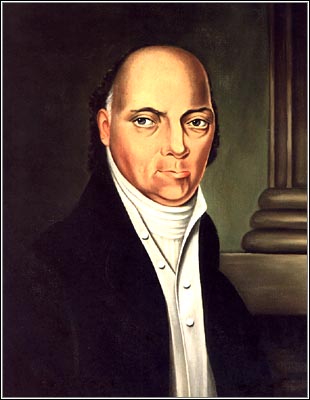
003_blair

Robert Harrison served as the Chief Justice of the General Court of Maryland from 1781 to 1789.Harrison, ultimately, declined to serve as an associate justice, citing health reasons. The seat eventually went to James Iredell.

robert_hanson_harrison

James Wilson was elected a delegate to the First Continental Congress in 1775 and was a signer of the Declaration of Independence. He also served as a delegate to the Second Continental Congress. As a delegate to the Constitutional Convention in Philadelphia in 1787, Wilson was a member of the committee that produced the first draft of the Constitution. He signed the finished document on September 17, 1787, and later served as a delegate to the Pennsylvania Ratification Convention. He served on the Court for eight years.
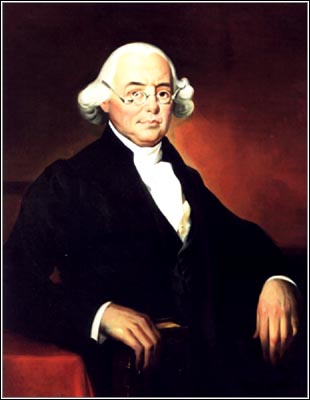
001_wilson

(Biographical information of the justices was provided by the Supreme Court Historical Society).

Presidential Debate Primer: Check out Washington Times Special Section on the President and the Constitution

In honor of Constitution Day this year, I took the lead on behalf of the National Constitutional Literacy Campaign on the publication of a Washington Times special section on the President and the Constitution. The special report includes articles from Senators Patrick Leahy and Mike Lee, among many others.

On the eve of tomorrow night’s presidential debate, I hope folks will consider reading, reflecting, and learning from the public officials, scholars and civic education advocates who submitted articles on this timely topic. It’s a great presidential debate primer.

The full special section is available in PDF form here.

Articles include:

Section 1: Citizens, Civic Knowledge, and Presidential Elections

(1) Julie Silverbrook, Why A Call for Civic Education and Constitutional Literacy?

(2) Julie Silverbrook, Student Competitions Spark Optimism, Civic Involvement

(3) Charles Quigley, Effective Civic Education Produces Informed Voters

(4) Dr. Michael Poliakoff, Civic Illiteracy and Civic Disempowerment

(5) Jeff Hymas, A Democratic or Republican Election? 

(6) Kyle Kondik, ‘Tyranny of the Swing States’?

(7) Meg Heubeck and Gerard Ferri, Get in the Game: Empowering America’s Next Generation to Vote

Section 2: Congress and the President

(1) Congressman George Nethercutt, Founders Intended ‘Tension’ In Co-Equal Branches

(2) Dr. Robert J. Spitzer, Political Gridlock, Past and Present

(3) Senator Patrick Leahy, Constitution Day: Protection Our Democracy

(4) Senator Mike Lee, The Battle to ‘Keep’ the American Republic

(5) Dr. Matthew Spalding, Congress and the New Imperial Presidency

Section 3: The Courts and the President

(1) Elizabeth Wydra, The President, the Constitution, and the Supreme Court

(2) Dr. Louis Fisher, How Courts Expand Presidential Power Beyond Constitutional Limits

(3) Ken Gormley, Presidents and the Supreme Court: Public Battles and Quiet Respect

Section 4: The Media and the President

(1) Julie Silverbrook, The Constitution on the Campaign Trail in 2016

(2) David Keene, the ‘Genius’ of the Constitution 

(3) Janine Turner and Andrew Langer, Is the Media Responsible for the Too-Power Presidency?

(4) Shoshana Weissman, How Social Media Gives Public Opinion Wings

Section 5: The Expansion of Presidential Authority

(1) Tim Donner, The Ever-Expanding Power of the Presidency

(2) Josh Blackman, Unteaching Professor Obama’s Constitutional Lessons

(3) Dr. Jason Stevens, Calvin Coolidge and the ‘two minds’ of the American Presidency

(4) Scott Michelman, Upholding the Right ‘To Be Let Alone’

227 Years Ago Congress Approved the Bill of Rights


bill_of_rights_630

On September 25, 1789, Congress approved 12 amendments to the United States Constitution and sent them to the states for ratification. The 10 amendments that were ultimately ratified (on December 15, 1791) became known as the Bill of Rights.

Here are the 12 amendments sent to the states on September 25. You might be surprised by the issues that ranked first and second above our now First Amendment. The second amendment proposed in 1789, regarding congressional pay, was ratified nearly 203 years later in 1992 and is now the 27th amendment to the U.S. Constitution.

THE Conventions of a number of the States, having at the time of their adopting the Constitution, expressed a desire, in order to prevent misconstruction or abuse of its powers, that further declaratory and restrictive clauses should be added: And as extending the ground of public confidence in the Government, will best ensure the benificent ends of its institution
RESOLVED by the Senate and House of Representatives of the United States of America, in Congress assembled, two thirds of both Houses concurring, that the following Articles be proposed to the Legislatures of the several States, as amendments to the Constitution of the United States, all or any of which Articles, when ratified by three fourths of the said Legislatures, to be valid to all intents and purposes, as part of the said Constitution; vizt.
ARTICLES in addition to, and amendment of the Constitution of the United States of America, proposed by Congress, and ratified by the Legislatures of the several States, pursuant to the fifth Article of the original Constitution.

ARTICLE THE FIRST. After the first enumeration required by the first Article of the Constitution, there shall be one Representative for every thirty thousand, until the number shall amount to one hundred, after which, the proportion shall be so regulated by Congress, that there shall be not less than one hundred Representatives, nor less than one Representative for every forty thousand persons, until the number of Representatives shall amount to two hundred, after which the proportion shall be so regulated by Congress, that there shall not be less than two hundred Representatives, nor more than one Representative for every fifty thousand persons.

ARTICLE THE SECOND. No law, varying the compensation for the services of the Senators and Representatives, shall take effect, until an election of Representatives shall have intervened.

ARTICLE THE THIRD. Congress shall make no law respecting an establishment of religion, or prohibiting the free exercise thereof; or abridging the freedom of speech, or of the press, or the right of the people peaceably to assemble, and to petition the Government for a redress of grievances.

ARTICLE THE FOURTH. A well regulated militia, being necessary to the security of a free State, the right of the people to keep and bear arms, shall not be infringed.

ARTICLE THE FIFTH. No Soldier shall, in time of peace be quartered in any House, without the consent of the owner, nor in time of war, but in a manner to be prescribed by law.

ARTICLE THE SIXTH. The right of the people to be secure in their persons, houses, papers, and effects, against unreasonable searches and seizures, shall not be violated, and no warrants shall issue, but upon probable cause, supported by oath or affirmation, and particularly describing the place to be searched and the persons or things to be seized.

ARTICLE THE SEVENTH. No person shall be held to answer for a capital, or otherwise infamous crime, unless on a presentment or indictment of {a} Grand Jury, except in cases arising in the land or naval forces, or in the militia, when in actual service in time of war or public danger; nor shall any person be subject for the same offence to be twice put in jeopardy of life or limb; nor shall be compelled in any criminal case to be a witness against himself, nor be deprived of life, liberty, or property, without due process of law;nor shall private property be taken for public use, without just compensation.

ARTICLE THE EIGHTH. In all criminal prosecutions, the accused shall enjoy the right to a speedy and public trial, by an impartial jury of the State and district wherein the crime shall have been committed; which district shall have been previously ascertained by law, and to be informed of the nature and cause of the accusation; to be confronted with the witnesses against him; to have compulsory process for obtaining witnesses in his favor, and to have the assistance of counsel for his defence.

ARTICLE THE NINTH. In suits at common law, where the value in controversy shall exceed twenty dollars, the right of trial by jury shall be preserved, and no fact tried by a jury, shall be otherwise re-examined in any Court of the United States, than according to the rules of the common law.

ARTICLE THE TENTH. Excessive bail shall not be required, nor excessive fines imposed, nor cruel and unusual punishments inflicted.

ARTICLE THE ELEVENTH. The enumeration the Constitution, of certain rights, shall not be construed to deny or disparage others retained by the people.

ARTICLE THE TWELFTH. The powers not delegated to the United States by the Constitution, nor prohibited by it to the States, are reserved to the States respectively, or to the people.


You can explore the legislative history of the Bill of Rights in the ConSource digital library.