A Brief History of Thanksgiving

Thanksgiving is an American holiday steeped in tradition – from gathering families for a large feast to breaking the turkey wishbone to watching football or the annual Thanksgiving Day parade.

It is also a holiday with a rich and interesting history, stemming from the New England custom of celebrating a successful harvest, and the Puritan religious tradition of thanksgivings, which combined solemn prayer and feasting.

The Continental Congress declared the first national Thanksgiving in 1777.

FORASMUCH as it is the indispensable Duty of all Men to adore the superintending Providence of Almighty God; to acknowledge with Gratitude their Obligation to him for Benefits received, and to implore such farther Blessings as they stand in Need of: And it having pleased him in his abundant Mercy, not only to continue to us the innumerable Bounties of his common Providence; but also to smile upon us in the Prosecution of a just and necessary War, for the Defense and Establishment of our unalienable Rights and Liberties; particularly in that he hath been pleased, in so great a Measure, to prosper the Means used for the Support of our Troops, and to crown our Arms with most signal success: It is therefore recommended to the legislative or executive Powers of these UNITED STATES to set apart THURSDAY, the eighteenth Day of December next, for SOLEMN THANKSGIVING and PRAISE: That at one Time and with one Voice, the good People may express the grateful Feelings of their Hearts, and consecrate themselves to the Service of their Divine Benefactor; and that, together with their sincere Acknowledgments and Offerings, they may join the penitent Confession of their manifold Sins, whereby they had forfeited every Favor; and their humble and earnest Supplication that it may please GOD through the Merits of JESUS CHRIST, mercifully to forgive and blot them out of Remembrance; That it may please him graciously to afford his Blessing on the Governments of these States respectively, and prosper the public Council of the whole: To inspire our Commanders, both by Land and Sea, and all under them, with that Wisdom and Fortitude which may render them fit Instruments, under the Providence of Almighty GOD, to secure for these United States, the greatest of all human Blessings, INDEPENDENCE and PEACE: That it may please him, to prosper the Trade and Manufactures of the People, and the Labor of the Husbandman, that our Land may yield its Increase: To take Schools and Seminaries of Education, so necessary for cultivating the Principles of true Liberty, Virtue and Piety, under his nurturing Hand; and to prosper the Means of Religion, for the promotion and enlargement of that Kingdom, which consisteth “in Righteousness, Peace and Joy in the Holy Ghost.” And it is further recommended, That servile Labor, and such Recreation, as, though at other Times innocent, may be unbecoming the Purpose of this Appointment, be omitted on so solemn an Occasion.

Presidents Washington, Adams, and Monroe each proclaimed national Thanksgivings, but the custom fell out of use by 1815, leaving individual states to observe the holiday.

Washington’s 1789 Thanksgiving Proclamation stated –

BY THE PRESIDENT OF THE UNITED STATES OF AMERICA – A PROCLAMATION Whereas it is the duty of all Nations to acknowledge the providence of almighty God, to obey his will, to be grateful for his benefits, and humbly to implore his protection and favor – and Whereas both Houses of Congress have by their joint Committee requested me “to recommend to the People of the United States a day of public thanksgiving and prayer to be observed by acknowledging with grateful hearts the many signal favors of Almighty God, especially by affording them an opportunity peaceably to establish a form of government for their safety and happiness.” Now therefore I do recommend and assign Thursday the 26th day of November next to be devoted by the People of these States to the service of that great and glorious Being, who is the beneficent Author of all the good that was, that is, or that will be – That we may then all unite in rendering unto him our sincere and humble thanks – for his kind care and protection of the People of this country previous to their becoming a Nation – for the signal and manifold mercies, and the favorable interpositions of his providence, which we experienced in the course and conclusion of the late war –for the great degree of tranquillity, union, and plenty, which we have since enjoyed – for the peaceable and rational manner in which we have been enabled to establish constitutions of government for our safety and happiness, and particularly the national One now lately instituted, for the civil and religious liberty with which we are blessed, and the means we have of acquiring and diffusing useful knowledge; and in general for all the great and various favors which he hath been pleased to confer upon us. And also that we may then unite in most humbly offering our prayers and supplications to the great Lord and Ruler of Nations and beseech him to pardon our national and other transgressions – to enable us all, whether in public or private stations, to perform our several and relative duties properly and punctually – to render our national government a blessing to all the People, by constantly being a government of wise, just, and constitutional laws, discreetly and faithfully executed and obeyed – to protect and guide all Sovereigns and Nations (especially such as have shewn kindness unto us) and to bless them with good government, peace, and concord – To promote the knowledge and practice of true religion and virtue, and the increase of science among them and Us – and generally to grant unto all mankind such a degree of temporal prosperity as he alone knows to be best. Given under my hand at the City of New York the third day of October in the year of our Lord 1789. GO. WASHINGTON.

By the 1850s, almost every state celebrated Thanksgiving in some way. Through the efforts of Sarah Josepha Hale, and later Abraham Lincoln, Thanksgiving became a regularly recognized national holiday.

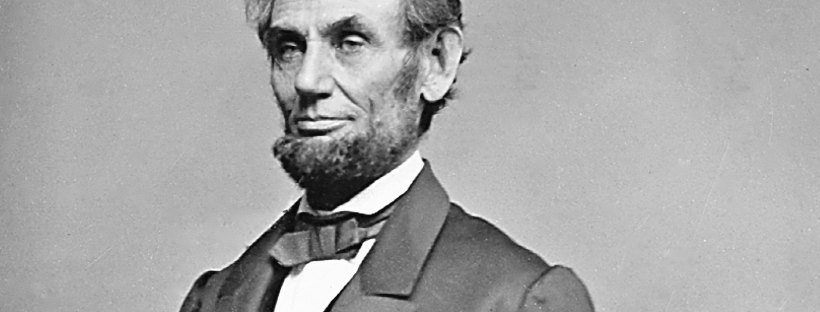
On October 3, 1863, in the midsts of the Civil War, President Abraham Lincoln issued a proclamation setting aside the last Thursday in November as a national day of thanks, thus setting the precedent for the modern Thanksgiving holiday.

BY THE PRESIDENT OF THE UNITED STATES OF AMERICA – A PROCLAMATION The year that is drawing toward its close has been filled with the blessings of fruitful fields and healthful skies. To these bounties, which are so constantly enjoyed that we are prone to forget the source from which they come, others have been added which are of so extraordinary a nature that they can not fail to penetrate and soften even the heart which is habitually insensible to the everwatchful providence of Almighty God. In the midst of a civil war of unequaled magnitude and severity, which has sometimes seemed to foreign states to invite and to provoke their aggression, peace has been preserved with all nations, order has been maintained, the laws have been respected and obeyed, and harmony has prevailed everywhere, except in the theater of military conflict, while that theater has been greatly contracted by the advancing armies and navies of the Union. Needful diversions of wealth and of strength from the fields of peaceful industry to the national defense have not arrested the plow, the shuttle, or the ship; the ax has enlarged the borders of our settlements, and the mines, as well of iron and coal as of the precious metals, have yielded even more abundantly than heretofore. Population has steadily increased notwithstanding the waste that has been made in the camp, the siege, and the battlefield, and the country, rejoicing in the consciousness of augmented strength and vigor, is permitted to expect continuance of years with large increase of freedom. No human counsel hath devised nor hath any mortal hand worked out these great things. They are the gracious gifts of the Most High God, who, while dealing with us in anger for our sins, hath nevertheless remembered mercy. It has seemed to me fit and proper that they should be solemnly, reverently, and gratefully acknowledged, as with one heart and one voice, by the whole American people. I do therefore invite my fellow-citizens in every part of the United States, and also those who are at sea and those who are sojourning in foreign lands, to set apart and observe the last Thursday of November next as a day of thanksgiving and praise to our beneficent Father who dwelleth in the heavens. And I recommend to them that while offering up the ascriptions justly due to Him for such singular deliverances and blessings they do also, with humble penitence for our national perverseness and disobedience, commend to His tender care all those who have become widows, orphans, mourners, or sufferers in the lamentable civil strife in which we are unavoidably engaged, and fervently implore the interposition of the Almighty hand to heal the wounds of the nation and to restore if, as soon as may be consistent with the divine purpose, to the full enjoyment of peace, harmony, tranquillity, and union. In testimony whereof I have hereunto set my hand and caused the seal of the United States to be affixed. Done at the city of Washington, this 3d day of October A.D. 1863, and of the Independence of the United States the eighty-eighth. ABRAHAM LINCOLN

Thanksgiving was celebrated on the last Thursday of November for every year from then until 1939, when President Franklin D. Roosevelt moved it up by a week in an attempt to increase holiday retail sales during the Great Depression. This move, known as Franksgiving, was met with much opposition, and, as a result, Congress passed a bill that Roosevelt reluctantly signed into law making Thanksgiving again the fourth Thursday in November.

 

On This Day in 1789, New Jersey Becomes the First State to Ratify the Bill of Rights

On November 20, 1789, New Jersey becomes the first state to ratify the Bill of Rights. The New Jersey legislators ratified 11 of the 12 amendments drafted by James Madison and approved by Congress. New Jersey rejected Article II, which would have regulated congressional pay raises (note: nearly 203 years later, this amendment was ratified and is now the 27th amendment to the Constitution).

The 12 Amendments proposed to the states in 1789 included:

Art. I. After the first enumeration required by the first article of the Constitution, there shall be one representative for every thirty thousand, until the number shall amount to one hundred, after which the proportion shall be so regulated by Congress, that there shall not be less than one hundred representatives, nor less than one representative for every forty thousand persons, until the number of representatives shall amount to two hundred, after which the proportion shall be so regulated by Congress, that there shall not be less than two hundred representatives, nor more than one representative for every fifty thousand.

Art. II. No law varying the compensation for services of the senators and representatives shall take effect, until an election of representatives shall have intervened.

Art. III. Congress shall make no law respecting an establishment of religion, or prohibiting the free exercise thereof, or abridging the freedom of speech, or of the press, or the right of the people peaceably to assemble, and to petition the government for a redress of grievances.

Art. IV. A well-regulated militia being necessary to the security of a free state, the right of the people to keep and bear arms shall not be infringed.

Art. V. No soldier shall, in time of peace, be quartered in any house without the consent of the owner, nor in time of war, but in a manner prescribed by law.

Art. VI. The right of the people to be secure in their persons, houses, papers, effects, against unreasonable searches and seizures, shall not be violated; and no warrants shall issue, but upon principal cause, supported by oath or affirmation, and particularly describing the place to be searched, and the persons or things to be seized.

Art. VII. No person shall be held to answer for a capital or otherwise infamous crime, unless on a presentment or indictment of a grand jury, except in cases arising in the land or naval forces, or in the militia when in actual service, in time of war or public danger; nor shall any person be subject, for the same offence, to be twice put in jeopardy of life or limb; nor shall be compelled, in any criminal case, to be a witness against himself; nor be deprived of life, liberty, or property, without due process of law; nor shall private property be taken for public use without just compensation.

Art. VIII. In all criminal prosecutions, the accused shall enjoy the right of a speedy and public trial, by an impartial jury of the state and district wherein the crime shall have been committed, which district shall have been previously ascertained by law; and to be informed of the nature and cause of the accusation; to be confronted with the witnesses against him; to have compulsory process for obtaining witnesses in his favor; and to have the assistance of counsel for his defence.

Art. IX. In suits at common law, where the value in controversy shall exceed twenty dollars, the right of trial by jury shall be preserved, and no fact tried by a jury shall be otherwise reëxamined, in any court of the United States, than according to the rules in common law.

Art. X. Excessive bail shall not be required, nor excessive fines imposed, nor cruel and unusual punishments inflicted.

Art. XI. The enumeration, in the Constitution, of certain rights, shall not be construed to deny or disparage others retained by the people.

Art. XII. The powers not delegated to the United States by the Constitution, nor prohibited by it to the states, are reserved to the states, respectively, or to the people.

Ratification of these 12 amendments required approval by three-fourths of the states. Only 10 amendments (now known as the Bill of Rights) were ratified, when Virginia voted in favor of ratification on December 15, 1791 (now known as Bill of Rights Day).

To learn more about the history of the Bill of Rights, explore the legislative history of the Bill of Rights in the ConSource digital library or check out this recorded conversation between me and historian Carol Berkin on the history of the Bill of Rights at the National Constitution Center.

“[G]overnment of the people, by the people, for the people shall not perish from the earth”: Lincoln Delivers His Gettysburg Address On This Day in 1863

On November 19, 1863, in the midst of the Civil War, President Abraham Lincoln delivers his Gettysburg Address. The Gettysburg Address is one of the most memorable speeches in American history. The short but powerful speech is reproduced in full below –


“Fourscore and seven years ago our fathers brought forth on this continent a new nation, conceived in liberty and dedicated to the proposition that all men are created equal. Now we are engaged in a great civil war, testing whether that nation or any nation so conceived and so dedicated can long endure. We are met on a great battlefield of that war. We have come to dedicate a portion of that field as a final resting-place for those who here gave their lives that that nation might live. It is altogether fitting and proper that we should do this. But in a larger sense, we cannot dedicate, we cannot consecrate, we cannot hallow this ground. The brave men, living and dead who struggled here have consecrated it far above our poor power to add or detract. The world will little note nor long remember what we say here, but it can never forget what they did here. It is for us the living rather to be dedicated here to the unfinished work which they who fought here have thus far so nobly advanced. It is rather for us to be here dedicated to the great task remaining before us–that from these honored dead we take increased devotion to that cause for which they gave the last full measure of devotion–that we here highly resolve that these dead shall not have died in vain, that this nation under God shall have a new birth of freedom, and that government of the people, by the people, for the people shall not perish from the earth.”

The First Constitution of the United States: The Articles of Confederation Were Adopted By the Continental Congress 239 Years Ago Today

On June 7, 1776, Richard Henry Lee of Virginia, introduced a resolution in the Second Continental Congress proposing independence for the American colonies. The resolution read:

Resolved, That these United Colonies are, and of right ought to be, free and independent States, that they are absolved from all allegiance to the British Crown, and that all political connection between them and the State of Great Britain is, and ought to be, totally dissolved.

That it is expedient forthwith to take the most effectual measures for forming foreign Alliances.

That a plan of confederation be prepared and transmitted to the respective Colonies for their consideration and approbation.

Four days later, the Continental Congress appointed three committees in response to the Lee Resolution. One of these committee was created to determine “a plan of confederation,” and was composed of one representative from each colony. John Dickinson of Delaware served as the principal drafter.

After 16 months of debate, the Continental Congress adopted the Articles of Confederation and Perpetual Union on November 15, 1777. The Articles set out that

Each state retains its sovereignty, freedom, and independence, and every power, jurisdiction, and right, which is not by this Confederation expressly delegated to the United States, in Congress assembled.

And that

The said States hereby severally enter into a firm league of friendship with each other, for their common defense, the security of their liberties, and their mutual and general welfare, binding themselves to assist each other, against all force offered to, or attacks made upon them, or any of them, on account of religion, sovereignty, trade, or any other pretense whatever.

The Articles did not go into effect until March 1, 1781, when the last of the 13 states – Maryland – ratified it.

The Articles provided for a loose federation of the states; a single legislative body, where each state had one vote, and a president who chaired the legislative assembly. The Confederation Congress had the following powers: to make war and peace; conduct foreign affairs; request men and money from the states; coin and borrow money; regulate Indian affairs; and settle disputes among the states. The following powers were reserved to the states: enforcing laws, regulating commerce, administering justice, and levying taxes.

No provision was made for an executive authority to enforce the laws or a judicial system to interpret them.

Within a short time, the weaknesses of the Confederation became apparent:

[The Continental Congress] could — theoretically — declare war and raise an army, but it could not force any state to meet its assigned quota for troops or for the arms and equipment needed to support them. It looked to the states for the income needed to finance its activities, but it could not punish a state for not contributing its share of the federal budget. Control of taxation and tariffs was left to the states, and each state could issue its own currency. In disputes between states — and there were many unsettled quarrels over state boundaries — Congress played the role of mediator and judge, but could not require the state to accept its decisions.

The result was virtual chaos. Without the power to collect taxes, the federal government plunged into debt. Seven of the 13 states printed large quantities of paper money — high in face value but low in real purchasing power — in order to pay veteran soldiers and a variety of creditors, and to settle debts between small farmers and large plantation owners.

. . . .

A weak central government, without the power to back its policies with military strength, was inevitably handicapped in foreign affairs as well. The British refused to withdraw their troops from the forts and trading posts in the new nation’s Northwest Territory, as they had agreed to do in the peace treaty of 1783. To make matters worse, British officers on the northern boundaries and Spanish officers to the south supplied arms to various Indian tribes and encouraged them to attack American settlers. The Spanish, who controlled Florida and Louisiana, as well as all territory west of the Mississippi River, also refused to allow Western farmers to use the port of New Orleans to ship their produce.

Although there were signs of returning prosperity in some areas of the fledgling nation, domestic and foreign problems continued to grow. It became increasingly clear that the Confederation’s central government was not strong enough to establish a sound financial system, to regulate trade, to enforce treaties or to exert military force against foreign antagonists when needed. Internal divisions between farmers and merchants, debtors and creditors, and among the states themselves were growing more severe. With Shay’s Rebellion of desperate farmers in 1786 vividly in mind and only recently crushed, George Washington warned: “There are combustibles in every state which a spark might set fire to.”

As a result, the new nation was on the brink of political and economic chaos. In 1785, George Washington wrote to Henry Knox saying “it does not appear to me, that we have wisdom, or national policy enough to avert the evils which are impending—How should we, when contracted ideas, local pursuits, and absurd jealousy are continually leading us from those great & fundamental principles which are characteristic of wise and powerful Nations; & without which, we are no more than a rope of Sand, and shall as easily be broken.” (Emphasis Added).

On July 21, 1786, the Virginia General Assembly passed a resolution proposing “a joint meeting of the states to consider and recommend a plan for regulating commerce.”

That convention met in Annapolis, Maryland, on September 11, 1786. Only 12 delegates were present at the meeting, representing only the states of New York, New Jersey, Pennsylvania, Delaware, and Virginia. On September 14, Alexander Hamilton introduced a resolution calling for a special convention of all the states to amend the Articles of Confederation.

This ultimately led to what we now call the Constitutional Convention of 1787. You can read James Madison’s notes of the Constitutional Convention here.

Our Nation’s First Presidential Cabinet

As president-elect Trump considers who he will choose to fill his cabinet, I thought it might be useful to look at the men who comprised our nation’s first presidential cabinet.

Today, the president’s cabinet includes includes the Vice President and the heads of 15 executive departments — the Secretaries of Agriculture, Commerce, Defense, Education, Energy, Health and Human Services, Homeland Security, Housing and Urban Development, Interior, Labor, State, Transportation, Treasury, and Veterans Affairs, as well as the Attorney General.

George Washington cabinet, by contrast, included just four original members: Secretary of State Thomas Jefferson, Secretary of Treasury Alexander Hamilton, Secretary of War Henry Knox, and Attorney General Edmund Randolph. Below I have included a brief biographical sketch of each cabinet secretary.

(1) Secretary of State Thomas Jefferson

mte5ndg0mdu1mdewmjq4mja3

Thomas Jefferson, after attending my alma mater the College of William & Mary, practiced law and served in local government as a magistrate, county lieutenant, and member of the House of Burgesses. He also served as a member of the Continental Congress and was chosen in 1776 to draft the Declaration of Independence. Jefferson left Congress in 1776 and served in the Virginia legislature. He was elected governor and served in the office from 1779 to 1781. Following his governorship, Jefferson wrote his famous Notes on the State of Virginia. In 1784, he returned to public service by serving first a trade commissioner in France and then as Benjamin Franklin’s successor as minister to France. After serving as Secretary of State during President Washington’s administration, Jefferson went on to serve as Vice President under John Adams and then President of the United States. He sold his collection of books to the government, which formed the nucleus of the collection of the Library of Congress. At the age of 75, he founded the University of Virginia.

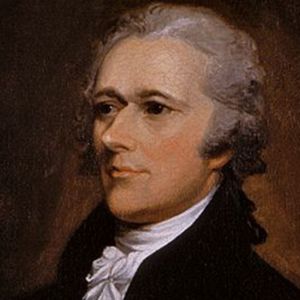
(2) Secretary of Treasury Alexander Hamilton

mte5ndg0mdu0otg3mjq1mdcx

Alexander Hamilton, born in Nevis, British West Indies, left school at King’s College (later renamed Columbia) in 1774 to begin a career in politics. That same year, he wrote “A Full Vindication of the Measures of Congress,” defending the Continental Congress’ proposal to embargo trade with Great Britain. In 1776, after the Revolutionary War began, Hamilton was commissioned as a captain in the Continental Army. In 1777, he accepted a position on General George Washington’s staff. He served admirably throughout the war. After the war’s conclusion, Hamilton passed the New York bar and practiced law in New York City. In 1787, Hamilton served as a New York delegate to the Constitutional Convention, where he advocated for the creation of a stronger central government. Along with James Madison and John Jay, Hamilton wrote “The Federalist,” a collection of 85 essays on the origins, purpose, and design of the United States Constitution. Hamilton wrote 51 of the essays. He served in New York’s ratifying convention and was instrumental in securing ratification of the new Constitution in the state. As the nation’s first Treasury secretary, Hamilton crafted a monetary policy that saved the nation from financial ruin. He was responsible for creating the First Bank of the United States, and his Report on Manufactures promoted commercial and industrial development in the new nation.

(3) Secretary of War Henry Knox

ana_kx_portrait.jpg

Henry Knox began his life as a bookbinder. During the Revolutionary war he served as General Washington’s chief of artillery and eventually rose to the rank of Major General. During the war, his most notable accomplishments include leading the expedition to transfer captured British cannon from Fort Ticonderoga to Boston, directing Washington’s famous crossing of the Delaware River, and take charge of the placement of the artillery at Yorktown. He served as secretary of war under the Articles of Confederation before serving as Washington’s Secretary of War under the new Constitution.

(4) Attorney General Edmund Randolph

220px-EdRand.jpg


Edmund Randolph studied at the College of William & Mary and studied law under his father’s tutelage. During the Revolutionary War, Randolph served as aide-de-camp to General Washington, and also attended the convention that adopted Virginia’s first state constitution in 1776 (he was the convention’s youngest member at the age of 23). He served as mayor of Williamsburg, Va, and Virginia’s attorney general. In 1779, he was elected to the Continental Congress, and in 1786 became the Governor of Virginia. He attended the Annapolis Convention in 1786, and was a delegate from Virginia during the Constitutional Convention of 1787. He presented the Virginia Plan on behalf of the Virginia delegation. Despite his support of Virginia Plan, he ultimately declined to sign the Constitution. By the time of the Virginia ratifying Convention, Randolph supported the Constitution and worked to secure its ratification in his state. He stated his reason for his switch as “The accession of eight states reduced our deliberations to the single question of Union or no Union.” He served as attorney general under President Washington until Jefferson resigned as Secretary of States, at which point Randolph assumed the role of Secretary of State.

The Founders on the Separation of Powers

Although, the Constitution does not expressly mention the “separation of powers,” the government created by the 1787 U.S. Constitution presupposes and gives expression to it. Below are quotes from the founding generation on why the separation of powers is referred to by Madison in The Federalist No. 47 as an “invaluable precept in the science of politics.”

(1) “The chief improvement in government, in modern times, has been the compleat separation of the great distinctions of power; placing the legislative in different hands from those which hold theexecutive; and again severing the judicial part from the ordinaryadministrative. ‘When the legislative and executive powers (says Montesquieu) are united in the same person, or in the same body of magistrates, there can be no liberty.'” – Centinel No. II (October 24, 1787)

(2) “Liberty therefore can only subsist, where the powers of government are properly divided, and where the different jurisdictions are inviolably kept distinct and separate. . . . This doctrine is not novel in America, it seems on the contrary to be every where well understood and admitted beyond controversy; in the bills of rights or constitutions of New-Hampshire, Massachusetts, Maryland, Virginia, North-Carolina and Georgia, it is expressly declared. “That the legislative, executive and judicial departments, shall be forever separate and distinct from each other.” InPennsylvania and Delaware, they are effectually separated without any particular declaration of the principle.” – “William Penn” No. 2 (January 3, 1788)

(3) “No political truth is certainly of greater intrinsic value or is stamped with the authority of more enlightened patrons of liberty, than that on which the objection is founded. The accumulation of all powers legislative, executive and judiciary in the same hands, whether of one, a few or many, and whether hereditary, self appointed, or elective, may justly be pronounced the very definition of tyranny. Were the federal constitution therefore really chargeable with this accumulation of power or with a mixture of powers having a dangerous tendency to such an accumulation, no further arguments would be necessary to inspire a universal reprobation of the system. I persuade myself however, that it will be made apparent to everyone, that the charge cannot be supported, and that the maxim on which it relies, has been totally misconceived and misapplied. In order to form correct ideas on this important subject, it will be proper to investigate the sense, in which the preservation of liberty requires, that the three great departments of power should be separate and distinct.” – The Federalist No. 47 (James Madison)

(4) “The conclusion which I am warranted in drawing from these observations is, that a mere demarkation on parchment of the constitutional limits of the several departments, is not a sufficient guard against those encroachments which lead to a tyrannical concentration of all the powers of government in the same hands.” – The Federalist No. 48 (James Madison)

(5) “But the great security against a gradual concentration of the several powers in the same department, consists in giving to those who administer each department, the necessary constitutional means, and personal motives, to resist encroachments of the others. The provision for defence must in this, as in all other cases, be made commensurate to the danger of attack. Ambition must be made to counteract ambition. The interest of the man must be connected with the constitutional rights of the place. It may be a reflection on human nature, that such devices should be necessary to controul the abuses of government. But what is government itself but the greatest of all reflections on human nature? If men were angels, no government would be necessary. If angels were to govern men, neither external nor internal controuls on government would be necessary. In framing a government which is to be administered by men over men, the great difficulty lies in this: You must first enable the government to controul the governed; and in the next place, oblige it to controul itself. A dependence on the people is no doubt the primary controul on the government; but experience has taught mankind the necessity of auxiliary precautions. This policy of supplying by opposite and rival interests, the defect of better motives, might be traced through the whole system of human affairs, private as well as public. We see it particularly displayed in all the subordinate distributions of power; where the constant aim is to divide and arrange the several offices in such a manner as that each may be a check on the other; that the private interest of every individual, may be a centinel over the public rights. These inventions of prudence cannot be less requisite in the distribution of the supreme powers of the state. But it is not possible to give to each department an equal power of self defence. In republican government the legislative authority, necessarily, predominates. The remedy for this inconveniency is, to divide the legislature into different branches; and to render them by different modes of election, and different principles of action, as little connected with each other, as the nature of their common functions, and their common de pendence on the society, it will admit. It may even be necessary to guard against dangerous encroachments by still further precautions. As the weight of the legislative authority requires that it should be thus divided, the weakness of the executive may require, on the other hand, that it should be fortified. An absolute negative, on the legislature, appears at first view to be the natural defence with which the executive magistrate should be armed. But perhaps it would be neither altogether safe, nor alone sufficient. On ordinary occasions, it might not be exerted with the requisite firmness; and on extraordinary occasions, it might be perfidiously abused. May not this defect of an absolute negative be supplied, by some qualified connection between this weaker department, and the weaker branch of the stronger department, by which the latter may be led to support the constitutional rights of the former, without being too much detached from the rights of its own department? If the principles on which these observations are founded be just, as I persuade myself they are, and they be applied as a criterion, to the several state constitutions, and to the federal constitution, it will be found, that if the latter does not perfectly correspond with them, the former are infinitely less able to bear such a test.” – The Federalist No. 51 (James Madison)

(6) “The same rule, which teaches the propriety of a partition between the various branches of power, teaches us likewise that this partition ought to be so contrived as to render the one independent of the other. To what purpose separate the executive, or the judiciary, from the legislative, if both the executive and the judiciary are so constituted as to be at the absolute devotion of the legislative? Such a separation must be merely nominal and incapable of producing the ends for which it was established. It is one thing to be subordinate to the laws, and another to be dependent on the legislative body. The first comports with, the last violates, the fundamental principles of good government; and whatever may be the forms of the Constitution, unites all power in the same hands. The tendency of the legislative authority to absorb every other, has been fully displayed and illustrated by examples, in some preceding numbers. In governments purely republican, this tendency is almost irresistable. The representatives of the people, in a popular assembly, seem sometimes to fancy that they are the people themselves; and betray strong symptoms of impatience and disgust at the least sign of opposition from any other quarter; as if the exercise of its rights by either the executive or judiciary, were a breach of their privilege and an outrage to their dignity. They often appear disposed to exert an imperious controul over the other departments; and as they commonly have the people on their side, they always act with such momentum as to make it very difficult for the other members of the government to maintain the balance of the Constitution.” – The Federalist No. 71 (Alexander Hamilton)

(7) “It is important, likewise, that the habits of thinking in a free country should inspire caution in those entrusted with its administration, to confine themselves within their respective constitutional spheres, avoiding in the exercise of the powers of one department to encroach upon another. The spirit of encroachment tends to consolidate the powers of all the departments in one, and thus to create, whatever the form of government, a real despotism. A just estimate of that love of power, and proneness to abuse it, which predominates in the human heart, is sufficient to satisfy us of the truth of this position. The necessity of reciprocal checks in the exercise of political power, by dividing and distributing it into different depositaries, and constituting each the guardian of the public weal against invasions by the others, has been evinced by experiments ancient and modern; some of them in our country and under our own eyes. To preserve them must be as necessary as to institute them.” – George Washington, Farewell Address (1796)

A Brief History of Veterans Day

Today is Veterans Day. I’m proud to say that many members of my family have bravely and admirably served in the U.S. armed forces – including, my mother, maternal grandfather, paternal grandfather, and paternal great uncle.

A Brief History of Veterans Day

During WWI, an armistice was reached on the 11th hour of the 11th day of the 11th month of 1918. The following year, November 11th was commemorated as Armistice Day. It became a federal legal holiday in the United states in 1938. After World War II and the Korean War, Armistice Day became Veterans Day, a holiday dedicated to American veterans of all wars.

President Woodrow Wilson’s Armistice Day Proclamation in 1919

To us in America, the reflections of armistice Day will be filled with solemn pride in the heroism of those who died in the country’s service and with gratitude for the victory, both because of the thing from which it has freed us and because of the opportunity it has given America to show her sympathy with peace and justice in the councils of the nations.”

President Dwight Eisenhower’s Veteran’s Day Proclamation in 1954

Whereas it has long been our custom to commemorate November 11, the anniversary of the ending of World War I, by paying tribute to the heroes of that tragic struggle and by rededicating ourselves to the cause of peace; and

Whereas in the intervening years the United States has been involved in two other great military conflicts, which have added millions of veterans living and dead to the honor rolls of this Nation; and

Whereas the Congress passed a concurrent resolution on June 4, 1926 (44 Stat. 1982), calling for the observance of November 11 with appropriate ceremonies, and later provided in an act approved May 13, 1938 (52 Stat. 351), that the eleventh of November should be a legal holiday and should be known as Armistice Day; and

Whereas, in order to expand the significance of that commemoration and in order that a grateful Nation might pay appropriate homage to the veterans of all its wars who have contributed so much to the preservation of this Nation, the Congress, by an act approved June 1, 1954 (68 Stat. 168), changed the name of the holiday to Veterans Day:

Now, Therefore, I, Dwight D. Eisenhower, President of the United States of America, do hereby call upon all of our citizens to observe Thursday, November 11, 1954, as Veterans Day. On that day let us solemnly remember the sacrifices of all those who fought so valiantly, on the seas, in the air, and on foreign shores, to preserve our heritage of freedom, and let us reconsecrate ourselves to the task of promoting an enduring peace so that their efforts shall not have been in vain. I also direct the appropriate officials of the Government to arrange for the display of the flag of the United States on all public buildings on Veterans Day.

In order to insure proper and widespread observance of this anniversary, all veterans, all veterans’ organizations, and the entire citizenry will wish to join hands in the common purpose. Toward this end, I am designating the Administrator of Veterans’ Affairs as Chairman of a Veterans Day National Committee, which shall include such other persons as the Chairman may select, and which will coordinate at the national level necessary planning for the observance. I am also requesting the heads of all departments and agencies of the Executive branch of the Government to assist the National Committee in every way possible.

In 1968, Congress passed the Uniform Holiday Bill (Public Law 90-363 (82 Stat. 250)). The law was intended to ensure three-day weekends for Federal employees by celebrating four national holidays on Mondays: Washington’s Birthday, Memorial Day, Veterans Day, and Columbus Day. It was thought that these long weekends would encourage travel, recreational and cultural activities and, therefore, stimulate the economy. Many states did not agree with this decision and continued to celebrate the holidays on their original dates.

The first Veterans Day under the new law was observed with much confusion on October 25, 1971. Several years later in 1975, President Gerald Ford signed Public Law 94-97 (89 Stat. 479), returning the annual observance of Veterans Day to its original date of November 11, beginning in 1978. And Veterans Day has continued to be celebrated on the November 11 ever since.

100 Years Ago Today, Jeannette Rankin Was Elected as First U.S. Congresswoman

On November 7, 1916, Jeannette Rankin, a suffragist from Montana, was elected to the U.S. House of Representatives, becoming the first woman in the history of this nation to win a seat in the United States Congress. When she was elected, she said:“I may be the first woman member of Congress . . . But I won’t be the last.” Today, 104 women hold seats in the United States Congress. 20 women serve in the U.S. Senate and 84 serve in the U.S. House of Representatives.


Who Was Jeannette Rankin?

Jeannette Rankin, the eldest daughter of a rancher and a schoolteacher, was born near Missoula, Montana, on June 11, 1880. She graduated from Montana State University (now the University of Montana) in 1902 and attended the New York School of Philanthropy (later the Columbia University School of Social Work). After a brief period as a social worker in Spokane, Washington, Rankin entered the University of Washington in Seattle. It was there that she joined the woman suffrage movement, a campaign that achieved its goal in Washington State in 1910. Rankin became a professional lobbyist for the National American Woman Suffrage Association (NAWSA). Her speaking and organizing efforts helped Montana women gain the vote in 1914.

When Rankin decided in 1916 to run for a House seat from Montana, she had two key advantages: her reputation as a suffragist and her politically well-connected brother, Wellington, who financed her campaign. Some national woman suffrage leaders feared she would lose and hurt the cause. The novelty of a woman running for Congress, however, helped Rankin secure a GOP nomination for one of Montana’s two At-Large House seats on August 29, 1916. Rankin ran as a progressive, pledging to work for a constitutional woman suffrage amendment and emphasizing social welfare issues. Long a committed pacifist, she did not shy away from letting voters know how she felt about possible U.S. participation in the European war that had been raging for two years: “If they are going to have war, they ought to take the old men and leave the young to propagate the race.” Rankin came in second, winning one of Montana’s seats. She trailed the frontrunner, Democratic Representative John M. Evans, by 7,600 votes, but she topped the next candidate— another Democrat–by 6,000 votes. Rankin ran a nonpartisan campaign in a Democratic state during a period of national hostility toward parties in general. And this was the first opportunity for Montana women to vote in a federal election. “I am deeply conscious of the responsibility resting upon me,” read her public victory statement.

Rankin and the Fight for Women’s Suffrage

As the first woman Member, Rankin was on the front lines of the national suffrage fight. During the fall of 1917 she advocated the creation of a Committee on Woman Suffrage and, when it was created, she was appointed to it. When the special committee reported out a constitutional amendment on woman suffrage in January 1918, Rankin opened the very first House Floor debate on this subject. “How shall we answer their challenge, gentlemen,” she asked. “How shall we explain to them the meaning of democracy if the same Congress that voted for war to make the world safe for democracy refuses to give this small measure of democracy to the women of our country?” The resolution narrowly passed the House amid the cheers of women in the galleries, but it died in the Senate.

Abraham Lincoln was Elected as First Republican President On This Day in 1860

On November 6, 1860, Abraham Lincoln became the 16th president of the United States. He was the first Republican to win the presidency. He received only 40% of the popular vote, but still handily defeated the three other candidates: John C. Breckenridge (Southern Democrat), Stephen Douglas (Northern Democrat), and John Bell (Constitutional Union).

Lincoln’s victory signaled the secession of Southern states, which had publicly threatened secession if Republicans gained the White House. By the time of Lincoln’s inauguration on March 4, 1861, 7 states had seceded, and the Confederate States of America had been formally established. A month later, the Civil War began when Confederate forces opened fire on Fort Sumter in South Carolina.

This was the Republican Party Platform in 1860

Resolved, That we, the delegated representatives of the Republican electors of the United States in Convention assembled, in discharge of the duty we owe to our constituents and our country, unite in the following declarations:

1. That the history of the nation during the last four years, has fully established the propriety and necessity of the organization and perpetuation of the Republican party, and that the causes which called it into existence are permanent in their nature, and now, more than ever before, demand its peaceful and constitutional triumph.

2. That the maintenance of the principles promulgated in the Declaration of Independence and embodied in the Federal Constitution, “That all men are created equal; that they are endowed by their Creator with certain inalienable rights; that among these are life, liberty and the pursuit of happiness; that to secure these rights, governments are instituted among men, deriving their just powers from the consent of the governed,” is essential to the preservation of our Republican institutions; and that the Federal Constitution, the Rights of the States, and the Union of the States must and shall be preserved.

3. That to the Union of the States this nation owes its unprecedented increase in population, its surprising development of material resources, its rapid augmentation of wealth, its happiness at home and its honor abroad; and we hold in abhorrence all schemes for disunion, come from whatever source they may. And we congratulate the country that no Republican member of Congress has uttered or countenanced the threats of disunion so often made by Democratic members, without rebuke and with applause from their political associates; and we denounce those threats of disunion, in case of a popular overthrow of their ascendency as denying the vital principles of a free government, and as an avowal of contemplated treason, which it is the imperative duty of an indignant people sternly to rebuke and forever silence.

4. That the maintenance inviolate of the rights of the states, and especially the right of each state to order and control its own domestic institutions according to its own judgment exclusively, is essential to that balance of powers on which the perfection and endurance of our political fabric depends; and we denounce the lawless invasion by armed force of the soil of any state or territory, no matter under what pretext, as among the gravest of crimes.

5. That the present Democratic Administration has far exceeded our worst apprehensions, in its measureless subserviency to the exactions of a sectional interest, as especially evinced in its desperate exertions to force the infamous Lecompton Constitution upon the protesting people of Kansas; in construing the personal relations between master and servant to involve an unqualified property in persons; in its attempted enforcement everywhere, on land and sea, through the intervention of Congress and of the Federal Courts of the extreme pretensions of a purely local interest; and in its general and unvarying abuse of the power intrusted to it by a confiding people.

6. That the people justly view with alarm the reckless extravagance which pervades every department of the Federal Government; that a return to rigid economy and accountability is indispensable to arrest the systematic plunder of the public treasury by favored partisans; while the recent startling developments of frauds and corruptions at the Federal metropolis, show that an entire change of administration is imperatively demanded.

7. That the new dogma that the Constitution, of its own force, carries slavery into any or all of the territories of the United States, is a dangerous political heresy, at variance with the explicit provisions of that instrument itself, with contemporaneous exposition, and with legislative and judicial precedent; is revolutionary in its tendency, and subversive of the peace and harmony of the country.

8. That the normal condition of all the territory of the United States is that of freedom: That, as our Republican fathers, when they had abolished slavery in all our national territory, ordained that “no persons should be deprived of life, liberty or property without due process of law,” it becomes our duty, by legislation, whenever such legislation is necessary, to maintain this provision of the Constitution against all attempts to violate it; and we deny the authority of Congress, of a territorial legislature, or of any individuals, to give legal existence to slavery in any territory of the United States.

9. That we brand the recent reopening of the African slave trade, under the cover of our national flag, aided by perversions of judicial power, as a crime against humanity and a burning shame to our country and age; and we call upon Congress to take prompt and efficient measures for the total and final suppression of that execrable traffic

10. That in the recent vetoes, by their Federal Governors, of the acts of the legislatures of Kansas and Nebraska, prohibiting slavery in those territories, we find a practical illustration of the boasted Democratic principle of Non-Intervention and Popular Sovereignty, embodied in the Kansas-Nebraska Bill, and a demonstration of the deception and fraud involved therein.

11. That Kansas should, of right, be immediately admitted as a state under the Constitution recently formed and adopted by her people, and accepted by the House of Representatives.

12. That, while providing revenue for the support of the general government by duties upon imports, sound policy requires such an adjustment of these imports as to encourage the development of the industrial interests of the whole country; and we commend that policy of national exchanges, which secures to the workingmen liberal wages, to agriculture remunerative prices, to mechanics and manufacturers an adequate reward for their skill, labor, and enterprise, and to the nation commercial prosperity and independence.

13. That we protest against any sale or alienation to others of the public lands held by actual settlers, and against any view of the free-homestead policy which regards the settlers as paupers or suppliants for public bounty; and we demand the passage by Congress of the complete and satisfactory homestead measure which has already passed the House.

14. That the Republican party is opposed to any change in our naturalization laws or any state legislation by which the rights of citizens hitherto accorded to immigrants from foreign lands shall be abridged or impaired; and in favor of giving a full and efficient protection to the rights of all classes of citizens, whether native or naturalized, both at home and abroad.

15. That appropriations by Congress for river and harbor improvements of a national character, required for the accommodation and security of an existing commerce, are authorized by the Constitution, and justified by the obligation of Government to protect the lives and property of its citizens.

16. That a railroad to the Pacific Ocean is imperatively demanded by the interests of the whole country; that the federal government ought to render immediate and efficient aid in its construction; and that, as preliminary thereto, a daily overland mail should be promptly established.

17. Finally, having thus set forth our distinctive principles and views, we invite the co-operation of all citizens, however differing on other questions, who substantially agree with us in their affirmance and support.


On the eve of an election that has bitterly divided this country, I am reminded of this passage from Lincoln’s first inaugural address –

We are not enemies, but friends. We must not be enemies. Though passion may have strained, it must not break our bonds of affection. The mystic chords of memory, stretching from every battle-field, and patriot grave, to every living heart and hearth-stone, all over this broad land, will yet swell the chorus of the Union, when again touched, as surely they will be, by the better angels of our nature.


Happy Birthday John Adams!

John Adams was born on October, 30, 1735.  Adams enrolled in Harvard University at age 16 and went on to teach school children and study law. Adams was instrumental in laying the foundation for the American Revolution. In 1783, he brokered the peace treaty between America and Britain that ended the American Revolution. Adams served as the nation’s first Vice President and second President.

Benjamin Rush wrote of Adams in 1776: “This illustrious patriot has not his superior, scarcely his equal for abilities and virtue on the whole of the continent of America.”

Sadly, Adams many accomplishments during the Revolutionary period are clouded by his signing of the Alien and Sedition Acts of 1798.

In honor of his birthday and contributions to the United States, I thought I’d spotlight some of my favorite quotes from Adams –

(1) “The Science of Government it is my Duty to study, more than all other Studies Sciences: the Art of Legislation and Administration and Negotiation, ought to take Place, indeed to exclude in a manner all other Arts. I must study Politicks and War that my sons may have liberty to study Painting and Poetry Mathematicks and Philosophy. My sons ought to study Mathematicks and Philosophy, Geography, natural History, Naval Architecture, navigation, Commerce and Agriculture, in order to give their Children a right to study Painting, Poetry, Musick, Architecture, Statuary, Tapestry and Porcelaine.”

(2) “Facts are stubborn things; and whatever may be our wishes, our inclinations, or the dictates of our passion, they cannot alter the state of facts and evidence.”

(3) “Thirteen governments thus founded on the natural authority of people alone, without a pretence of miracle or mystery, and which are destined to spread over the northern part of that whole quarter of the globe, are a great point gained in favor of the rights of mankind.”

(4) “But a Constitution of Government once changed from Freedom, can never be restored. Liberty once lost is lost forever.”

(5) “Posterity, you will never know how much it cost the present Generation to preserve your Freedom. I hope you will make good use of it. If you do not, I shall repent in Heaven, that I ever took half the Pains to preserve it.”

(6) “The Second Day of July 1776, will be the most memorable Epocha, in the History of America. I am apt to believe that it will be celebrated, by succeeding Generations, as the great anniversary Festival. It ought to be commemorated, as the Day of Deliverance by solemn Acts of Devotion to God Almighty. It ought to be solemnized with Pomp and Parade, with Shews, Games, Sports, Guns, Bells, Bonfires and Illuminations from one End of this Continent to the other from this Time forward forever more.

You will think me transported with Enthusiasm but I am not. — I am well aware of the Toil and Blood and Treasure, that it will cost Us to maintain this Declaration, and support and defend these States. — Yet through all the Gloom I can see the Rays of ravishing Light and Glory. I can see that the End is more than worth all the Means. And that Posterity will tryumph in that Days Transaction, even altho We should rue it, which I trust in God We shall not.”

(7) “It should be your care, therefore, and mine, to elevate the minds of our children and exalt their courage; to accelerate and animate their industry and activity; to excite in them an habitual contempt of meanness, abhorrence of injustice and inhumanity, and an ambition to excel in every capacity, faculty, and virtue. If we suffer their minds to grovel and creep in infancy, they will grovel all their lives.”

(8) “The preservation of the means of knowledge among the lowest ranks is of more importance to the public than all the property of all the rich men in the country.”

(9) “Children should be educated and instructed in the principles of freedom.”

(10) “The die was now cast; I had passed the Rubicon. Sink or swim, live or die, survive or perish with my country, was my unalterable determination.”

(11) “[L]iberty must at all hazards be supported. We have a right to it, derived from our Marker. But if we had not, our fathers have earned and bought it for us, at the expense of their estates, their pleasure, and their blood.”

(12) “There must be a positive Passion for the public good, the public Interest, Honour, Power and Glory, established in the Minds of the People, or there can be no Republican Government, nor any real Liberty: and this public Passion must be Superiour to all private Passions. Men must be ready, they must pride themselves, and be happy to sacrifice their private Pleasures, Passions and Interests, nay, their private Friendships and dearest Connections, when they stand in Competition with the Rights of Society.”